
Cheap Chinese Chicken Challenges Brazilian Meatpackers in Global Markets
A surge in low-cost Chinese poultry exports is undercutting Brazilian meatpackers in key global markets, threatening the market share of major US-listed food producers.
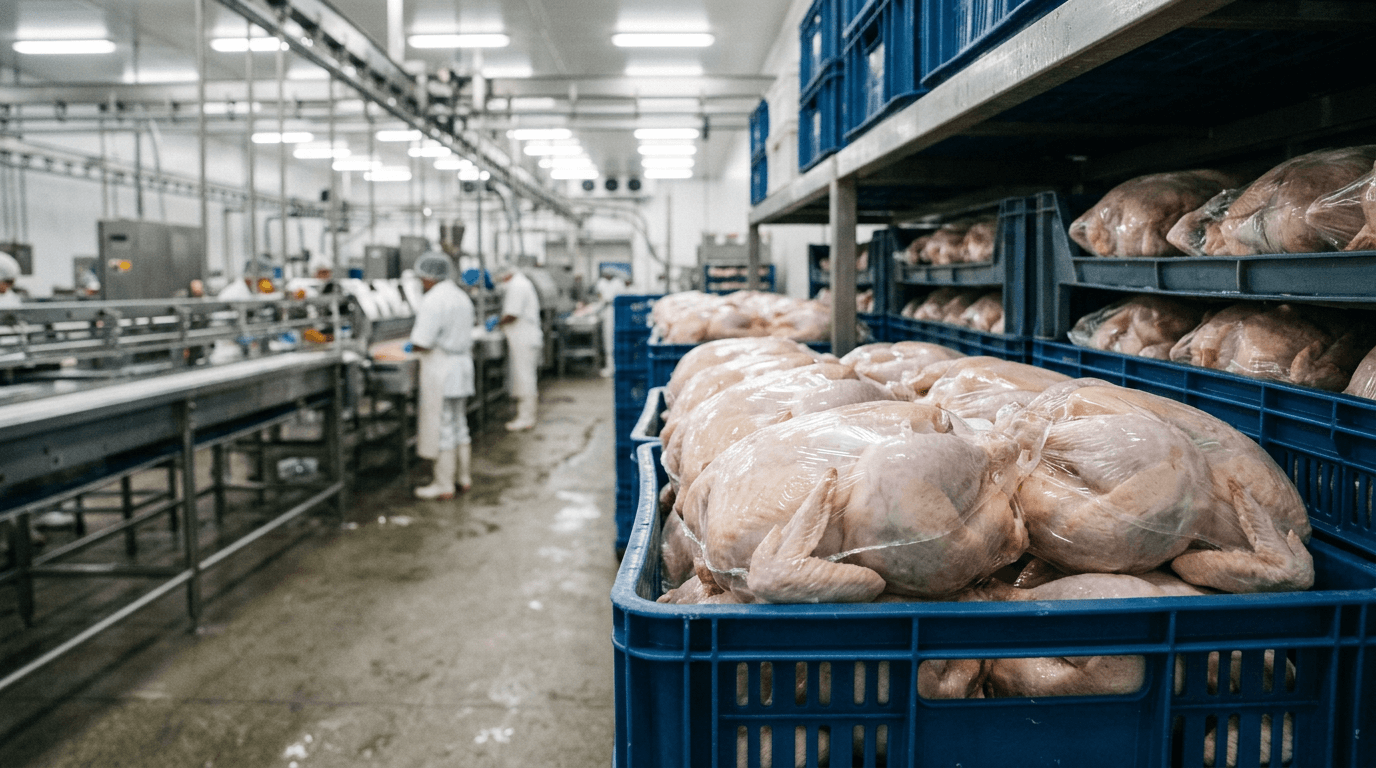
American retail investors holding shares of major global food companies are facing an unexpected source of disruption in their portfolios: a massive wave of low-cost poultry exports from China. Long known as a primary importer of animal protein, China has rapidly pivoted to become an aggressive exporter, directly challenging the dominant global market share of Western and South American food producers.
According to U.S. Department of Agriculture (USDA) projections and industry data from October 2026, China's poultry exports are projected to rise 42% in 2026 to 1.54 million tonnes. This rapid expansion is driven by domestic oversupply and a national focus on food security, which has pushed poultry production to grow faster than domestic consumption. As a result, Chinese chicken breast and leg quarters are selling at 10% to 20% cheaper than comparable Brazilian products, creating a steep price hurdle for traditional exporters.
The primary casualty of this shift is Brazil, the world's largest chicken exporter, which has historically dominated supply chains to the Middle East, Africa, and Asia. International meat traders are increasingly substituting Brazilian poultry with Chinese alternatives to serve cost-sensitive markets. For example, Lisbon-based meat trader Branexx recently turned to Chinese products to satisfy buyers looking for cheaper meat, noting that Chinese poultry can be up to $1,000 cheaper per ton than Brazilian and Thai competitors.
This competitive pressure comes at a critical time for Brazil's agricultural sector. The country's meatpackers are heavily exposed to shifting trade dynamics as they navigate high domestic logistics costs and volatile feed prices. While Brazil continues to produce record volumes of chicken meat—reaching 14.3 million tons in recent annual figures—the aggressive pricing from Chinese integrated producers like Wintop Food is squeezing margins in shared international destinations.
For global investors, the rising tide of Chinese exports introduces a new layer of geopolitical and commercial risk to the consumer staples sector. While trade barriers still limit China's access to the U.S. domestic market, the battle for dominance in neutral territories like the Middle East and Africa will heavily dictate the earnings potential of multinational meat processors.
In your brokerage app
Investors can monitor this shifting competitive landscape through major food processing companies listed in New York. JBS S.A., the world's largest meatpacker, operates a vast global poultry network and is directly exposed to international pricing pressures. Similarly, BRF S.A., a Brazilian poultry giant listed in New York, relies heavily on export markets in the Middle East and Asia, making its revenue streams highly sensitive to low-cost Chinese competition. Broad exposure to these agricultural shifts can also be found in the iShares MSCI Brazil ETF, which holds significant positions in the country's dominant food exporters.