
Brazilian Soybean Farmers Resist Selling Despite US Price Drop, Shifting Focus to Critical Cerrado Planting Risk
A strong US dollar is supporting local Brazilian soybean prices, allowing farmers to restrict sales even after US corn and soy futures tumbled on unexpected USDA stock data, putting the focus on whether the new planting season will be delayed.
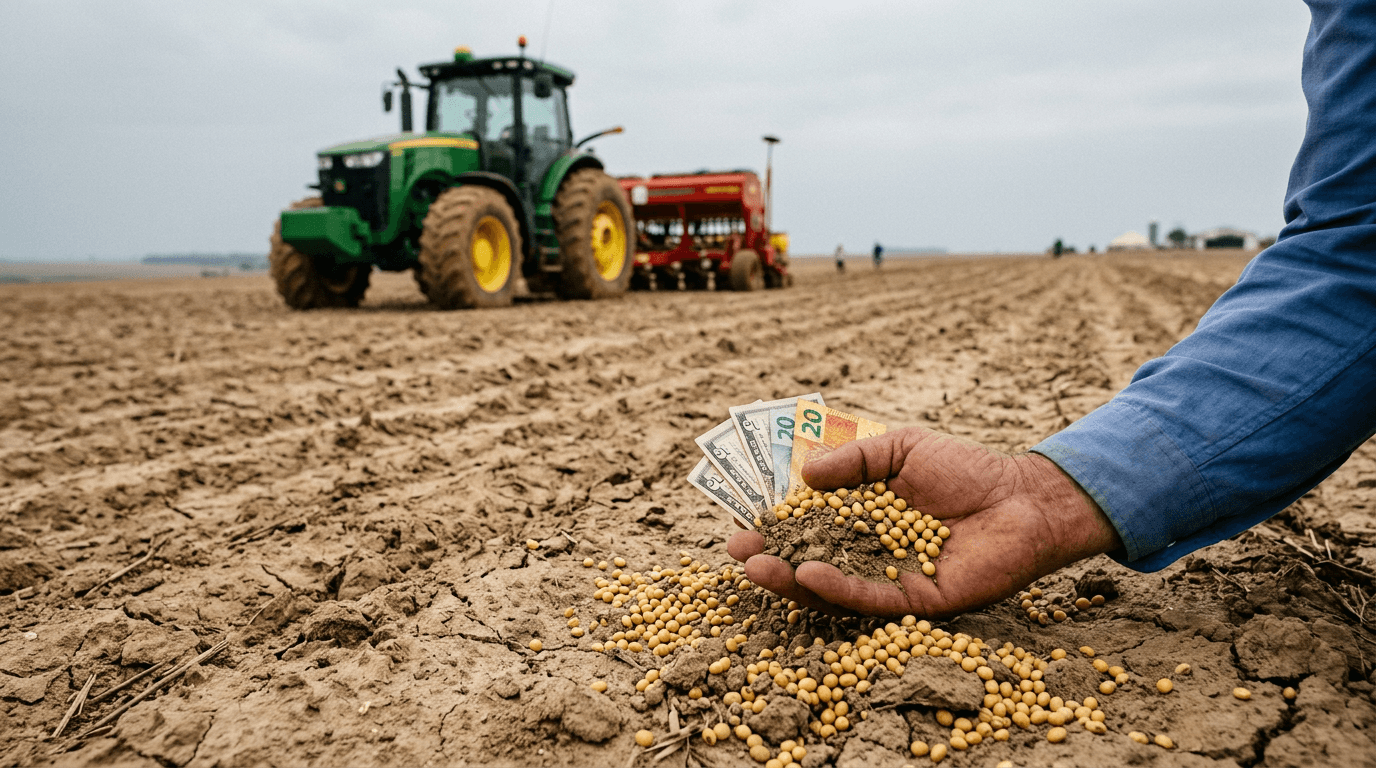
Brazilian soybean farmers are restricting sales of the remaining 2025/26 crop and new forward contracts, supported by a strong domestic currency that has provided a critical price floor against global market volatility. This commercial resistance is leading to a tightening of physical supply as the market’s focus abruptly shifts from the US harvest data to the uncertain start of the new Brazilian soybean farming season in the Cerrado region.
The latest jolt to the global grain complex came from the United States Department of Agriculture (USDA), whose quarterly grain stocks report showed US corn inventories well above expectations, causing corn futures to plunge on the Chicago Board of Trade (CBOT). While CBOT soybean futures also declined, the impact on the ground for brazil soybean farmers was lessened by the local currency exchange rate, with the US Dollar holding firm against the Brazilian real (USD/BRL trading around 5.1803). This exchange rate buffers the dollar-denominated price decline when it is converted to reais, giving brazil farmer soybean sales lagging an incentive to hold out for better prices.
This high-stakes standoff between farmers and buyers is unfolding as the clock begins to tick on the planting of the new 2026/27 crop in the crucial Central-West states, which include top producing states like Mato Grosso. Delays in the current soybean planting window pose a significant risk, as they would compress the planting schedule for the subsequent and far more critical safrinha corn crop.
The safrinha, or "little harvest," is Brazil’s second-season corn crop, but it represents up to 80% of the country’s total corn production. Because it is planted immediately after the soybean harvest, any delay now in getting soybeans in the ground means a later soybean harvest in January and February, pushing the safrinha planting beyond its optimal window, which typically closes around the third week of February in Central Brazil. Planting outside this window significantly increases the risk that the corn will face the onset of the dry season before it is fully mature, threatening yield.
The immediate concern for farmers is the forecast for Cerrado planting weather, with some forecasts raising the specter of delayed rains or irregular patterns linked to the potential for an El Niño effect in the region. The combination of profitable domestic prices and an acute weather risk means producers are now watching the skies over the Central-West as closely as they watch the screens for CBOT futures. The outlook for Brazil's massive grain exports, and for global corn supply, hinges on the rainfall returning to the key planting states soon to allow the soybean crop to get underway.
What it touches
The combination of volatility in the Soy Complex (Soybeans and Soybean Meal) and the importance of the USD/BRL exchange rate means both assets are central to the story, determining whether the global price shock translates into lower domestic prices.
Latest articles
NASDAQ · PRO
Sigma Lithium Shares Drop 3.2% as Brazil Regulator Orders Partial Mine Halt Over ‘Imminent Risk’
Published
Politics
Oxford Economics Outlines Two Contending Economic Futures for Brazil's Next Government
Published
Politics · PRO
Brazil Federal Audit Court Flags 30 Fiscal Risks in Lula Government’s 2026 Management
Published