
Google Trends reveal what Brazilians care about before 2026 election
Search data highlights the immediate, practical anxieties of voters, from navigating complex local alcohol bans to the low cost of skipping the mandatory vote.
Days before Brazil’s high-stakes general election on October 4, 2026, voters are turning to the internet with highly practical, immediate concerns. While political analysts obsess over ideological divides and presidential polling, actual search data reveals that everyday citizens are more preoccupied with the logistics of daily life on election Sunday—specifically, whether they can buy a beer and how much it will cost them to skip the ballot box entirely.
According to data from Google Trends, searches for the phrase "Pode vender bebida alcoólica no dia da eleição?" (Can alcohol be sold on election day?) surged by 300% in the week leading up to the vote. Meanwhile, general search interest in the election-day alcohol ban, known locally as the lei seca (dry law), skyrocketed by an astonishing 1,250%.
The confusion stems from Brazil's decentralized approach to election-day sobriety. Unlike federal systems with blanket national mandates, Brazil has no single federal law governing alcohol sales during elections. Instead, the Superior Electoral Court (TSE)—the nation's highest electoral authority—leaves the decision to individual state-level Regional Electoral Courts (TREs) and local public safety secretariats. This has created a complex patchwork across the country. For the 2026 vote, at least 12 states have implemented some form of restriction, ranging from total statewide bans in northern states like Pará and Amazonas to localized zone-by-zone restrictions in states like Goiás. Meanwhile, Brazil's largest economic and population hubs, including São Paulo and Rio de Janeiro, have opted for no restrictions at all.
Beyond the quest for a Sunday drink, millions of Brazilians are looking for a way out of their civic duties. Voting is legally mandatory in Brazil for literate citizens between the ages of 18 and 70. However, Google searches for multa eleitoral (voter fines) spiked by 350% during the same week. The surge in curiosity highlights a well-known loophole in the Brazilian democratic process: the penalty for failing to vote without a formal justification is a nominal fee, typically ranging from a meager R$ 1.05 to R$ 3.51 (roughly $0.20 to $0.70 USD).
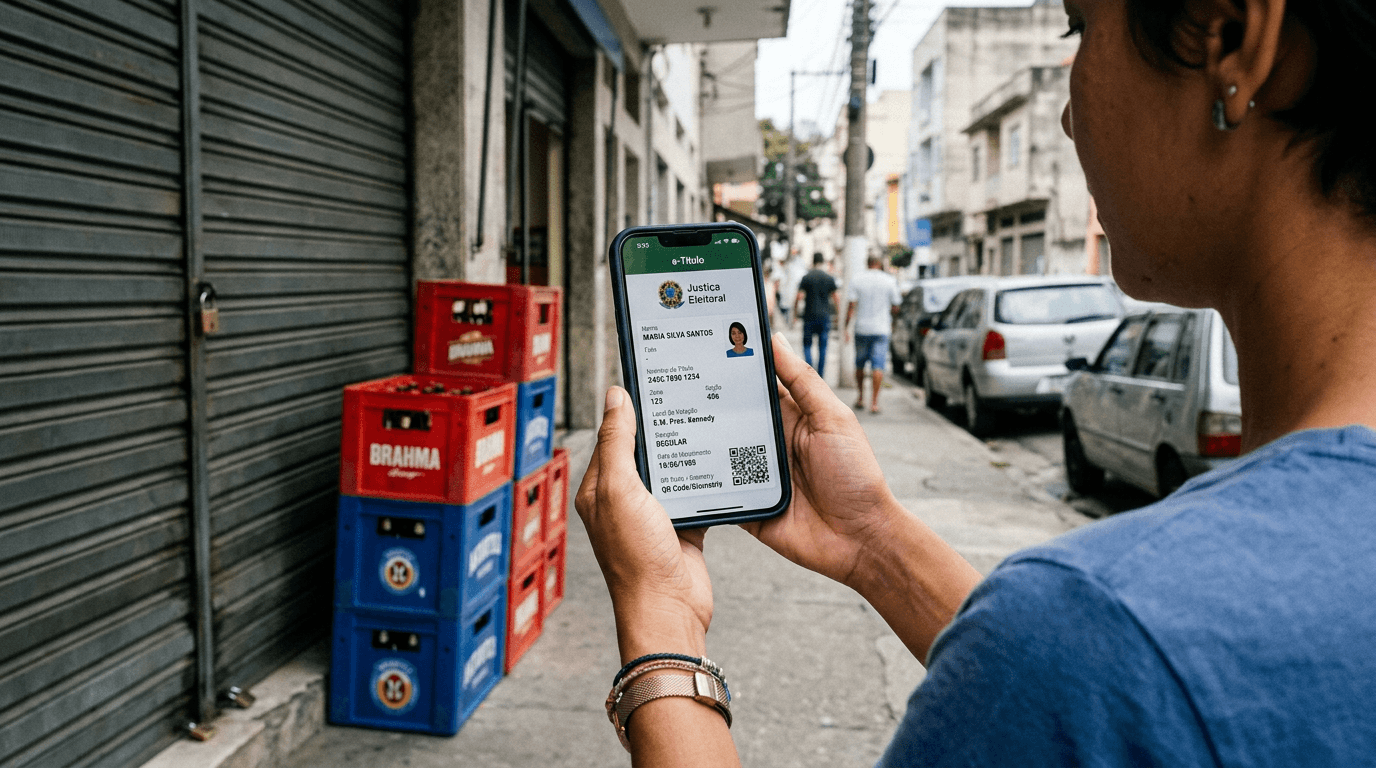
For many voters, paying this nominal fine online or via the government's official e-Título mobile app is a highly appealing alternative to waiting in long lines at polling stations. While repeated failure to vote or pay the fine can eventually lead to administrative headaches—such as being barred from obtaining a passport, taking public sector jobs, or enrolling in state universities—the immediate financial penalty remains practically non-existent.
As over 158 million eligible voters prepare for the first round of voting to choose their next president, governors, senators, and congressmen, these search trends offer a candid look at the electorate's mindset. For a significant portion of the population, navigating the state-by-state bureaucracy of the lei seca and weighing the minor cost of electoral truancy are just as pressing as the political future of the nation.