
Selective Retail Growth Baffles Bears as Durable Goods Sales Outpace Weak Consumer Confidence
Brazilian retail sales volume grew 4.2% in Q2 2026, driven by durable goods and financing options, despite falling consumer confidence.
Brazilian retail sales volume expanded by 4.2% year-over-year in the second quarter of 2026, offering a pocket of resilience for investors even as the broader B3 stock market retreats, with the benchmark Ibovespa falling 1.52% to 174,041.95 on the day. The overall sales increase appears largely concentrated, suggesting a selective environment for small-cap investors in retail equities such as Magazine Luiza (MGLU3). The Small Cap Index (SMLL) has shown similar caution, recently trading down 1.07% over a single-day period, indicating that the positive retail data is not translating into a broad-based rally for the sector.
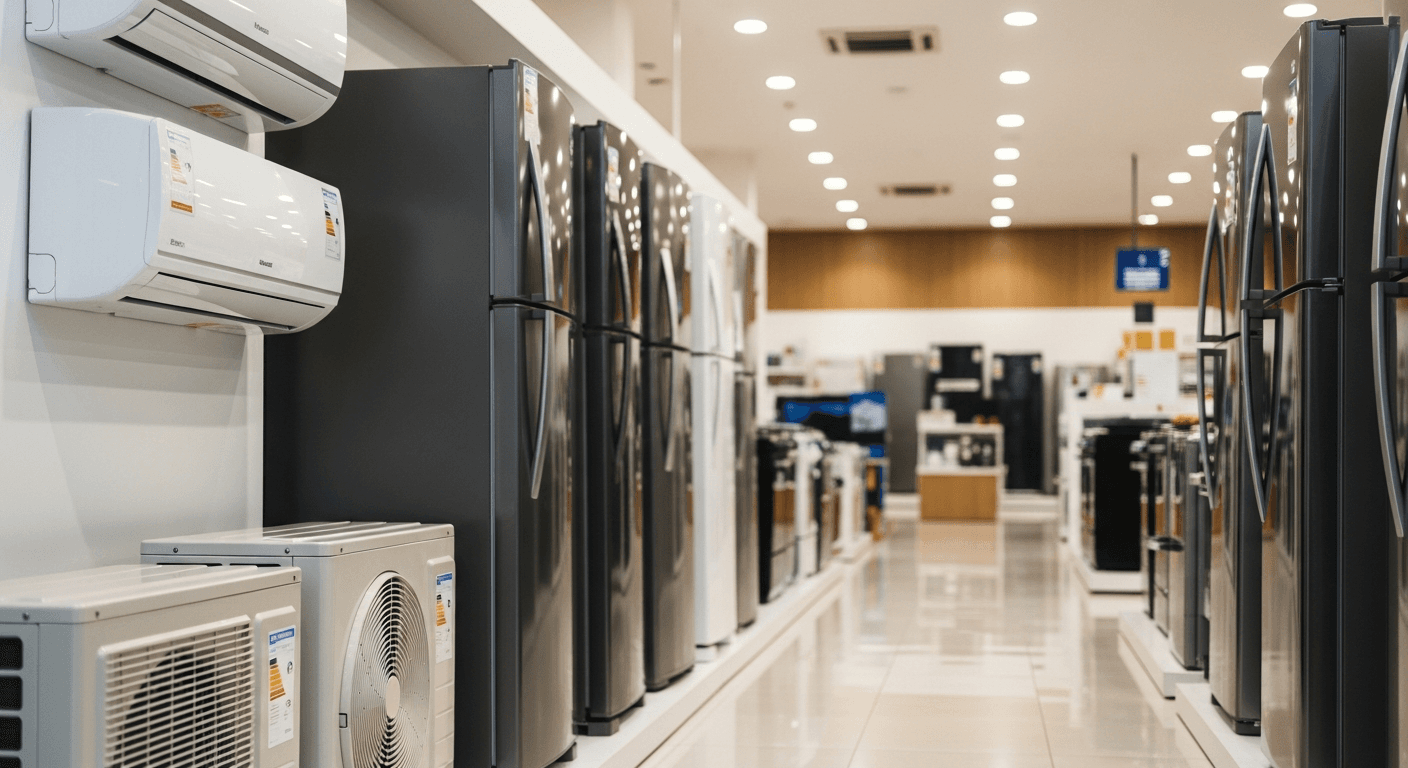
The outperformance was starkest in the discretionary category of durable goods. The 'Furniture and Home Appliances' sub-sector delivered a robust 5.9% year-over-year growth in sales volume for June 2026, positioning it as a standout performer in the small-cap retail landscape. This growth highlights a bifurcation in Brazilian consumer spending, where demand for big-ticket items is offsetting weakness in other segments.
This strength in durables is notable because it clashes with the persistent macro headwind of high interest rates and cautious consumers. Analysis suggests the growth mechanism is tied to two factors: the continued expansion of accessible financing options like point-of-sale installment financing (BNPL), which help cushion the impact of high-interest consumer loans, and recent climate-driven demand for items like air conditioners. Furthermore, retailers with strong omnichannel models, such as MGLU3, are better positioned to capture sales through credit initiatives and digital platforms, enabling them to outperform traditional retail-only models.
The challenge for investors is reconciling the hard sales data with the palpable lack of general optimism. Overall consumer confidence in Brazil continued its slide in June, dropping to 88.70 points from 88.80 in May, according to the Fundação Getulio Vargas (FGV). This weakening sentiment, driven by a worsening perception of the present economic situation and high household debt, has led Fitch Ratings to issue a "deteriorating" outlook for the broader Latin American retail sector. The broad market sell-off today, with large-cap stocks like PETR4 (-1.72%) and ITUB4 (-1.08%) also in the red, reflects this underlying market pessimism.
Investors watching the selective nature of this retail recovery should focus on the next key data prints to gauge sustainability. The release of the full July retail sales data from IBGE and the next FGV consumer confidence reading will determine if the momentum in sub-sectors like home appliances can persist, or if the overall weak sentiment begins to drag down the entire small-cap retail segment.