
US Tariff Hike Pushes Brazilian Exports to Historical Low, Accelerating Pivot to China
Brazilian exports to the US fell 13% to US$17.4 billion in H1 2026 after new 25% tariffs, dropping the US share of Brazil's trade to a 29-year low.
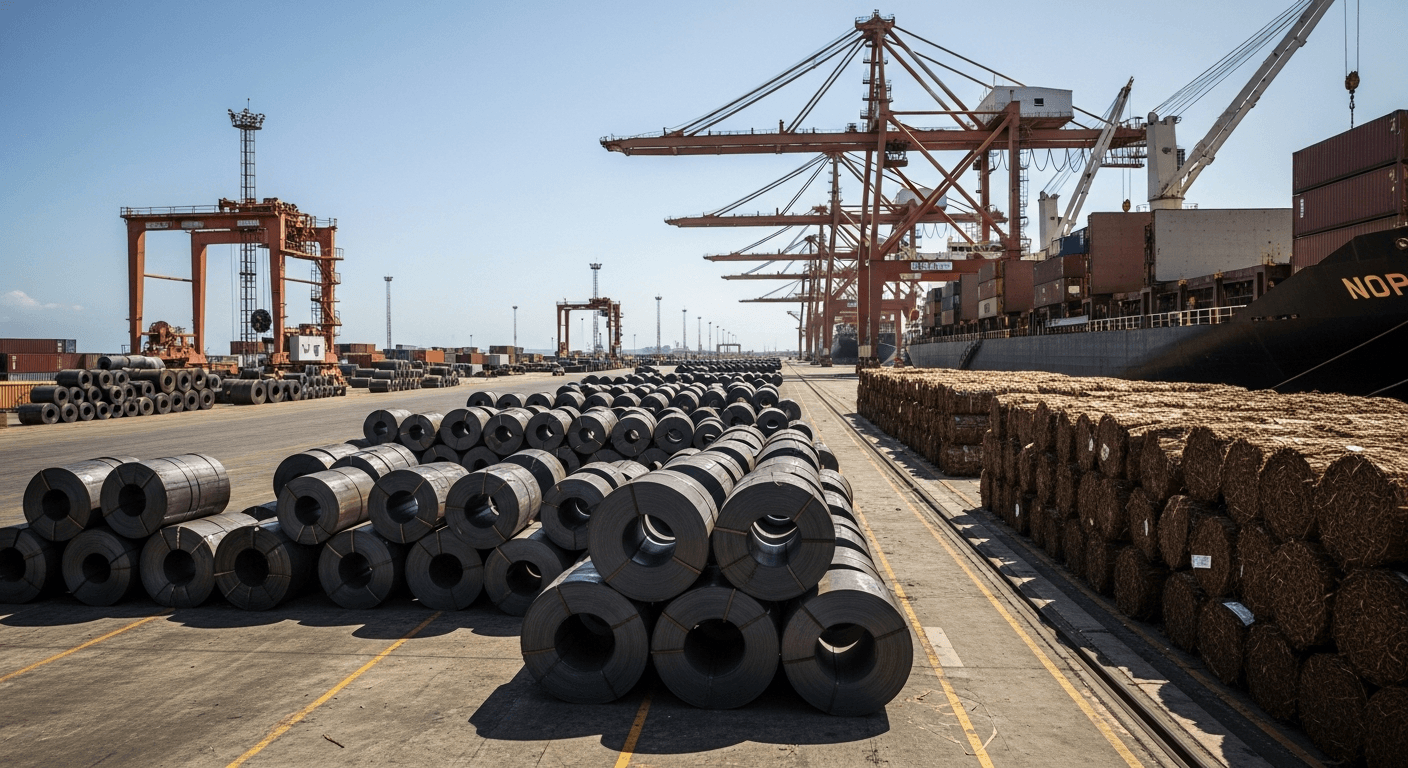
Brazilian exports to the United States plunged to a historical low of US$17.4 billion in the first half of 2026, marking a 13% decline from the same period in 2025, following the introduction of a new 25% US tariff on a range of Brazilian goods. The decrease has driven the US share of Brazil’s total exports down to 9.4%, the lowest figure recorded since 1997, confirming a major trade shift that creates risk for US-exposed manufacturers while solidifying Brazil’s pivot toward Asian and European markets. The decline was most pronounced in manufactured and semi-manufactured goods, including iron and steel products, wood pulp, and footwear, a trend exacerbated by the new duties that took effect in July.
The decline is a direct financial consequence of the "tarifaço," a broad 25% tariff imposed by the US under a Section 301 investigation citing unfair trade practices. This punitive measure directly impacts an estimated US$7.2 billion in Brazilian exports, threatening sectors that rely heavily on the US market. The industrial hubs of the South and Southeast are the most exposed: the states of Santa Catarina, São Paulo, and Rio Grande do Sul, which are major producers of affected goods like furniture, tires, machinery, and footwear, face reduced orders and operational cost increases. For example, the Federation of Industries of Santa Catarina estimates that over 80% of its products sent to the US market may suffer a direct commercial impact. This mechanism disproportionately affects Brazilian industrial exporters, as major commodities like beef, coffee, and crude oil were largely exempted.
Despite the contraction in North American trade, Brazil's overall global exports surged by 11.5% in the first half of 2026, reaching $184.8 billion. This counterbalancing growth was overwhelmingly driven by strong demand from China, which saw a 21.9% increase in its purchases from Brazil, alongside a major boost in shipments to the European Union. This trade diversification reinforces the growing influence of the BRICS partner, which already accounts for over a third of Brazil's total exports, and indicates that industrial exporters are already working to replace lost US demand with alternative markets in Asia and the EU. For every real lost in the US market due to the tariffs, Brazilian exporters gained more than six in new market revenue.
The US tariff action, while signaling geopolitical friction, has cemented a clear divergence between Brazil's commodity-driven giants and its US-exposed manufacturers. The Ibovespa index, as tracked by the Brazil ETF (EWZ), and the USD BRL currency pair will be sensitive to any further escalation or new US measures, especially with additional potential tariffs linked to a separate forced-labor probe remaining on the table. Investors should monitor trade data from the states of Santa Catarina and Rio Grande do Sul for the third quarter to gauge the full financial impact on industrial firms, while simultaneously watching for formal announcements on new trade deals with Asian partners as the primary indicator for future export revenue stability.
Related coverage
Politics · PRO
Brazil Supreme Court Moves to Impose Binding Fiscal Discipline on All Government Spending
Published
Politics · PRO
Brazil’s PPSA Schedules First Auction to Break Petrobras Gas Monopoly, Targeting 50% Price Cut for Industry
Published
Politics · PRO
Brazil’s Election Defined by Stark Fiscal Divide Over High Debt and 13.75% Interest Rate
Published