
Supreme Court Feud Over Justice Moraes’s Ties to Jailed Banker Overshadows Final Weeks of Brazil Election
Brazil's Supreme Federal Court is in crisis after a justice unsealed reports suggesting improper ties between Justice Alexandre de Moraes and a jailed banker, weeks before the October 4th general election.
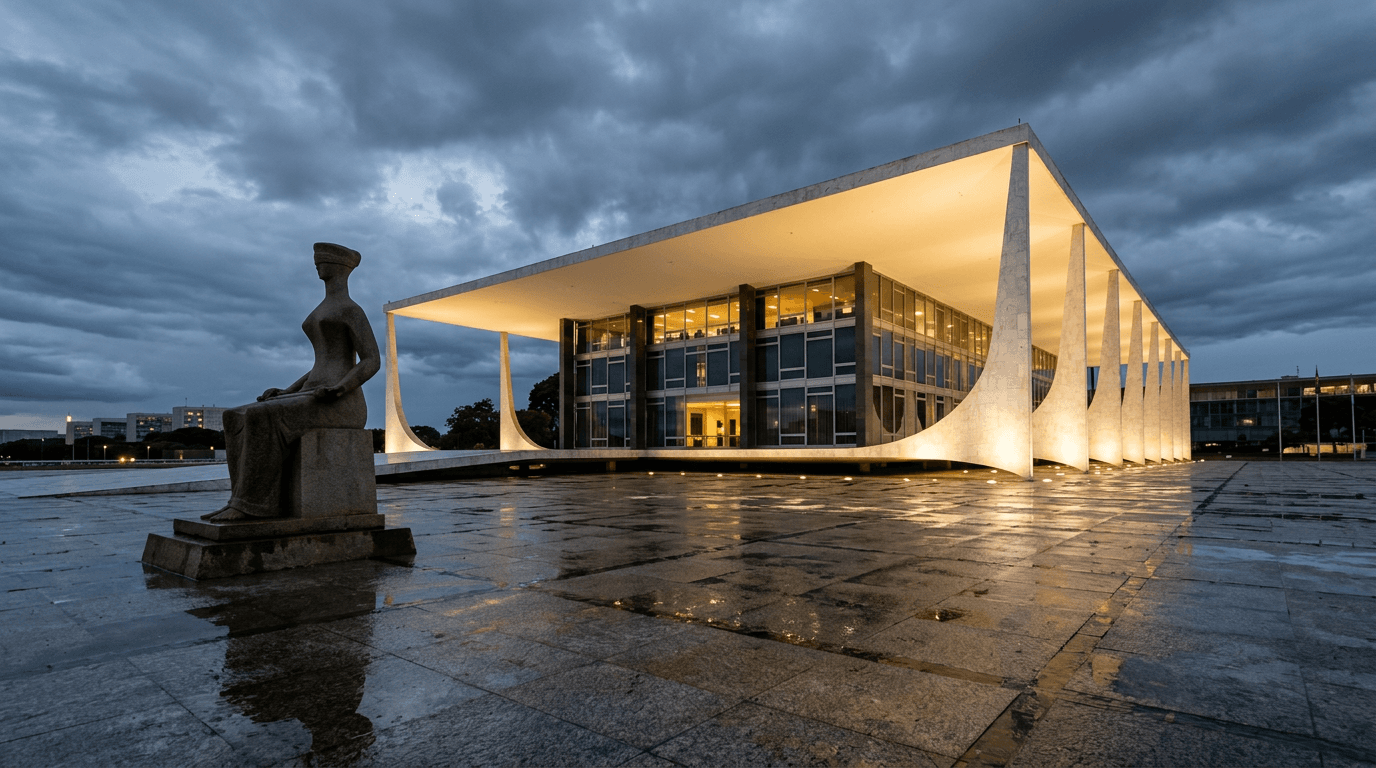
Brazil’s Supreme Federal Court (STF) is gripped by an intense institutional crisis, marked by a public feud between justices, that has injected major political uncertainty into the final weeks of the 2026 Brazil election campaign. The conflict centers on a police report suggesting highly irregular ties between Justice Alexandre de Moraes and Daniel Vorcaro, the former head of Banco Master who is currently jailed over a massive financial fraud scandal. The fallout is exposing deep internal division at the STF just weeks before voters head to the polls on October 4th to elect the president, Congress, and state governors.
The crisis began when Justice André Mendonça, a justice appointed by former President Jair Bolsonaro, unsealed a police report containing messages that allegedly show Vorcaro seeking legal guidance from Justice de Moraes shortly before the banker's arrest in November 2025. The investigation further revealed that a law firm led by Moraes’s wife held a substantial contract, reported to be worth R$131 million (approximately $25.5 million), with Banco Master. The internal response has been bitter and public, with justices openly trading accusations and the court canceling scheduled sessions as the feud paralyzes its work.
For an international audience, the crisis is amplified by the political identities of the figures involved. Justice de Moraes is the judge who notably oversaw the post-coup investigations that led to the conviction of former President Jair Bolsonaro, who was sentenced to 27 years in prison but is currently serving his term under house arrest due to failing health, a decision de Moraes granted in March 2026. The right-wing opposition, which has long accused Moraes of political overreach, has seized on the scandal, framing the integrity crisis as an institutional breakdown.
Senator Flávio Bolsonaro, the former president's son and a presidential candidate in the upcoming general election, is among the key opposition figures attempting to exploit the controversy. He has publicly demanded Moraes's impeachment and is seeking to link the judicial crisis to the incumbent government’s political adversaries, ensuring the instability at the STF remains a central talking point in the final push of the campaign.
The judicial turmoil culminated in a dramatic STF deliberation on Tuesday, September 15th, on whether to open an official investigation into Moraes’s conduct. The six-hour session, which was broadcast live, laid bare the deep factionalism of the court, featuring shouting matches between justices over procedural matters. The trial was ultimately suspended after Justice Flávio Dino requested a pedido de vista, or request for review, a procedural delay that typically grants up to 90 days for further analysis. This ensures the cloud of uncertainty over the court’s integrity and its most powerful justice will persist through the October 4th general election.
What it touches
The public clash between justices of the nation’s highest court on the cusp of a general election compounds Brazilian Sovereign Risk by raising the political temperature and increasing uncertainty around the strength and independence of democratic institutions. This non-monetary source of instability is a significant factor influencing how the market is “pricing in the election,” elevating institutional risk for investors assessing Brazil.
Related coverage
Politics · PRO
Lula Announces Welfare Hike, Free Weight-Loss Injections While Threatening to Ban Regulated Betting Ahead of Election
Published
Politics · PRO
Brazil's Sovereign Risk Hits Lowest Level Since Pre-Pandemic Era
Published
Politics · PRO
Brazil’s Tax Overhaul Forces Small Businesses to Decide on Cash Flow-Squeezing ‘Split Payment’ by Month’s End
Published