
São Paulo Candidates Exploit R$2.2 Million Digital Ad Loophole Before Official Campaign
Gubernatorial frontrunners Tarcísio de Freitas and Fernando Haddad used a digital ad loophole to spend R$2.2M before limits began.
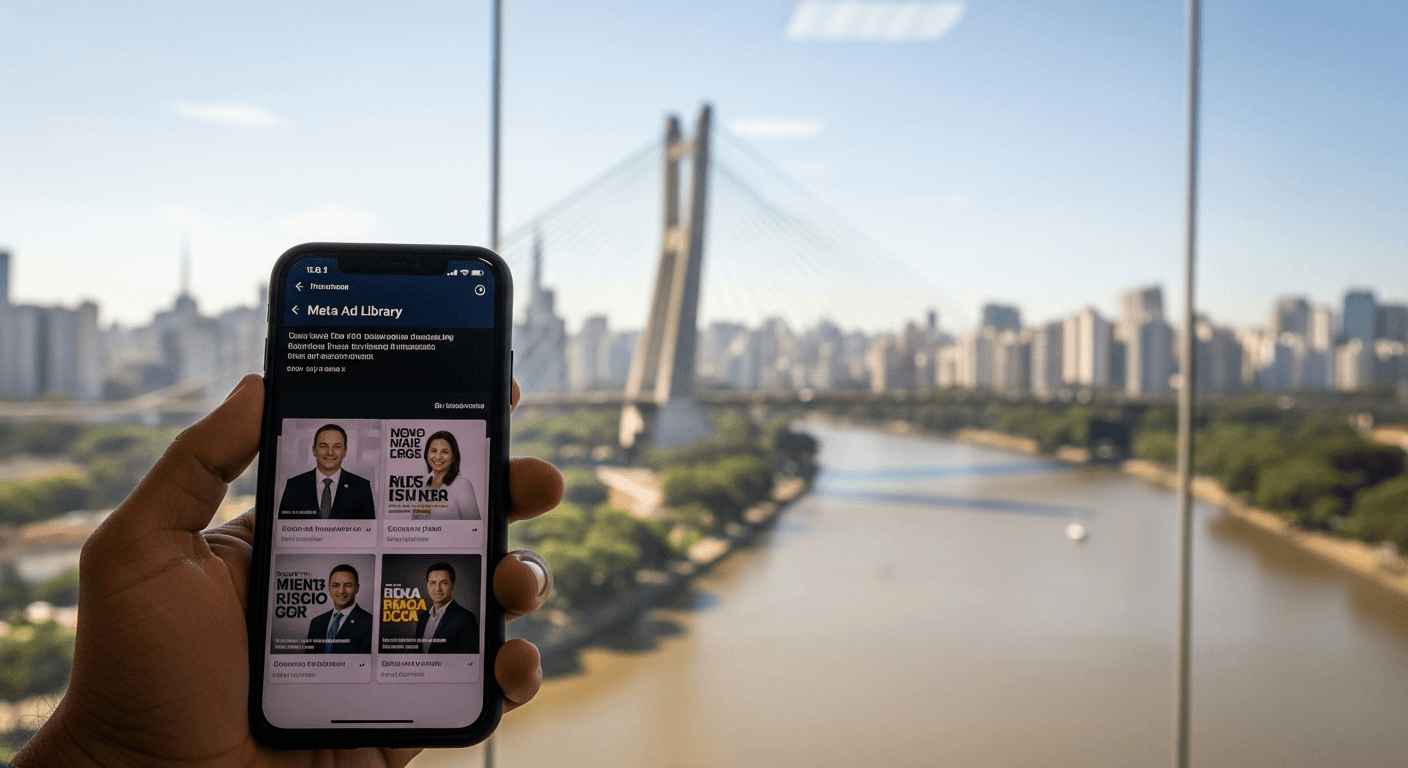
The leading candidates for governor in São Paulo, Brazil’s most populous state and economic engine, have leveraged a loophole in Brazil electoral law to spend at least R$2.2 million (about $423,000) on Facebook and Instagram ads before the official campaign period began. This massive “pre-campaign” outlay, which is not fully counted against strict spending limits, has raised concerns over campaign finance transparency ahead of October’s general election. Gubernatorial candidates Tarcísio de Freitas (Republicanos), the incumbent, and Fernando Haddad (PT), the former Mayor of São Paulo, utilized the strategy to establish their platforms through Meta’s platforms without drawing down on the official R$26.6 million spending cap for the first round of voting.
An analysis of the Meta ad spending library shows that the two frontrunners spent the combined amount in the months leading up to the official start of the campaign on August 16. Governor Tarcísio de Freitas had the largest minimum investment at R$1.18 million, while Fernando Haddad's campaign and related party ads accounted for at least R$1.02 million. This spending is permitted under Brazilian law, which defines a period where candidates can promote their names and general ideas without explicitly asking for votes. However, the sheer size of the spending raises questions about what constitutes "moderate" expenditure, as required by the Regional Electoral Court of São Paulo (TRE-SP).
The mechanism effectively bypasses the finance restrictions put in place after a 2015 reform banned corporate donations in an effort to curb political corruption. Since the pre-campaign spending does not count toward the official limit, it allows campaigns to front-load significant investments, gaining massive exposure—Tarcísio's ads, for instance, accumulated nearly 200 million views—before the formal spending rules take effect. Furthermore, a core issue for financial oversight is that the Meta Ad Library only releases data in broad ranges, meaning the R$2.2 million total represents only the minimum possible expenditure. This opacity hinders the Tribunal Superior Eleitoral (TSE), Brazil's top electoral court, from conducting full and transparent financial oversight, as the actual investment could be significantly higher.
The next major point of friction over campaign finance will be the official rendering of accounts, where the campaigns are expected to detail all their spending. While pre-campaign expenditures are technically excluded from the campaign spending limits, the massive investment now made public will likely draw scrutiny from the Federal Public Ministry and political rivals who may argue the spending went beyond "moderate" limits or constituted illicit early campaigning. A decisive ruling by the TSE on the classification and accountability of this high-volume digital pre-campaign spending is the key factor to watch as the election cycle progresses, as it will determine if the loophole can be sustained in future elections.
What it touches The exposure of a significant loophole in campaign finance introduces non-market political risk to the Brazilian investment environment, particularly for sectors highly exposed to government contracts and regulatory changes. Governance risk remains a factor for foreign investors tracking the Brazilian politics landscape, as campaign funding and transparency issues can directly impact the perceived stability and fairness of the country's democratic institutions.
Related coverage
Politics · PRO
Brazil Supreme Court Moves to Impose Binding Fiscal Discipline on All Government Spending
Published
Politics · PRO
Brazil’s PPSA Schedules First Auction to Break Petrobras Gas Monopoly, Targeting 50% Price Cut for Industry
Published
Politics · PRO
Brazil’s Election Defined by Stark Fiscal Divide Over High Debt and 13.75% Interest Rate
Published