
Net Negative Lula Approval Rating Heightens Risk to Brazil Fiscal Framework, Weighing on IBOV
President Lula's disapproval reached 49% against 47% approval in the latest BTG/Nexus poll, indicating political headwinds for crucial fiscal reform.
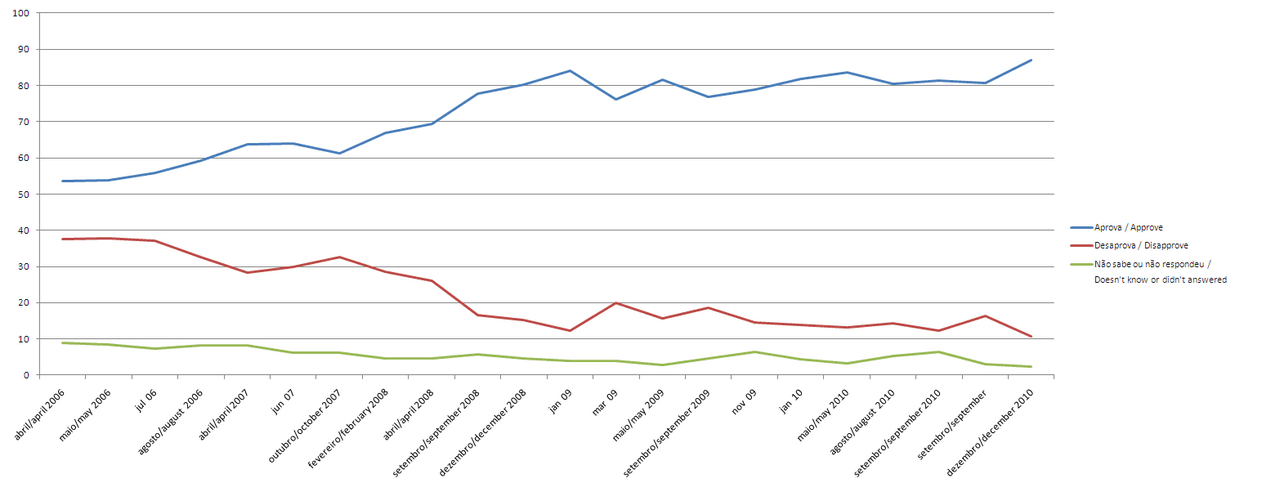
President Luiz Inácio Lula da Silva’s disapproval rating numerically exceeded his approval for the first time in the current series, according to a BTG/Nexus poll conducted between July 24 and July 26, signaling a significant headwind for the government's fiscal agenda. The survey found that 49% of voters disapprove of the President’s administration, compared to 47% who approve. Although the 2-point difference falls within the 2-percentage-point margin of error, the net negative sentiment indicates that the government's political capital is waning just as it needs consistent congressional backing to maintain its new fiscal framework.
The erosion of political support poses a direct risk to fiscal continuity and market confidence. The mechanism is clear: a President with weakened political leverage faces a harder task securing the votes needed for necessary, often unpopular, austerity measures or spending controls required by the fiscal framework. Investors view the government's ability to maintain fiscal discipline as critical, given that Brazil’s high public debt remains a central concern, with some projections showing it rising above 80% of GDP. International institutions have recently warned that a weaker-than-envisaged fiscal effort could increase uncertainty, fuel inflationary pressures, and lead to higher borrowing costs, ultimately undermining growth forecasts.
For foreign investors tracking the Brazilian market, the political friction translates directly into a higher risk premium across assets like the Ibovespa (IBOV) and the Brazilian Real (BRL). The benchmark IBOV, currently trading around 174,041.95, and the USD/BRL rate, hovering near 5.0860, are both highly sensitive to political uncertainty and doubts over the government's commitment to fiscal anchor. Brazil ETFs and BDRs will likely remain volatile as the government approaches the October 2026 general elections, a period that historically pressures public spending and intensifies market scrutiny of fiscal performance.
The immediate focus for investors will be any near-term congressional votes on revenue-generating or expenditure-limiting measures, as well as the government's response to the sustained negative political sentiment. The political challenge is now to convert a statistical tie into a clear majority for its economic program, or risk the market pricing in continued policy drift and a greater probability of the fiscal framework failing to meet its targets, driving up inflation expectations and potentially delaying any further interest rate cuts by the Central Bank.
Related coverage
Politics · PRO
Brazil Supreme Court Moves to Impose Binding Fiscal Discipline on All Government Spending
Published
Politics · PRO
Brazil’s PPSA Schedules First Auction to Break Petrobras Gas Monopoly, Targeting 50% Price Cut for Industry
Published
Politics · PRO
Brazil’s Election Defined by Stark Fiscal Divide Over High Debt and 13.75% Interest Rate
Published