
Flávio Bolsonaro Leads Lula in First Round, Triggering Market Rally
Right-wing Senator Flávio Bolsonaro secured a surprise first-round lead over President Lula, reshaping Brazil's presidential race and boosting local assets.
In a stunning upset that has reshaped the landscape of Brazilian politics, right-wing Senator Flávio Bolsonaro secured the lead in the first round of Brazil’s presidential election on Sunday, October 4, 2026. The unexpected performance by the eldest son of former President Jair Bolsonaro has forced a highly competitive runoff against the incumbent, leftist President Luiz Inácio Lula da Silva, scheduled for October 25, 2026.
According to official results from the Tribunal Superior Eleitoral, Flávio Bolsonaro of the Liberal Party (PL) finished the first round with 47.03% of the valid votes, representing 56.1 million ballots. President Lula of the Workers' Party (PT) trailed closely with 45.16%, or 53.8 million votes. The narrow margin of less than two percentage points marks the tightest first-round presidential contest in Brazil since the country's return to democracy in 1989, defying final pre-election polls that had consistently placed Lula in the lead.
The result represents a significant political milestone for the Bolsonaro dynasty. By capturing 56.1 million votes, the 45-year-old senator surpassed the first-round vote tallies achieved by his father in both his victorious 2018 campaign and his unsuccessful 2022 re-election bid. Analysts point to Flávio’s surprising inroads in the Northeast, a traditional stronghold for Lula’s PT, and his victories in key states like Minas Gerais as the primary drivers of his strong performance.
The political momentum has shifted rapidly ahead of the October 25 runoff. While Lula must now defend his administration's economic record and consolidate support from centrist factions, Flávio Bolsonaro enters the final three weeks of the campaign with newfound status as the frontrunner. The outcome of this race will dictate the direction of Latin America's largest economy, particularly regarding fiscal policy, state-owned enterprises, and environmental regulations.
What it touches
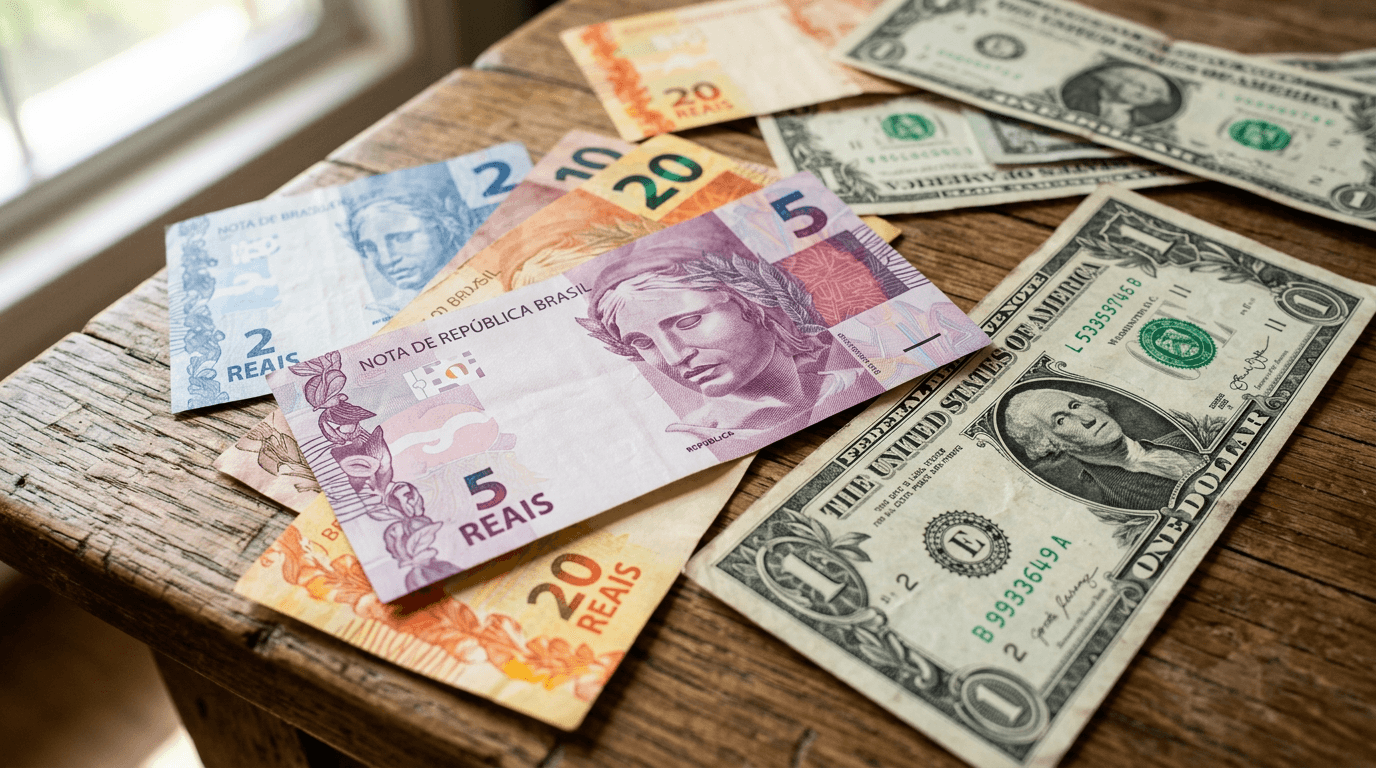
The surprise election results triggered a massive rally in Brazilian financial markets on Monday morning, reflecting investor optimism over a potential shift toward more market-friendly economic policies. The Brazilian Real surged over 4%, pushing the US Dollar below the R$ 5.00 threshold to trade at R$ 4.97, while the benchmark Ibovespa stock index rallied strongly toward the 200,000-point milestone. This sudden repricing of Brazilian risk assets directly impacts US-listed instruments tied to the country's economy, most notably the iShares MSCI Brazil ETF (EWZ), alongside major American Depositary Receipts (ADRs) of state-controlled entities like Petrobras (PBR) and Eletrobras (EBR), which are highly sensitive to shifts in federal leadership.