
Brazil’s TCU Clears R$1.06 Billion Santos Port Auction Linked to Minister’s Family, Overruling Own Judge
Brazil’s powerful Federal Court of Accounts (TCU) has authorized a controversial R$1.06 billion Santos Port logistics contract.
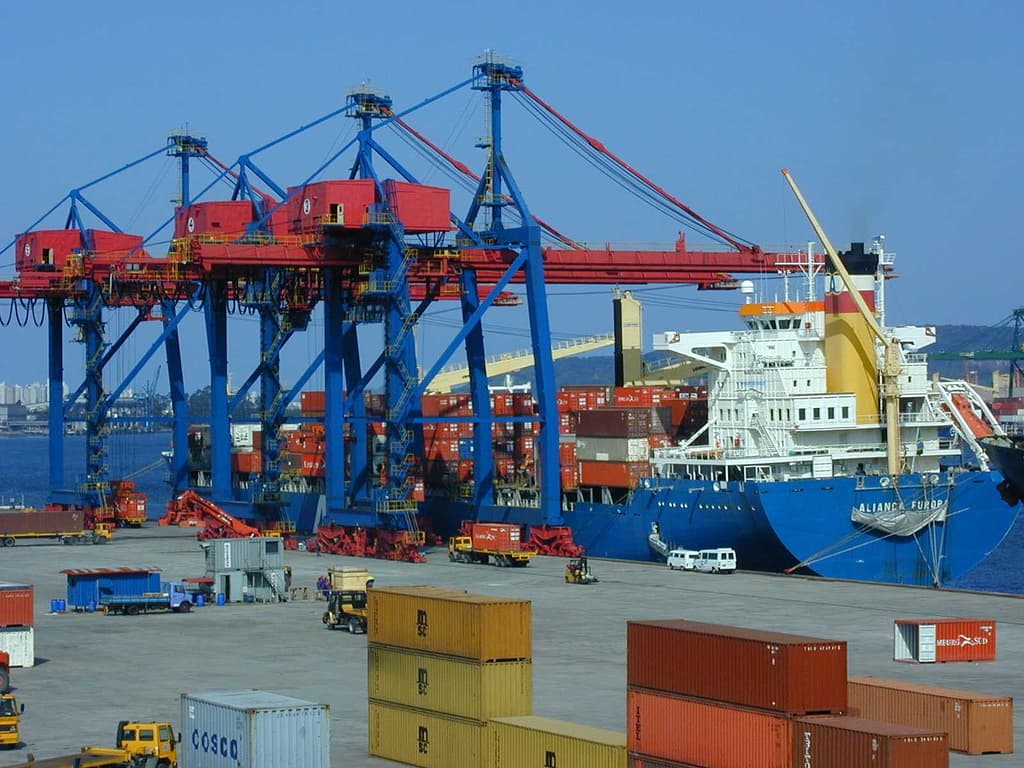
The Federal Court of Accounts (TCU), Brazil’s powerful federal audit court, voted on Wednesday to overturn an injunction that had suspended a controversial R$1.06 billion auction for a logistics area at the Port of Santos, clearing the critical infrastructure project to move forward. The project, which involves the 20-year operation of a 242,000 square-meter truck patio and logistical support area at South America’s largest port, had been under a provisional suspension due to ethical concerns stemming from the winner’s ties to a sitting TCU Minister.
The winning bid was secured by the Portolog Consortium, whose principals include the wife, father-in-law, and brother-in-law of TCU Minister Bruno Dantas. The controversy had cast a shadow over the auction for months, prompting opposition parliamentarians to petition the audit court to intervene. While Minister Dantas declared himself legally "impeded" and did not participate in the final vote, the close family ties to the winning consortium were at the center of the regulatory battle.
The temporary suspension was granted by TCU Minister Augusto Nardes, who cited "serious evidence of irregularities" and the risk of blocking "vital areas" of the port for 20 years. A core technical complaint was that the structure of the R$1.06 billion bid was designed to avoid required prior review by the National Waterway Agency (Antaq). However, the full TCU plenary overruled Minister Nardes’s action. The deciding vote followed the dissenting opinion of the court's dean, Minister Walton Alencar, who stated that an Antaq analysis had been performed and ultimately concluded that the process was legal.
The final ruling substantially reduces the short-term regulatory uncertainty surrounding the key port project. While the plenary's decision allows the contract to be executed, the episode underscored the judicial-political tension within the Federal Court of Accounts, exposing a rare instance of public disagreement between ministers over a case involving high-value infrastructure and close family ties to the court itself. For the Brazilian government, the ruling signals that large-scale port concessions, particularly those necessary for the massive flow of Brazilian commodities, can proceed despite political scrutiny.
What it touches The removal of the TCU injunction is viewed as a positive regulatory signal for the Ports and Logistics sector in Brazil, especially for the Portolog Consortium and its partners. The decision reduces perceived political risk on multi-decade, high-value infrastructure contracts, which is a factor closely watched by international funds that invest in the country’s infrastructure and associated assets.
Related coverage
Politics · PRO
Brazil Supreme Court Moves to Impose Binding Fiscal Discipline on All Government Spending
Published
Politics · PRO
Brazil’s PPSA Schedules First Auction to Break Petrobras Gas Monopoly, Targeting 50% Price Cut for Industry
Published
Politics · PRO
Brazil’s Election Defined by Stark Fiscal Divide Over High Debt and 13.75% Interest Rate
Published