
Brazil Supreme Court Postponement Turns Corruption Crisis Into Key Election Flashpoint
Brazil’s Supreme Court deferred a decision on a corruption probe into Justice Alexandre de Moraes until after the October election, injecting institutional crisis into the tight Lula-Bolsonaro race.
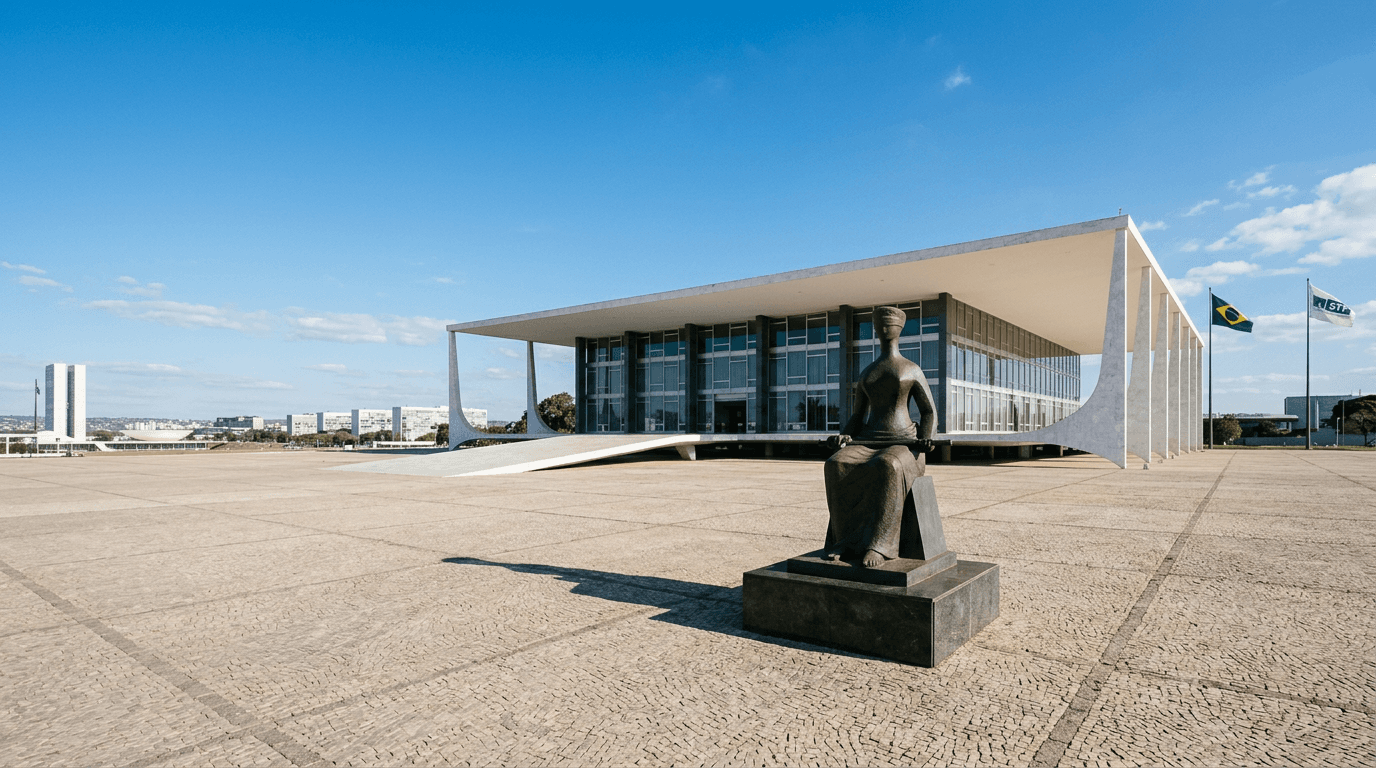
Brazil’s Supreme Federal Court (STF) has postponed a decision on whether to investigate Justice Alexandre de Moraes for alleged corruption until mid-December, effectively ensuring that an institutional crisis at the highest court will remain a flashpoint in the country’s tight October presidential election. The STF’s decision, made public earlier this week, followed a request by Justice Flávio Dino to review the case, delaying a resolution until well after the October 4th first-round vote.
The central figure in the controversy, Justice Moraes, is a prominent and often politically charged figure on the 11-member STF, which is Brazil’s highest constitutional court. Moraes gained national recognition by leading the investigation that resulted in the conviction of former President Jair Bolsonaro for anti-democratic actions last year. The current controversy stems from a federal police report that alleged undisclosed communications between Moraes and the jailed owner of the collapsed Banco Master, Daniel Vorcaro, as well as a $24 million consulting contract the bank held with a law firm owned by the Justice's wife.
The crisis has been swiftly leveraged as a political weapon by the right-wing opposition. Senator Flávio Bolsonaro, the former president’s son and a candidate in the increasingly tight presidential race against incumbent President Luiz Inácio Lula da Silva, has used the probe to attack the court and the sitting government. Flávio Bolsonaro has repeatedly sought to tie Lula to Moraes in campaign rhetoric, framing the justice as an agent of the left. Ironically, Senator Bolsonaro is himself implicated in the broader Banco Master corruption case, where he is under investigation for alleged money laundering linked to the bank's former owner.
By deferring the investigation, the STF has removed the immediate risk of further institutional chaos, but it has not resolved the underlying political issue. The postponement ensures the corruption allegations against the powerful justice will continue to cast a shadow over the final weeks of the campaign, where polls show a statistical dead heat between Lula and Flávio Bolsonaro. The electoral outcome now holds significant sway over the future of the court, as the next president will have the power to appoint justices, potentially reshaping the ideological balance of the STF.
What it touches
The institutional instability and the tightening election race are now considered the principal drivers of Brazilian financial assets, overshadowing domestic economic data and global trends. The market is reportedly pricing in a change of political power, with investors betting on a future administration that will pursue stronger fiscal adjustment measures. This expectation has coincided with a rally in the benchmark stock index, the Ibovespa, and a drop in long-term interest rate futures (DI), as the perceived likelihood of a more fiscally conservative government has reduced future inflation and long-term risk premiums.
Related coverage
Politics · PRO
Independent Senate Body Projects R$86 Billion Deficit for Brazil's 2027 Budget
Published
Politics · PRO
Brazilian Congress Advances Risk-Based Bill to Regulate AI, Setting Strict New Compliance Rules for Tech
Published
Politics
Brazil Supreme Court Delays Key Clean Slate Law Ruling That Could Benefit Ineligible Politicians
Published