
Brazil Supreme Court Institutional Feud Escalates, Threatening Judicial Stability and Risk Premium
A high-profile internal conflict between Justices Alexandre de Moraes and André Mendonça over leaked messages with former banker Daniel Vorcaro is creating an institutional crisis at the STF ahead of a key vote.
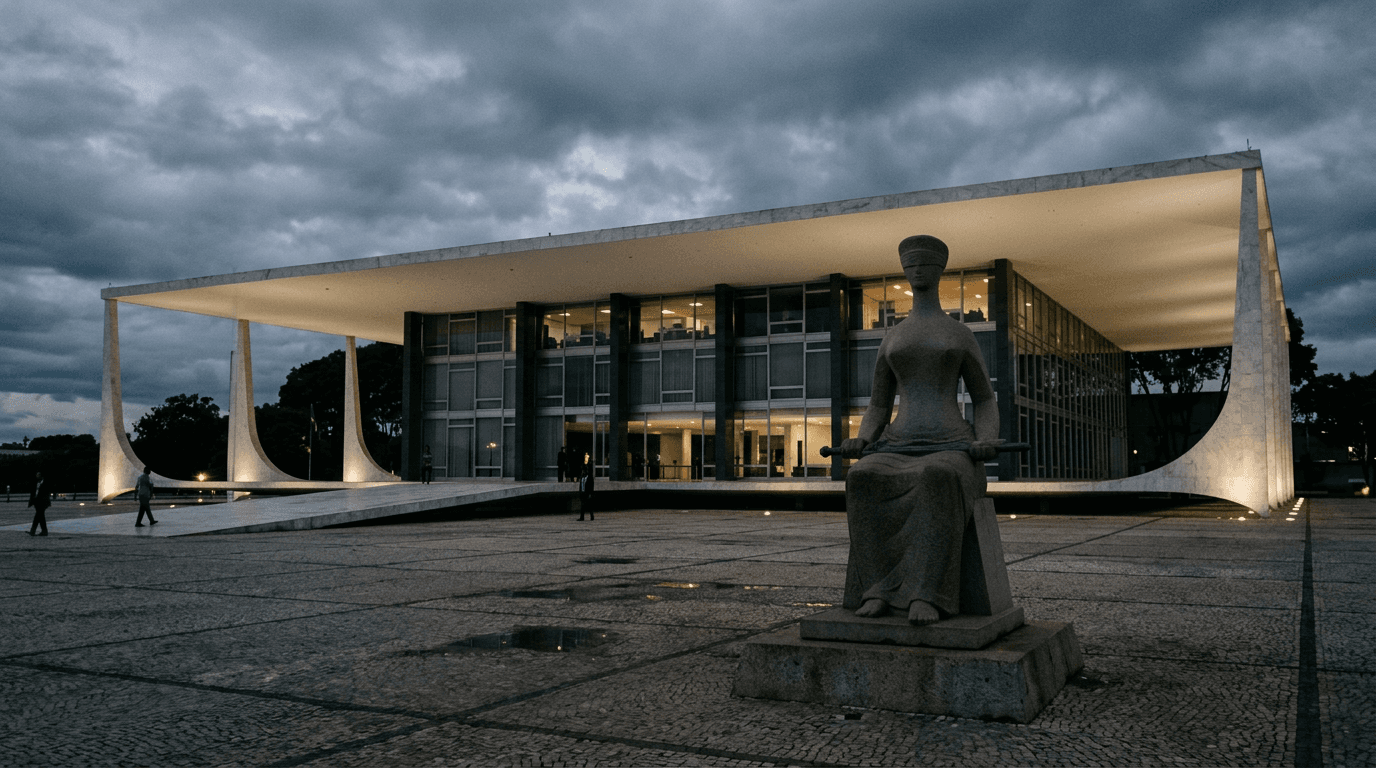
The institutional stability of Brazil’s highest court is under intense strain as an open feud between two key Justices of the Supreme Federal Court (STF) over allegations of influence-peddling threatens to undermine judicial security and increase the country’s risk premium. The crisis centers on a high-profile dispute between Justice Alexandre de Moraes, one of the court’s most powerful members, and Justice André Mendonça, the rapporteur who decided to release a confidential Federal Police report detailing messages between Moraes and former banker Daniel Vorcaro, who was later arrested in a fraud investigation. The STF is scheduled to vote next week on whether to investigate or archive the messages, with the outcome poised to shape the credibility of the entire body.
The STF serves a critical role as both Brazil’s constitutional court and the court of original jurisdiction for investigations involving top government officials, including its own members. The released Federal Police report contains material extracted from Vorcaro’s seized phone, which showed a series of interactions with an interlocutor suspected to be Justice Moraes. The messages suggest a high degree of access, with Vorcaro, the former controlling shareholder of Banco Master, allegedly seeking advice or assistance from Moraes in the run-up to his arrest, and even asking if he should leave the country. More politically explosive is the revelation that Vorcaro's bank had signed a contract worth over R$130 million with a law firm run by Moraes’ wife, raising immediate questions of conflict of interest.
The public confrontation began when Justice Mendonça—an appointee of former President Jair Bolsonaro—unsealed the police report detailing the interactions. Justice Moraes responded by requesting that the STF’s President, Edson Fachin, open a simultaneous investigation into Mendonça, effectively turning the spotlight onto his colleague and accuser. The core legal question now facing the full court is whether the evidence collected from Vorcaro's phone is admissible, with Moraes's legal team arguing the chain of custody was broken and the messages should be invalidated, potentially protecting him from a deeper investigation.
This dramatic internal conflict has significant consequences beyond the walls of the court. Analysts warn that the perception of institutional instability and high-level judicial score-settling erodes public trust in the rule of law, a key determinant of a country's investment climate. The ongoing dispute, involving a powerful bank executive and a top justice, suggests that political outcomes in Brazil can be shaped by judicial brinkmanship, which is cited by some analysts as a factor contributing to recent negative market movements.
The immediate focus is on the STF’s full plenary session, which is scheduled for the coming Tuesday (September 15). The court's President, Justice Fachin, must decide whether to proceed with the scheduled discussion on the Vorcaro messages or to accept Moraes’s request to simultaneously review Mendonça’s conduct, which could further delay a definitive decision on the core allegations.
What it touches
The instability at the Supreme Federal Court is directly linked to the country’s institutional risk premium. The perceived lack of judicial security and the breakdown of collegiality among the highest court’s members increase the cost of capital for Brazilian companies, as institutional investors price in the heightened governance risk. This structural uncertainty can weigh on Brazilian assets, including local equities traded on the B3 and the Brazilian currency, the Real (BRL).