
Brazil Supreme Court Feud Over 'Caso Master' Eviscerates Judicial Credibility
The public clash between two top judges in Brazil's Supreme Federal Court over a corruption case is seen by analysts as a crisis of politicization that is raising Brazil’s country risk premium.
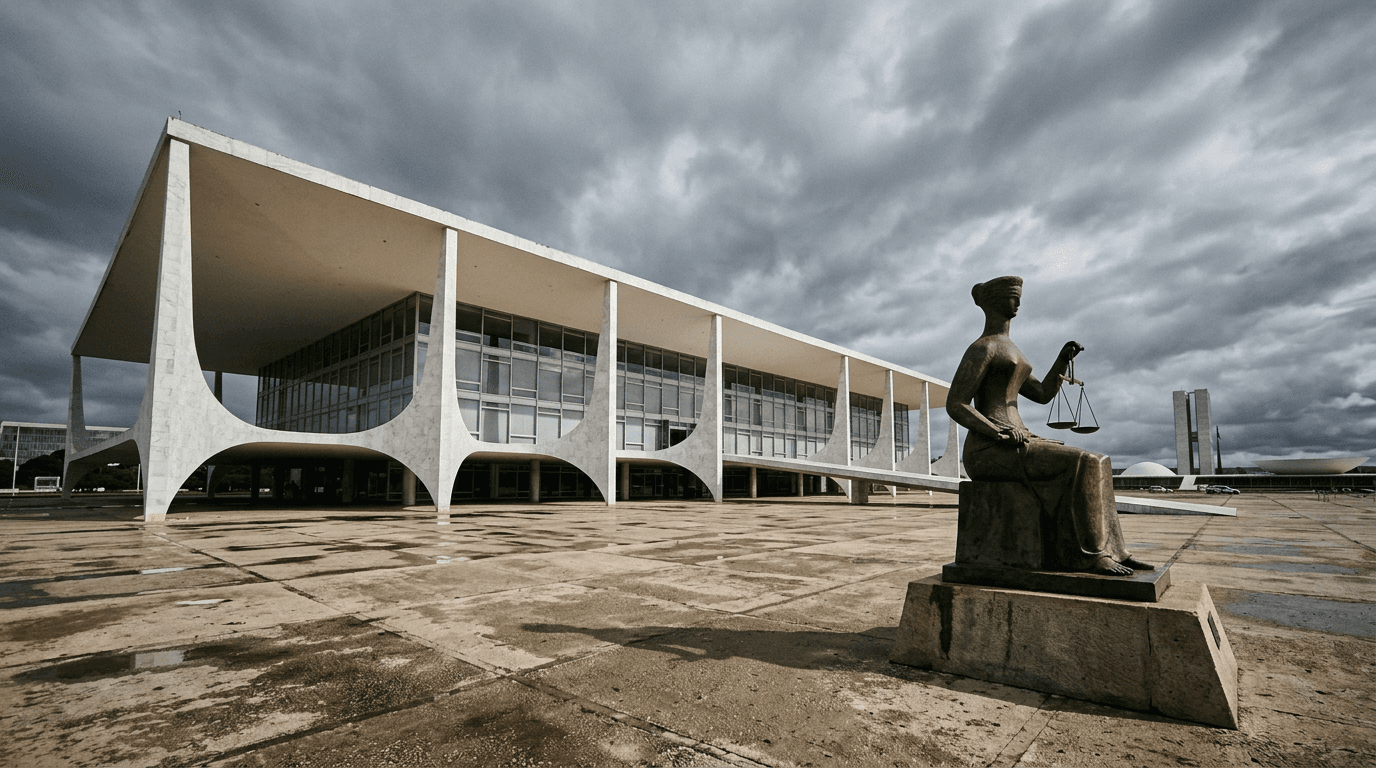
A bitter and unprecedented public feud between two key Justices on Brazil’s Supreme Federal Court (STF), Alexandre de Moraes and André Mendonça, has exposed a profound institutional crisis, significantly escalating political and regulatory uncertainty just weeks before a critical national election. The clash stems from the ongoing Caso Master investigation into massive financial fraud at Banco Master, which has now fully ensnared the nation’s highest judicial body.
The conflict centers on accusations of abuse of authority and political bias, confirming long-held fears about the politicization of the country’s judiciary. Justice Mendonça, a nominee of former President Jair Bolsonaro, and Justice Moraes, a powerful figure seen as a major adversary of the Bolsonaro movement, have both filed requests to investigate the other. Mendonça accuses Moraes of using privileged police reports to orchestrate an investigation against him. In turn, Moraes's request came after Mendonça released police documents suggesting Moraes had an undue, close relationship with the former head of the bank under investigation, Daniel Vorcaro, whose wife had a multi-million-reais contract with the bank.
Analysts warn that the spectacle of high-ranking justices—tasked with safeguarding the rule of law—weaponizing investigations against one another is "deteriorating" the STF's credibility. The court's role as the final arbiter of law and elections (where Moraes heads the Superior Electoral Court, or TSE) is being jeopardized by a perceived "fight for power." This public breakdown in legal impartiality is creating legal uncertainty, a primary concern for international businesses operating in the country.
The loss of faith in judicial stability is translating into a tangible economic risk. Analysts note that the institutional tension elevates Brazil’s political risk premium, which directly affects the cost of capital and investment decisions. The American business community and foreign investors have repeatedly warned that a loss of credibility in the judiciary could hinder foreign direct investment and delay Brazil’s economic recovery, citing the country's already challenging regulatory environment.
The current crisis is deeply entwined with the looming presidential election, with both sides of the political spectrum now attempting to use the scandal for electoral gain. With the court divided and under immense pressure, the resolution of the conflict is widely expected to be delayed until after the ballot, making the election’s outcome a determinant factor for the future institutional balance of the STF.
What it touches
The increased institutional uncertainty directly impacts Brazil’s sovereign credit default swap (CDS) spreads, a key measure of the country risk premium. Furthermore, companies in highly-regulated sectors like banking, infrastructure, and oil and gas—where regulatory and judicial predictability is essential for long-term project viability—face an added layer of regulatory risk and potential for policy discontinuity.
Related coverage
Politics
Brazil Central Bank Cuts 2026 GDP Forecast After Lula Boosts Social Spending
Published
Politics · PRO
Gold Laundering Scheme Worth $2 Billion Evades Brazil’s Amazon Mining Crackdown
Published
Politics · PRO
Unprecedented Judicial Infighting at Brazil's Supreme Court Raises Institutional Risk
Published