
Brazil Supreme Court Crisis Deepens Over Corruption Allegations and Judicial Feud
An unprecedented conflict within Brazil's Supreme Court over a massive banking scandal is fueling concerns from political risk analysts about institutional degradation.
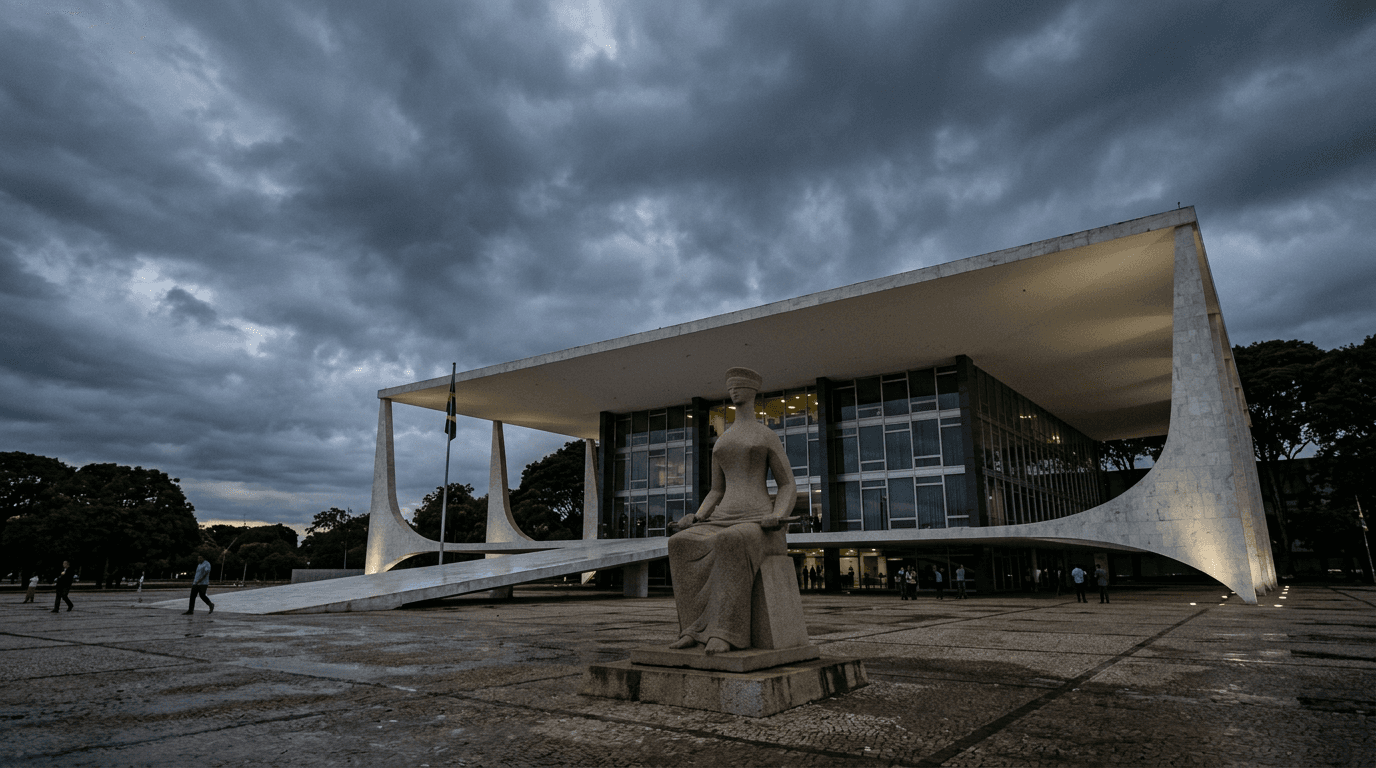
Brazil’s Supreme Federal Court (STF) is facing its most acute internal crisis in decades, as an unprecedented feud between two justices, fueled by corruption allegations in a massive banking scandal, has led political risk analysts to warn of institutional degradation. The crisis centers on the collapse of Banco Master and revelations of improper ties between its former owner, Daniel Vorcaro, and high-ranking members of the court, shaking investor confidence in the country’s rule of law.
The conflict pits Justice Alexandre de Moraes, who has become the court's most powerful figure through his oversight of high-profile political investigations, against Justice André Mendonça, a former pastor appointed by former president Jair Bolsonaro. Mendonça made public a Federal Police report drawn from Vorcaro's seized phone, which alleged 187 compromising interactions and revealed that a legal firm belonging to Moraes's wife had a R$131 million (~$25 million) contract with Banco Master. Moraes, in turn, has accused Mendonça of abuse of authority and acting with political motivation to favor opposition figures, turning the STF's public session this week into an angry exchange of accusations.
The scandal’s reach extends across the court's leadership. Separately, another prominent Justice, Gilmar Mendes, was revealed to have met with Vorcaro to discuss a "billion-dollar agenda" concerning precatórios, which are court-recognized government debts, in a dispute over up to R$145 billion. Vorcaro’s bank had a direct financial interest in the outcome of these cases, raising serious questions about the influence of financial interests on the judiciary.
President Luiz Inácio Lula da Silva has been forced to "dive" into the crisis, telling allies that the recent Supreme Court session was a "show of horrors". While seeking to distance the executive branch from the feud, Lula has publicly defended the need for a profound discussion on judicial reform in the coming year, echoing calls from the political opposition. In a separate, unrelated case, Mendonça, acting as the assigned justice, this week dismissed a legal challenge from the opposition against an election-year 15% increase to the crucial Bolsa Família social program, doing so on procedural grounds.
The immediate outcome of the crisis remains uncertain. In the most recent session, the justices failed to resolve the core issue of whether to investigate Moraes, as the court became consumed by a procedural debate over consolidating the separate investigation requests against both Moraes and Mendonça. The lack of a clear, unified institutional response has intensified international concern about the court's ability to police itself and safeguard the country's institutional stability.
What it touches
The turmoil in the highest court adds a layer of uncertainty to Brazil's country risk profile. The appearance of conflicts of interest and politicization within the Supreme Court erodes trust in the judicial system's independence, which is a core component for long-term capital allocation and general investment, signaling a higher institutional risk for foreign investors.
Related coverage
Politics · PRO
Lula’s R$691 Welfare Hike Faces Constitutional Showdown as Audit Court Prosecutor Seeks Suspension
Published
Politics · PRO
Lula Links New Equatorial Margin Oil Frontier to Sovereignty, Warning of US Interest
Published
Politics
High-Profile São Paulo Politician Milton Leite Surrenders in PCC Organized Crime Probe
Published