
Banco Master Scandal Upends Lula-Flávio Bolsonaro Presidential Race
A massive banking fraud scandal has eroded President Lula's polling lead by entangling key institutional allies, turning the 2026 race into a statistical tie.
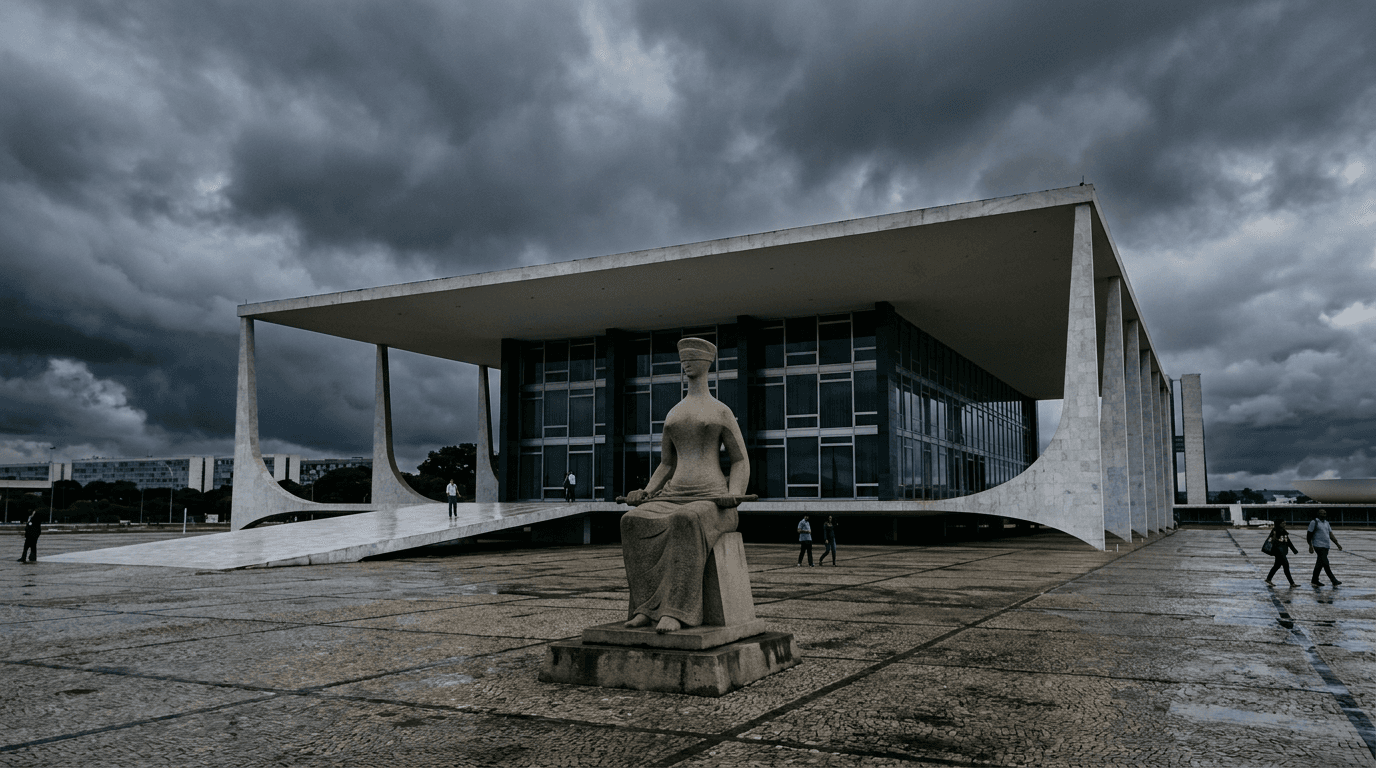
A massive financial and judicial scandal has severely disrupted the final stretch of Brazil's 2026 presidential campaign, dragging in major political figures and eroding the polling lead of incumbent President Luiz Inácio Lula da Silva. What began as the liquidation of a mid-sized lender has evolved into a sweeping institutional crisis that has turned a once-predictable race between Lula and right-wing Senator Flávio Bolsonaro into a statistical tie.
According to a Datafolha survey released on October 1, 2026, Lula holds a slim 45% to 40% lead over Flávio Bolsonaro in first-round valid votes. More critically for the incumbent, a simulated head-to-head runoff shows the two candidates in a statistical tie, with Lula holding a narrow 48% to 45% margin, down from much wider leads earlier in the year. The narrowing of the brazil election polls comes as the fallout from the "Banco Master" corruption scandal continues to widen.
The crisis erupted after Brazil's Central Bank liquidated Banco Master in late 2025 following a major funding squeeze, leading to a massive 47.3 billion reais ($9.5 billion) payout from the country's Credit Guarantee Fund (FGC). The bank's owner, Daniel Vorcaro, was subsequently arrested and accused of running a multibillion-dollar fraud scheme. Investigators allege that Vorcaro protected his operations by cultivating an extensive network of influence among Brasília's political and judicial elite.
A Court Divided and a Campaign Derailed
The scandal has recently damaged Lula's campaign due to allegations involving Supreme Court Justice Alexandre de Moraes, who is widely viewed as a key institutional ally of the current government. Leaked messages and documents released by a rival justice, André Mendonça, purported to show Vorcaro seeking legal advice from Moraes, as well as a multimillion-dollar legal contract between Banco Master and a law firm run by the justice's wife. Moraes has strongly denied any wrongdoing, calling the leaks an "incriminating farce" designed for political and electoral purposes.
However, the scandal has also touched the opposition. Flávio Bolsonaro—the son of former President Jair Bolsonaro—has faced intense scrutiny over leaked audio in which he allegedly requested financial backing from Vorcaro to fund a promotional film about his father. While Lula has seized on these revelations to attack the Bolsonaro family as a "gang," the overarching narrative of systemic corruption has deeply disillusioned voters and weakened the president's anti-corruption credentials.
With the brazil election scheduled for October 4, 2026, the political risk surrounding the vote has intensified. The deep division within the Supreme Court and the weaponization of judicial leaks have fueled concerns over institutional stability. Whichever candidate triumphs in the likely second-round runoff will inherit a highly polarized nation and a judiciary facing its worst credibility crisis since the historic Lava Jato investigations.
What it touches
The ongoing political volatility and institutional friction have direct implications for Brazilian financial markets, particularly the MSCI Brazil ETF (EWZ), which tracks the country's largest publicly traded equities. Heightened political risk ahead of the runoff election, combined with the unprecedented multi-billion dollar strain on the local financial system from the Banco Master liquidation, has kept international investors cautious, weighing on state-controlled firms and major financial institutions.