Why soybean traders are ignoring a massive South American harvest
Speculative traders in Chicago hold deep net-long soybean positions despite rapid planting progress and projected record production in Brazil.
Speculative traders in Chicago are doubling down on bullish agricultural bets, even as the physical supply of grain prepares to expand. According to the U.S. Commodity Futures Trading Commission (CFTC), non-commercial traders held a deep net-long position of 246,596 contracts in Chicago Board of Trade soybean futures as of October 20, 2026 brznews.com. The weekly Commitments of Traders report showed long positions at 330,528 contracts compared to 83,932 short contracts, out of a total market open interest of 1,093,612 contracts brznews.com.
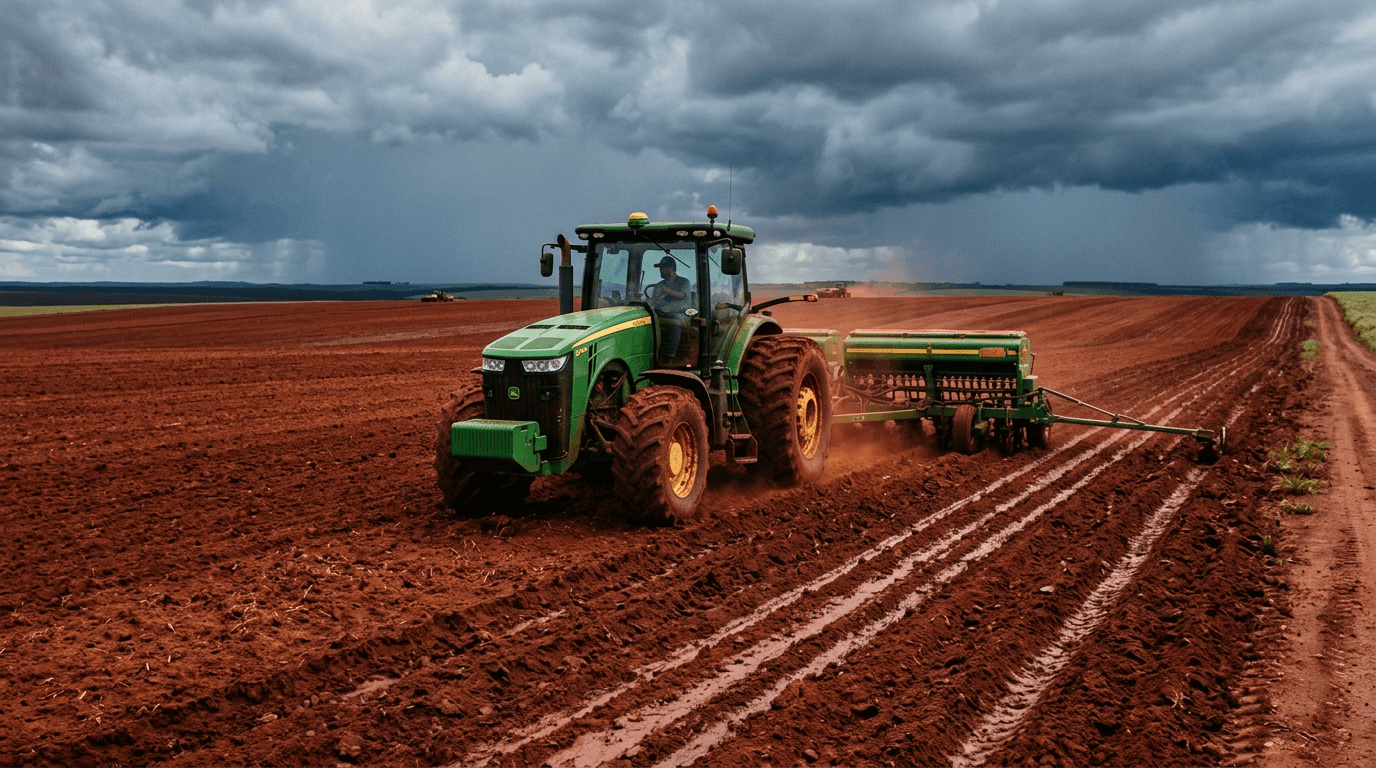
This concentration of speculative backing comes at a critical time for South American agriculture, which heavily influences global pricing. In Brazil, the world's largest soybean exporter, farmers are planting their next crop at a remarkably fast pace brznews.com. According to data released on October 26, 2026, by Brazil's National Supply Company (CONAB), soybean planting for the 2026/27 season had reached 30.1% completion, up from 15.6% the previous week and ahead of the 21.4% recorded at the same point in the prior year brznews.com.
The rapid progress in Brazil is primarily driven by favorable early-season rainfall in Mato Grosso, the country's top agricultural state, where planting reached 60.8% of the projected area indexbox.io. This smooth start has reinforced expectations of a bumper harvest. On October 22, 2026, the U.S. Department of Agriculture's attaché in Brasilia projected that Brazil will produce 184 million metric tons of soybeans for the 2026/27 marketing year. This estimate represents a nearly 2% increase over the previous season's harvest of 180.5 million tons, signaling that global markets are likely to remain highly supplied.
Political risks and currency swings
For global commodity markets, the physical volume of the crop is only one part of the equation; currency and political dynamics in South America are increasingly driving capital flows. On October 25, 2026, incumbent President Luiz Inácio Lula da Silva won a historic fourth term according to the official results from Brazil's Superior Electoral Court (TSE), defeating challenger Flávio Bolsonaro in a highly polarized runoff election. The political transition and fiscal outlook continue to inject volatility into the Brazilian Real. A weaker local currency typically encourages Brazilian farmers to sell their dollar-priced crops aggressively to lock in higher local-currency revenues, which can put downward pressure on Chicago futures.
While weekly trader positioning provides valuable sentiment context rather than a direct price forecast, the divergence between paper positioning in Chicago and the physical progress in South American fields highlights a tense standoff. Speculators are holding their ground, but a prolonged absence of weather disruptions in South America could eventually test the resilience of these bullish bets.
Related publicly traded companies
These agricultural dynamics directly shape the operating environment for major agribusinesses active in South America. Companies like Adecoagro S.A., which owns and manages extensive farmland assets across Brazil and Argentina, are publicly traded on U.S. exchanges. For global investors, the performance of these equities remains closely tied to how local currency fluctuations and regional harvest volumes interact with Chicago futures prices.