Unsealed Evidence Against Bolsonaro Challenger Flávio Deepens Brazil’s Judicial and Election Crisis
Documents detailing a R$61 million payment to Senator Flávio Bolsonaro have been unsealed, escalating an unprecedented political and judicial crisis weeks before Brazil's October 4 election.
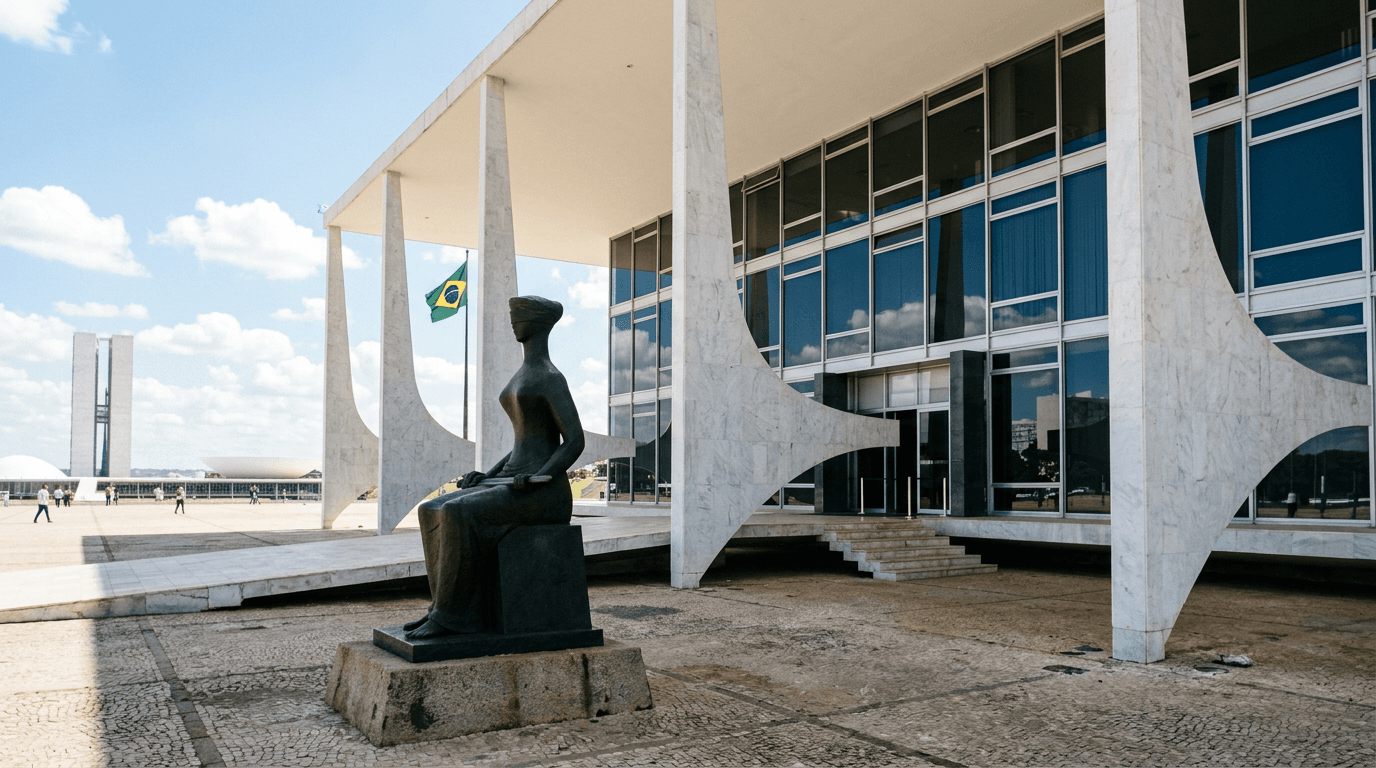
The race for Brazil’s presidency was rocked this week after the Supreme Federal Court (Supremo Tribunal Federal, or STF) unsealed documents detailing a corruption probe against Senator Flávio Bolsonaro, the leading right-wing challenger in the October 4 election. The move comes as the country’s highest court is gripped by an unprecedented institutional crisis and President Luiz Inácio Lula da Silva escalates concerns over fiscal policy.
The unsealed evidence, part of the sprawling Banco Master financial scandal, alleges that Senator Bolsonaro, the eldest son of imprisoned former President Jair Bolsonaro, received R$61 million (approximately $12 million) from disgraced banker Daniel Vorcaro. The funds were purportedly to finance an unreleased movie about his father. Federal police are investigating the payments as potential corruption, money laundering, and tax evasion, a probe Flávio Bolsonaro has denied, insisting the financing was a legitimate private sponsorship. The criminal inquiry, opened in July, was made public by the STF only weeks before the first round of voting, placing the judicial system squarely in the center of an already tight election.
The political bombshell landed amid an open civil war within the Supreme Court itself, an institution that serves as the final arbiter of Brazilian law and the guardian of the Constitution. The Banco Master probe has exposed deep rifts, with two prominent justices, Alexandre de Moraes and André Mendonça, actively requesting sanctions against one another over their own alleged connections to the scandal. Chief Justice Luiz Edson Fachin ordered the documents unsealed to bring transparency to the judicial process.
Reacting to the crisis, President Lula broke with tradition to advocate for term limits for the justices of the STF, who currently serve until they reach 75. Lula argued that "nobody can stay 40 years in the same office" in a push for judicial reform that appears timed to capitalize on the public’s eroding trust in the judiciary.
Fiscal Policy Concerns
Further adding to the uncertainty was President Lula’s public dismissal of the country’s main measure of fiscal responsibility. Lula characterized the pursuit of a primary surplus—the budget balance before interest payments—as "nonsense," arguing the government should focus on social spending and growth rather than fiscal austerity. This rhetoric reinforces market worries about Brazil’s fiscal risk, especially since the administration has struggled to meet its own deficit reduction targets, putting pressure on the currency and likely committing the central bank to maintaining high interest rates.
With the first-round election scheduled for October 4, the political landscape is now defined by a dual crisis: a scandal-plagued judiciary fighting itself and a key presidential challenger fighting a corruption probe, all set against a backdrop of rising fiscal uncertainty. The results of the upcoming vote will determine whether the current institutional tensions are resolved through political negotiation or continue to escalate.
What it touches
The state-owned lender Banco do Brasil S.A. committed to a 30% dividend payout ratio for 2026, providing a clear signal of shareholder return despite the broader political and fiscal headwinds. The dividend commitment for the bank, one of the country's largest, offers a concrete data point for investors tracking state-controlled assets.