
Speculators Increase Chicago Soybean Bets as Brazil Dominates Global Supply
Non-commercial traders on the Chicago Board of Trade raised their net-long position in soybeans to 273,424 contracts as of September 8, signaling bullish sentiment for the commodity that is central to Brazil's trade balance.
Large speculators significantly increased their bullish positioning in Chicago soybean futures, with the latest weekly data from the U.S. Commodity Futures Trading Commission (CFTC) showing a substantial net-long position. Non-commercial traders, a category that includes hedge funds and other large financial players, held a net-long position of 273,424 contracts as of the September 8, 2026 observation date, according to the CFTC’s weekly Commitments of Traders (COT) report.
The figure is the difference between 365,743 long contracts and 92,319 short contracts held by this group. This non-commercial net-long position reflects a prevailing sentiment among traders that the price of the oilseed will rise. The entire market’s open interest—the total number of outstanding futures contracts—stood at 1,070,401.
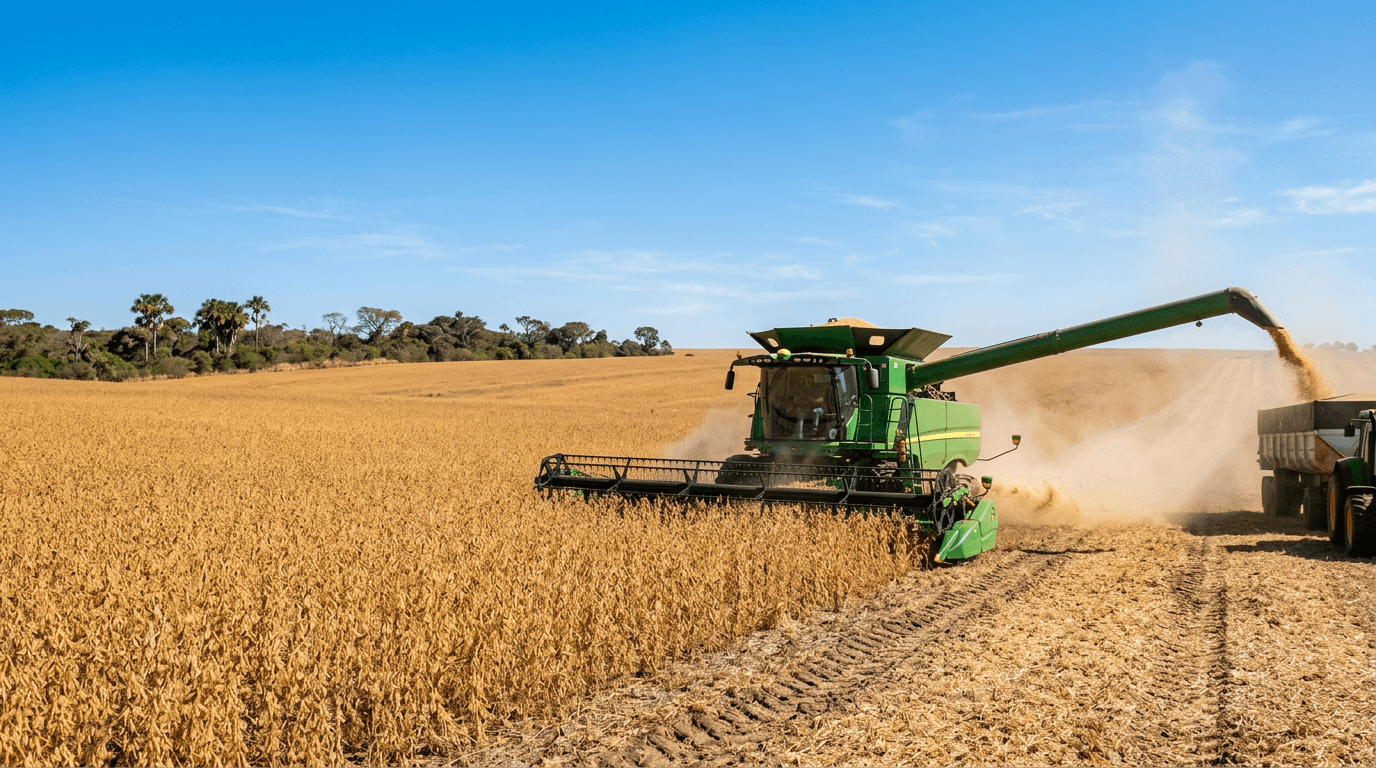
While the report is a snapshot of trading activity on the Chicago Board of Trade, it provides key context for the physical commodity market, where Brazil has established itself as the dominant global force. Brazil is now the world’s largest producer and exporter of soybeans, a title it took from the United States.
This financial positioning in Chicago futures markets is indirectly tied to the state of the Brazilian economy. Soy is one of Brazil's most critical export commodities, generating billions in annual revenue and accounting for a significant portion of the country's foreign trade balance. The robust demand implied by the speculative positioning supports the global price floor for the commodity harvested and shipped from Brazilian ports.
The expansion of soy production in Brazil, however, is a complex story for international readers. While it drives economic growth and exports, the commodity’s cultivation is a major factor in deforestation and land conversion, particularly in the Cerrado and parts of the Amazon biome. Global demand, reflected in reports like the CFTC data, puts continuous pressure on Brazilian agriculture to expand its footprint.
The positioning report itself is a backward-looking metric, reflecting sentiment as of a specific date, and is not a forecast of future price moves. However, it will set the stage for how the market reacts to the next major developments, such as the upcoming planting season forecasts for the Southern Hemisphere, including Brazil, or the next official data release from the CFTC.
What it touches
The commodity's strong performance and speculative interest provide a tailwind for companies tied to global soybean supply and agricultural land in the region. This exposure is concentrated in firms whose revenue is directly linked to farm output and prices, such as the agricultural holding company Adecoagro S.A., which trades on the New York Stock Exchange under the ticker AGRO.
Related coverage
Markets · PRO
Brazil’s Election-Driven Spending, Supreme Court Crisis Converge with Economic Slowdown
Published
Markets
Speculators Place Large Bullish Bet on Soybeans, Setting Up Price Support for Brazilian Farmers
Published
Markets
Brazil’s Petrobras Expands Global Exploration with Eight Offshore Blocks in Ivory Coast
Published