
Speculators Hold Massive Net-Long Position in Chicago Soybeans as Brazil Eyes Record Harvest
Large financial traders held a net-long position of 261,183 contracts in CBOT soybeans on September 15, influencing prices for the Brazilian sector.
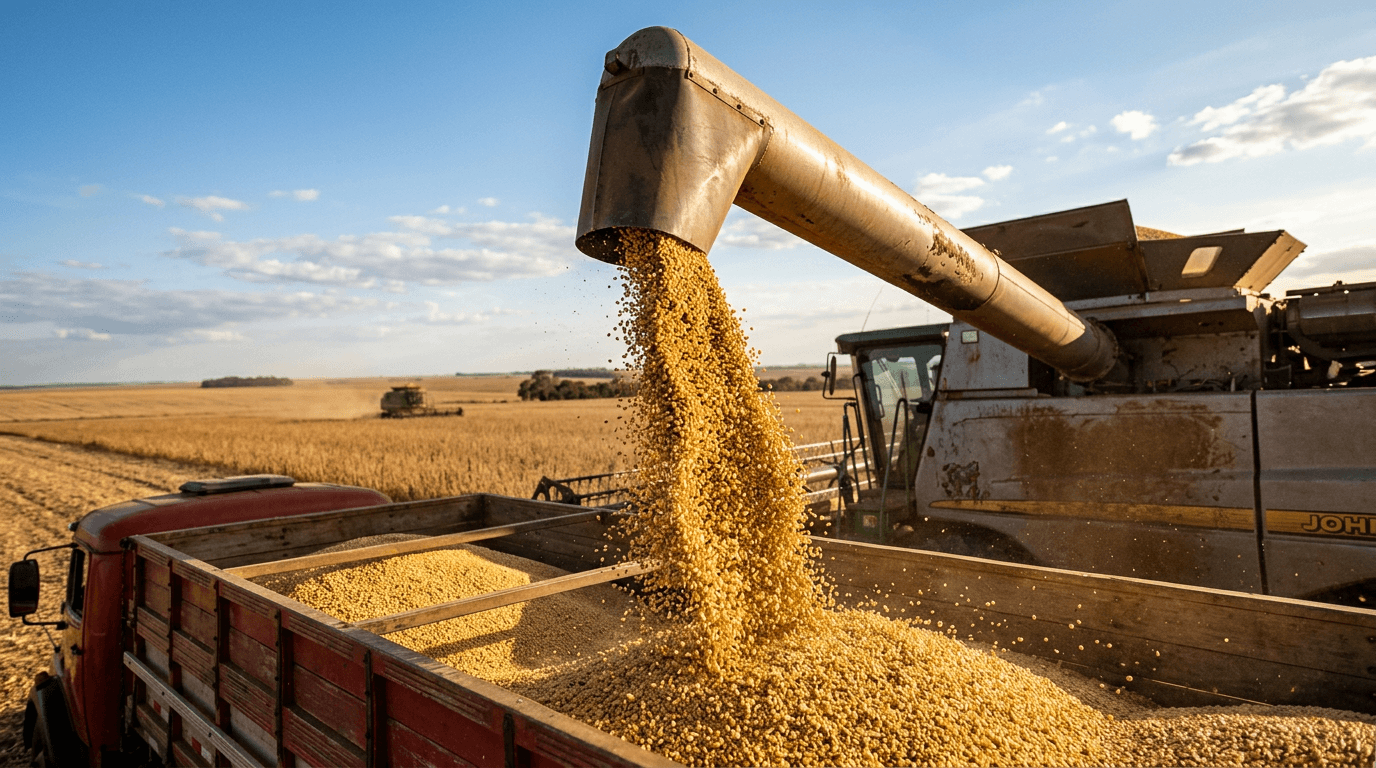
Large speculative traders on the Chicago Board of Trade (CBOT) were massively bullish on soybeans as of September 15, holding a net-long position of 261,183 futures contracts, according to the latest data from the U.S. Commodity Futures Trading Commission (CFTC). The positioning reveals the high volume of bets placed by financial funds on the direction of the world’s most significant oilseed commodity.
The net-long figure is the difference between 356,583 long (buy) contracts and 95,400 short (sell) contracts held by non-commercial traders, a category that includes large hedge funds and money managers. This non-commercial segment often signals market sentiment, as these traders are positioning for price moves rather than hedging a physical crop, and their cumulative stance significantly influences the price of futures. The total open interest in the contract stood at 1,104,880 on the observation date, illustrating the sheer scale of financial interest in the grain.
For Brazil, the world's leading producer and exporter of soybeans, this heavy financial positioning in Chicago futures is of material consequence. The price of soybeans in Brazil's major agricultural states, such as Mato Grosso, is closely linked to the CBOT benchmark, a critical factor for the Brazilian agriculture sector that drives a substantial part of the national economy. When Chicago futures rise on speculative interest, it supports prices for the Brazilian farmer and export companies, despite domestic pressures from a record-breaking crop.
This speculative bullishness comes as Brazil consolidates its dominant position in global supply. The country is expected to achieve another record soybean harvest and export volume for the 2026/2027 season, with forecasts predicting exports well over 110 million metric tons. The enormous volume of Brazilian supply means that Chicago prices are now influenced just as much by the pace of the South American export program and local logistics as by U.S. weather and crop reports.
The close correlation between the financial positioning in Chicago and the physical reality in Brazilian ports underscores the tight integration of the global commodity market. Brazilian producers are now preparing to plant the new crop, and the sustained strength in the Chicago futures market provides a supportive price floor as they make critical investment decisions for the coming year.
What it touches
The highly traded nature of soybeans means the futures price is a critical input for companies involved in the production, trading, and processing of the commodity. This includes large multinational traders as well as Brazilian-exposed firms like JBS, which uses soy as a key input for animal feed in its protein business, and AGRO, which manages farmland and production assets. The level of speculative interest in Chicago provides a backdrop for the valuation of physical crop assets and the margins of companies along the supply chain.
Related coverage
Markets
OECD Upgrades Brazil 2026 GDP Forecast to 2.0% on 'Resilient Domestic Demand'
Published
Markets · PRO
Public Ministry Seeks Freeze on Braskem’s $476 Million Investment in Mexico
Published
Markets · PRO
Speculators Hold Vast Net-Long Soybean Position, Signaling Bullish Bet on Key Brazil Export Crop
Published