
Speculative Rush on Soybeans Signals Continued Price Support for Brazilian Exports
Hedge funds are building an extremely bullish bet on soybean futures, buoyed by Brazil’s record demand and tightening global supplies.
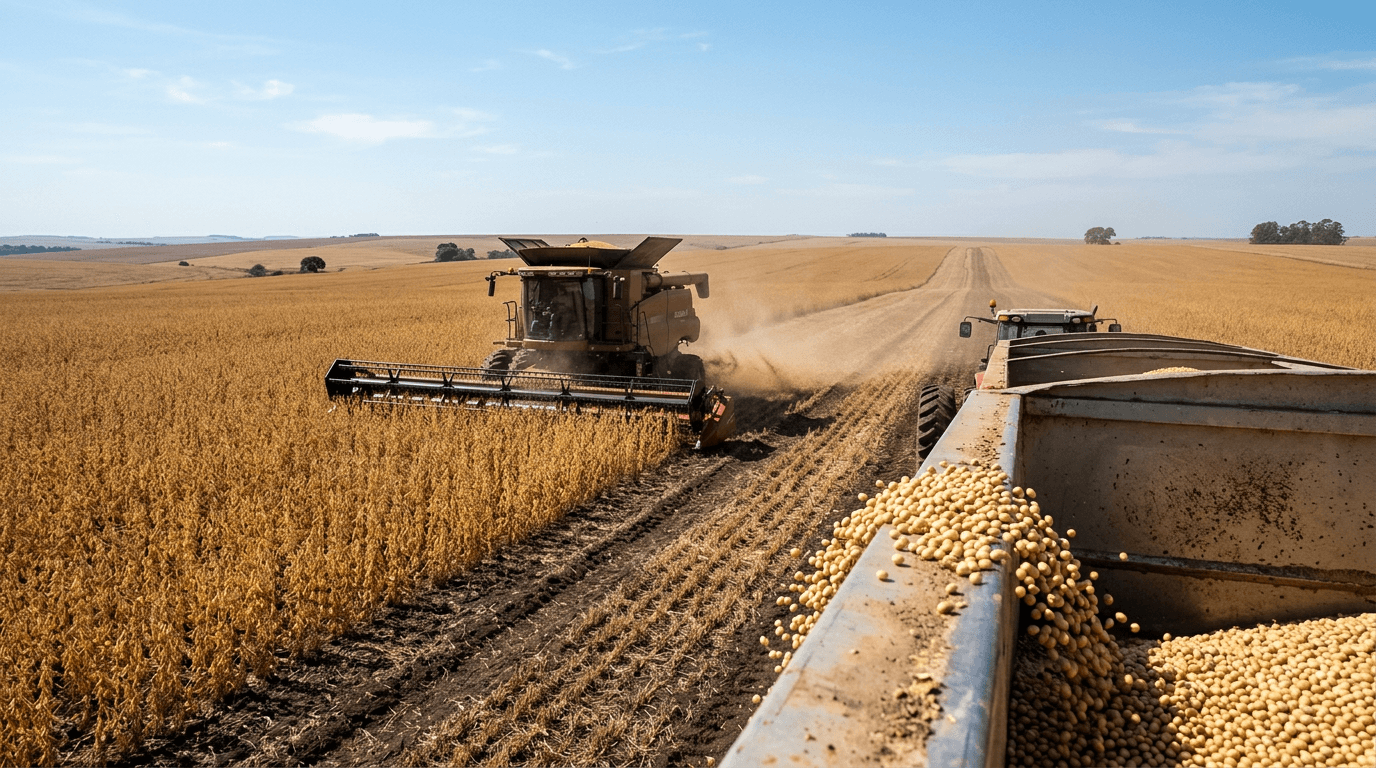
Large speculators are holding an exceptionally bullish position in soybean futures, a signal that money managers anticipate sustained high prices for the commodity that is the single largest driver of Brazilian agricultural exports. The extreme positioning by hedge funds, who are betting long (prices will rise) at a ratio of roughly 20-to-1 against those betting short (prices will fall), suggests a market conviction that is not only robust but potentially overextended.
This conviction is fundamentally tied to the health and outlook of the Brazilian agricultural sector, which has cemented its place as the world’s largest soybean producer and exporter. Despite a record-breaking Brazilian harvest this past season, global soybean prices have remained surprisingly resilient, defying the typical pressure of abundant supply. The strength comes from two key areas: consistently strong demand from China, the world’s largest buyer, and an increase in domestic processing in Brazil fueled by the growth of the country’s mandatory biodiesel blending program. The national crop agency, Conab, forecasts another large crop for 2026/27, but with supply expected to remain tight, any hiccup could send prices soaring.
Non-commercial traders, which include hedge funds and other large financial institutions, are known to amplify market trends. Their current, highly concentrated net-long position—where their desire to buy far outweighs their desire to sell—is a dramatic show of confidence in the fundamentals underpinning the soy market. However, extreme positioning is often a double-edged sword: a "crowded trade" like this can precede a sharp reversal. If a fundamental factor shifts—such as a major slowdown in Chinese imports or unexpectedly favorable weather during the U.S. harvest or the start of the Brazilian planting season—the stampede to liquidate these long contracts could cause a swift and sudden price drop.
For ordinary Brazilians, this positioning holds significant weight. High commodity prices translate directly into a stronger inflow of dollars, which aids the national currency and supports the vast infrastructure that powers Brazil’s agricultural heartland, known as the agronegócio. The immediate risk, however, falls on the Brazilian farmer who has been judiciously holding back inventory from the market, betting that prices will go higher still. A sudden unwind of this massive speculative bet could collapse those local prices, forcing them to sell at less-favorable margins.
What happens next will hinge on the weather and global geopolitics. Traders are watching for any update on the ongoing risk of an El Niño weather pattern, which typically disrupts South American crops, and are paying close attention to Chinese demand signals as the new Brazilian planting season begins.
What it touches The highly bullish market sentiment directly supports Brazilian assets tied to the agricultural supply chain, including global food conglomerate JBS N.V. (JBS) and agricultural land holding company Adecoagro S.A. (AGRO), though prices for both assets were slightly lower today. The price action in soybean futures, primarily traded on the Chicago Board of Trade, provides a forward view on the cash flow and profits for the world's largest food exporters, many of whom have significant operations in Brazil.
Related coverage
Markets · PRO
Vale CEO Calls Base Metals IPO a 'Long-Term Option,' Not a Near-Term Priority for Growth
Published
Markets
Speculators Hold Extreme Bullish Bet on Soybeans, Putting Focus on Brazil’s Coming Harvest
Published
Markets · PRO
TIM Brasil Gets New Indirect Controller as Italy’s Poste Italiane Takes Over Telecom Italia
Published