
Political Fight Over E32 Ethanol Mandate Puts Brazil’s $40 Billion Bioenergy Sector at Risk
A political battle over a higher mandatory ethanol blend is creating major regulatory uncertainty for Brazil’s bioenergy industry, sugar producers, and fuel distributors.
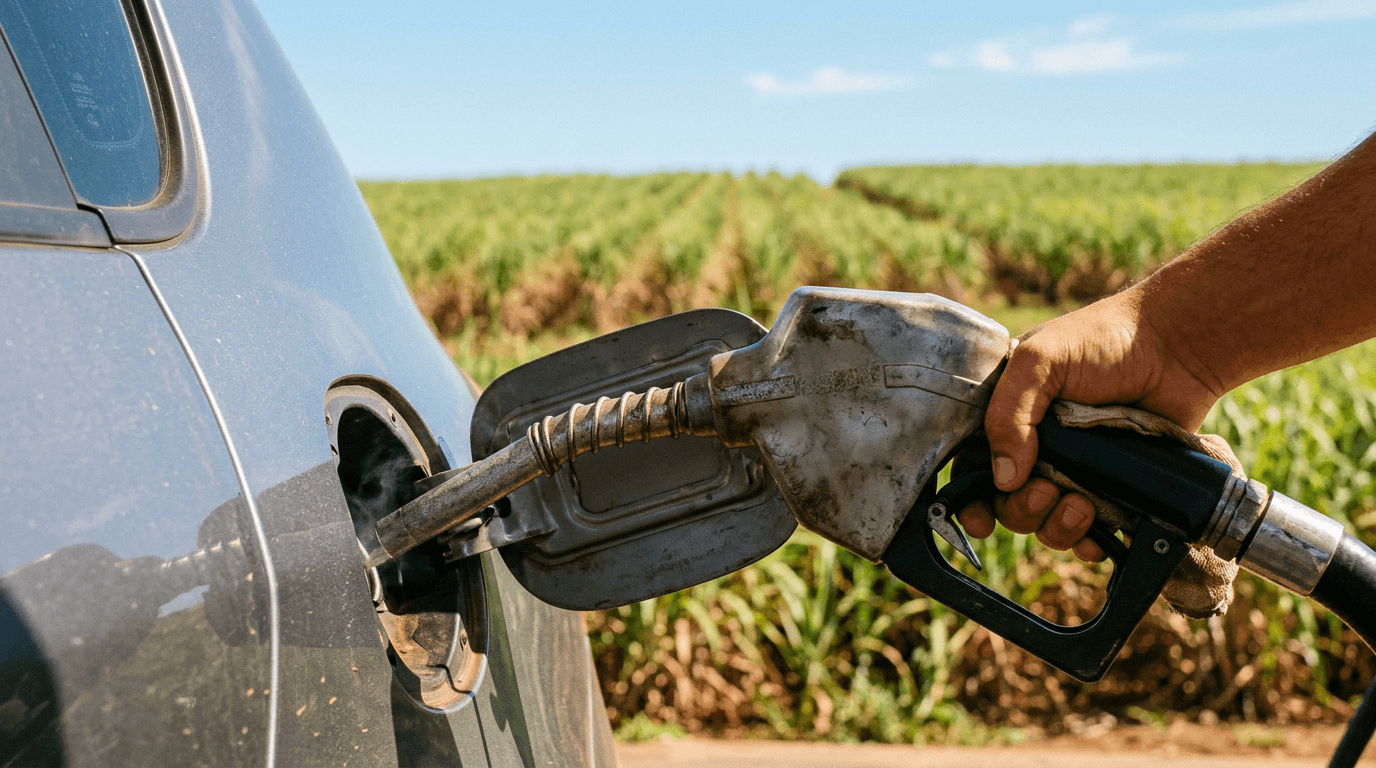
A political battle is escalating in Brasília over the mandatory blend of ethanol in gasoline, a fight that pits the Lula administration’s energy policy against a surprising consumer-driven backlash in Congress, creating substantial regulatory uncertainty for Brazil’s multi-billion dollar bioenergy sector. The dispute centers on the government’s recent move to increase the blend, which now faces two legislative counter-proposals that could drastically cut or eliminate demand for the biofuel.
The Brazilian government, acting under the National Energy Policy Council (CNPE), recently increased the mandatory anhydrous ethanol blend in common gasoline from 30% to 32%, known as E32. This temporary measure, in place for 180 days with a possible extension, is part of a broader strategy to boost energy security by reducing the country’s dependence on imported gasoline and reinforcing Brazil’s global leadership in low-carbon fuels. The government is also considering technical tests for a future E35 blend (35% ethanol). The entire sugarcane and bioenergy value chain in Brazil supports an economic output valued at over $100 billion, with the sector's GDP contribution estimated at around $40 billion, underscoring the massive scale of the industry caught in the crossfire.
The resistance is materializing in two separate legislative initiatives. In the Senate, a popular legislative suggestion, SL 30/2026, aims to allow the optional sale of gasoline with reduced (E10) or no ethanol (E0) in service stations nationwide. A separate bill in the Chamber of Deputies, PL 4.783/2026, goes further by proposing to make the offer of pure, ethanol-free gasoline (E0) mandatory. Both proposals are being driven by lobbying from groups like the Federação Brasileira de Veículos Antigos (Brazilian Federation of Antique Vehicles) and the nautical sector.
These opposition groups argue that the higher ethanol content, specifically E32, can cause premature damage to the rubber hoses, gaskets, and fuel system components of older, imported, and nautical engines that were not designed for such high proportions of the biofuel. The issue is particularly acute for boat owners, as ethanol tends to absorb water, which can accelerate corrosion and engine wear in the humid, stationary conditions common in marine environments. The sudden push in Congress introduces significant regulatory risk, as any move to lower the national blend would cut demand from the fuel distribution industry, which is the ethanol sector’s largest customer.
Should either bill pass, it would offer a political victory to consumers seeking engine protection, but it would come with a likely consequence for the majority of Brazilian drivers. Gasoline without ethanol, or with a much lower blend, would almost certainly be more expensive for the consumer because the pure gasoline component (Gasolina A) is costlier than the ethanol it replaces. The immediate next step for the industry is watching the congressional committees, where the technical debate over engine compatibility and fuel logistics will determine whether the political pendulum swings away from the national bioenergy mandate and toward optional lower-blend fuel sales.
What it touches
The mounting regulatory risk primarily affects the large agricultural and industrial conglomerates in Brazil’s Center-South region whose primary business is sugar and ethanol production, such as Cosan, Raízen (a joint venture between Cosan and Shell), and BP Bunge Bioenergia. The policy uncertainty also affects fuel distributors, as a fragmented market with multiple mandatory blends creates logistical and infrastructure challenges for the transport and storage of different fuel types. Global investors with exposure to Brazilian agricultural and energy assets will monitor the legislative trajectory closely.