
Large Speculator Bet on Soybeans Signals Continued Revenue Stream for Brazilian Agribusiness
Large speculators on the Chicago Board of Trade are heavily net long on soybeans, a signal that supports prices for Brazil's largest export.
Large speculative traders are placing a massive bullish bet on rising soybean prices, according to the latest Commitment of Traders (COT) report released by the U.S. Commodity Futures Trading Commission (CFTC). The data, current as of September 15, 2026, shows that non-commercial traders—a category dominated by hedge funds and large money managers—held a net-long position of 261,183 contracts on the Chicago Board of Trade (CBOT) soybean futures.
This substantial net-long figure represents the difference between the 356,583 long contracts and 95,400 short contracts held by large speculators, indicating a strong conviction that the price of soybeans will continue to climb. While the weekly COT report is a snapshot of trader sentiment—not a forecast of market prices—this high level of speculative buying acts as an underlying support for the global price benchmark, which directly impacts Brazil's largest agricultural export.
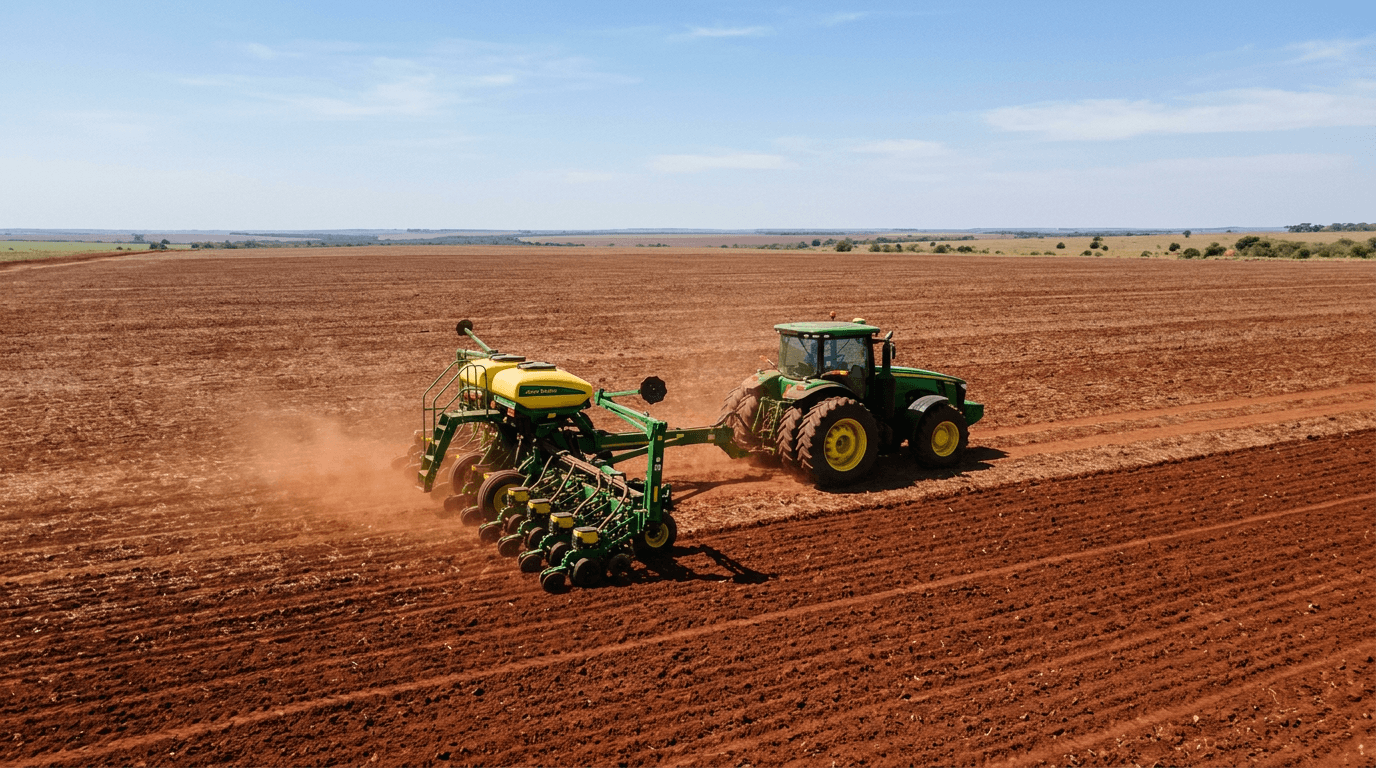
For a foreign reader, understanding this connection requires knowing the immense scale of Brazilian agronegócio, the country's powerful farm sector. Brazil is the world's largest producer and exporter of soybeans, a crown it took from the United States more than a decade ago. The country's soy harvest, primarily grown in the central-western state of Mato Grosso, is critical to the national economy, accounting for tens of billions of dollars in annual revenue and driving a vast logistics network through ports like Santos and Paranaguá.
A bullish outlook on the CBOT—the world’s most liquid trading venue for the commodity—translates to higher dollar-denominated revenue for Brazilian farmers and major trading houses, even with the logistical challenges of transporting the grain from the interior to the coast. This is particularly relevant now as farmers in the key growing regions are preparing for the summer planting season, a period where expectations of high forward prices can encourage greater investment in inputs like seeds and fertilizer. High futures prices, therefore, inject capital and confidence deep into the country’s agricultural heartland.
The next point of focus for the global soybean trade will be the release of the following CFTC report, which will indicate whether speculators are maintaining, adding to, or beginning to unwind their substantial long positions. Simultaneously, all eyes will be on the weather forecasts and early planting results in Mato Grosso and other major states like Goiás and Paraná, as these factors will determine whether Brazil can deliver another record-breaking harvest to meet sustained global demand.
What it touches
Brazilian companies tied to the soybean cycle benefit from strong prices, which can ease pressure on the sector. Food and protein companies, such as JBS, which rely on soybean meal for animal feed, may face higher input costs, while firms with exposure to farmland or agricultural logistics, such as Adecoagro, see their underlying asset values supported by the positive price environment.