
Brazil soybean planting begins under split weather and bullish bets
Brazilian farmers start the 2026/27 soybean crop amid a split weather pattern of central heat and southern rain, while global speculative traders build long positions.
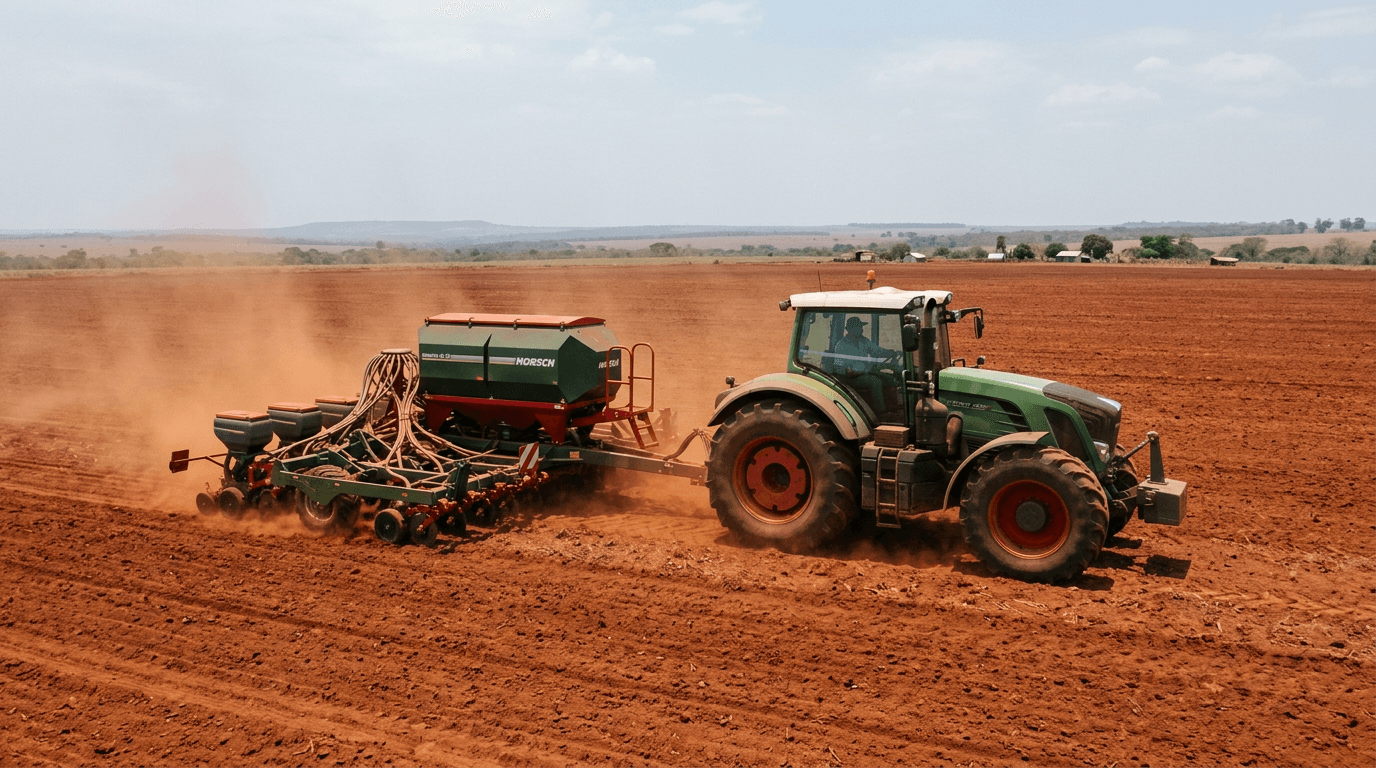
As Brazilian farmers start machinery across the country's vast agricultural heartland to plant the 2026/27 crop, global financial markets are closely watching the supply outlook. Weekly regulatory data from the United States reveals that large financial players have built up significant bullish exposure to the oilseed, reflecting a shifting global backdrop of weather risks and trade negotiations.
According to the U.S. Commodity Futures Trading Commission (CFTC), non-commercial traders—a category that includes hedge funds and speculative managers—held a substantial net-long position of 281,581 contracts in Chicago Board of Trade (CBOT) soybeans as of September 22, 2026. This position was built on 370,525 long contracts against 88,944 short contracts, out of a total market open interest of 1,114,328 contracts. While weekly positioning reports provide a snapshot of market sentiment rather than a guaranteed price forecast, they highlight how heavily financial markets are weighing the upcoming South American harvest.
For Brazil, the world's largest exporter of soybeans, the stakes of the new agricultural cycle are immense. The country's economic health relies heavily on the agribusiness sector to bring in foreign currency and drive regional growth. Sowing schedules, which are dictated by strict environmental "soybean-free" periods designed to prevent the spread of crop diseases, began opening in major states like Mato Grosso and Paraná during September.
The early progress of the crop is highly dependent on the timely arrival of spring rains to break the dry season. According to Conab's agricultural monitoring bulletin, the start of the 2026/27 sowing has been favored in areas where the sanitary break has ended, but regional conditions remain highly uneven. While southern states like Paraná have seen abundant moisture, northern and central growing regions, including the key state of Mato Grosso, face a drier and hotter start with temperatures forecast to exceed 100°F (38°C) in early October, making the establishment of the seasonal wet season the primary focus for local farmers.
Global traders monitor these weather patterns daily, as any delay in Brazilian planting can compress the window for the subsequent "safrinha" corn crop, which is planted immediately after the soybean harvest. Despite these initial regional weather splits, private consultancy StoneX estimated on October 2, 2026, that Brazil's 2026/27 soybean crop will reach a record 183.36 million tons, representing a 0.4% increase over the previous season.
What it touches
The shifting dynamics in global agricultural trade directly affect major international agribusiness companies operating in Brazil. This includes large grain processors and farmland operators such as Adecoagro S.A. (NYSE: AGRO), which manages extensive agricultural land across South America, and global protein giant JBS N.V. (NYSE: JBS), whose animal feed costs are heavily tied to domestic grain and soy meal prices.