
Lula Government Abruptly Bans Regulated Online Betting, Costing Operators R$2.5 Billion
Brazil's government reversed its sports betting law, costing operators R$2.55 billion, while the Supreme Court faces a corruption crisis.
The Brazilian government has delivered a shock to the country’s newly regulated gaming market, with President Luiz Inácio Lula da Silva signing a Provisional Measure that prohibits all fixed-odds betting and online casino games, pulling the rug out from under an industry that had recently invested heavily to comply with federal law. The abrupt move, announced Friday, reverses a regulatory framework established just last year and immediately exposes operators to a collective loss of R$2.55 billion (approximately $480 million) in non-refundable licensing fees.
The measure takes immediate effect, ordering licensed platforms to halt new customer deposits and shut down entirely within a ten-day transition period. The Ministry of Finance had granted 85 federal authorizations at a cost of R$30 million each to companies seeking to operate in the newly regulated market. The government has stated that the termination of these licenses does not create a right to compensation for lost profits or a full or partial refund of the fees paid, triggering immediate legal challenges from industry groups who argue the decision signals extreme regulatory risk to foreign investment.
This regulatory jolt coincides with significant volatility in the corporate sector and a deepening institutional crisis in Brasília. Shares of Nu Holdings Ltd., the US-listed parent company of Brazilian digital bank Nubank, tumbled more than 8% in trading this week on reports that the company is exploring a massive acquisition of the UK challenger bank Monzo. Investors reportedly viewed the potential move, which could value Monzo at up to £10 billion, as a risky expansion into a less familiar market, challenging Nubank’s focus on high-growth Latin American regions.
The country's highest court, the Supreme Federal Court (STF), is simultaneously grappling with a rare internal crisis, where Justices are clashing publicly and accusing one another of abuse of authority. The conflict pits Justice Alexandre de Moraes against Justice André Mendonça, with both calling for investigations into the other, stemming from a probe into the multi-billion-reais fraud scheme involving the failed Banco Master. This highly public judicial infighting underscores the fragility of the nation's institutions at a critical economic moment. Separately, the earlier collapse of SouthRock, the local operator for Starbucks and other US brands, serves as a recent reminder of the retail sector's vulnerability to the combination of accrued debt, high inflation, and Brazil’s persistently high benchmark interest rate, known as the Selic.
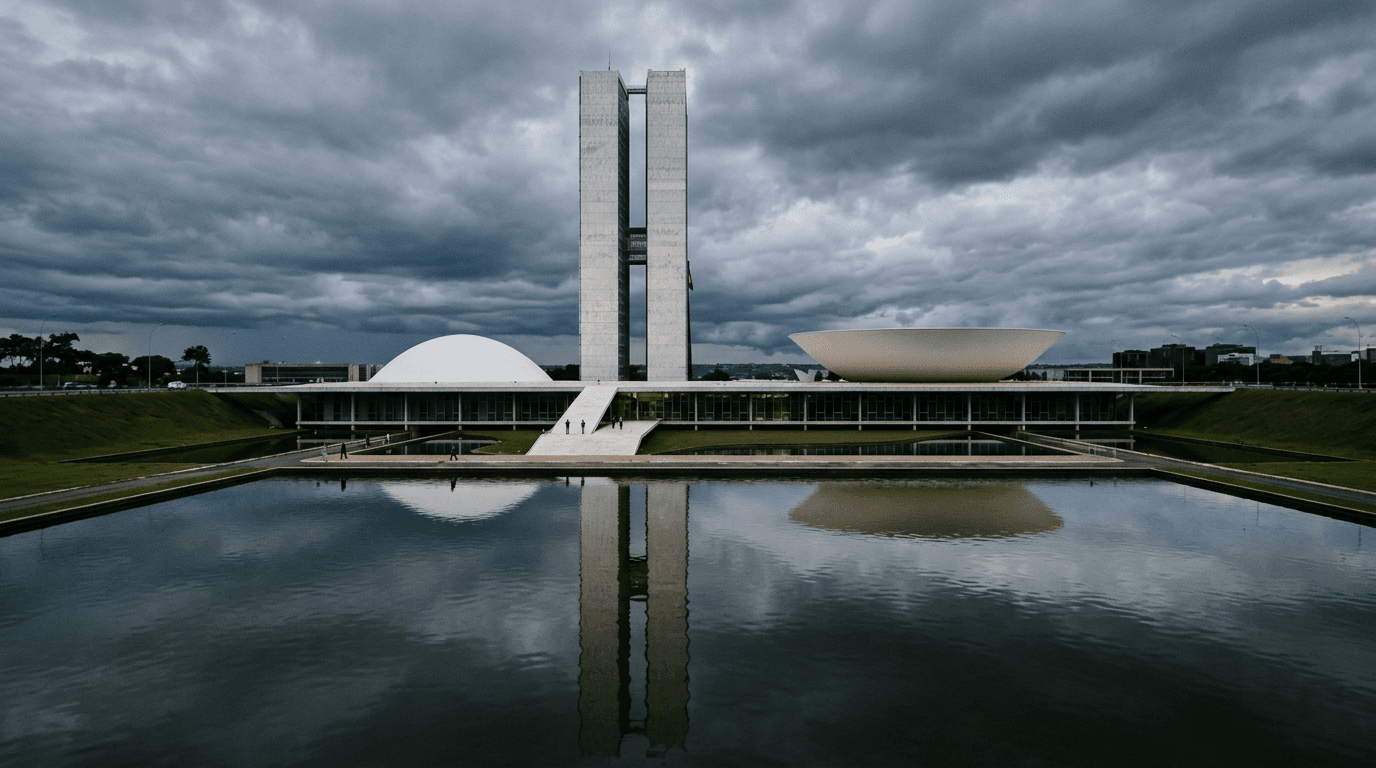
The betting ban, the volatile corporate news, and the judicial chaos all draw focus to the legislative branch. The provisional measure banning the betting market has a 60-day validity and must be converted into permanent law by the Brazilian Congress, amended, or allowed to lapse. This pending review in the National Congress is the next key event to watch, as the legislature holds the power to either uphold the abrupt prohibition or restore some form of a regulated environment.
What it touches The confluence of instability and regulatory uncertainty is of material concern to holders of Brazilian sovereign debt, given the impact on public finances. The loss of expected tax revenue from the regulated betting market comes as the share of government debt linked to the benchmark Selic rate—floating-rate debt—remains elevated, exposing the Treasury to escalating debt-servicing costs as long as the historically high interest rates persist.
Related coverage
Markets
Large Speculators Take Extreme Net-Long Bet on Soybeans, Highlighting Supply Risk for Brazil
Published
Markets · PRO
Nubank Shares Tumble Over 8% on Rumors of Billion-Dollar UK Bank Acquisition
Published
Markets
Lula’s Abrupt Online Betting Ban Challenged at Supreme Court, Threatening R$2.55 Billion in Fees
Published