
Brazil Real Hits R$5.16 as Deepening Political Instability Fuels Investor Anxiety
Heightened political uncertainty surrounding the presidential election and a crisis at the Supreme Court pushed the Brazilian Real to R$5.16 against the US Dollar on Monday.
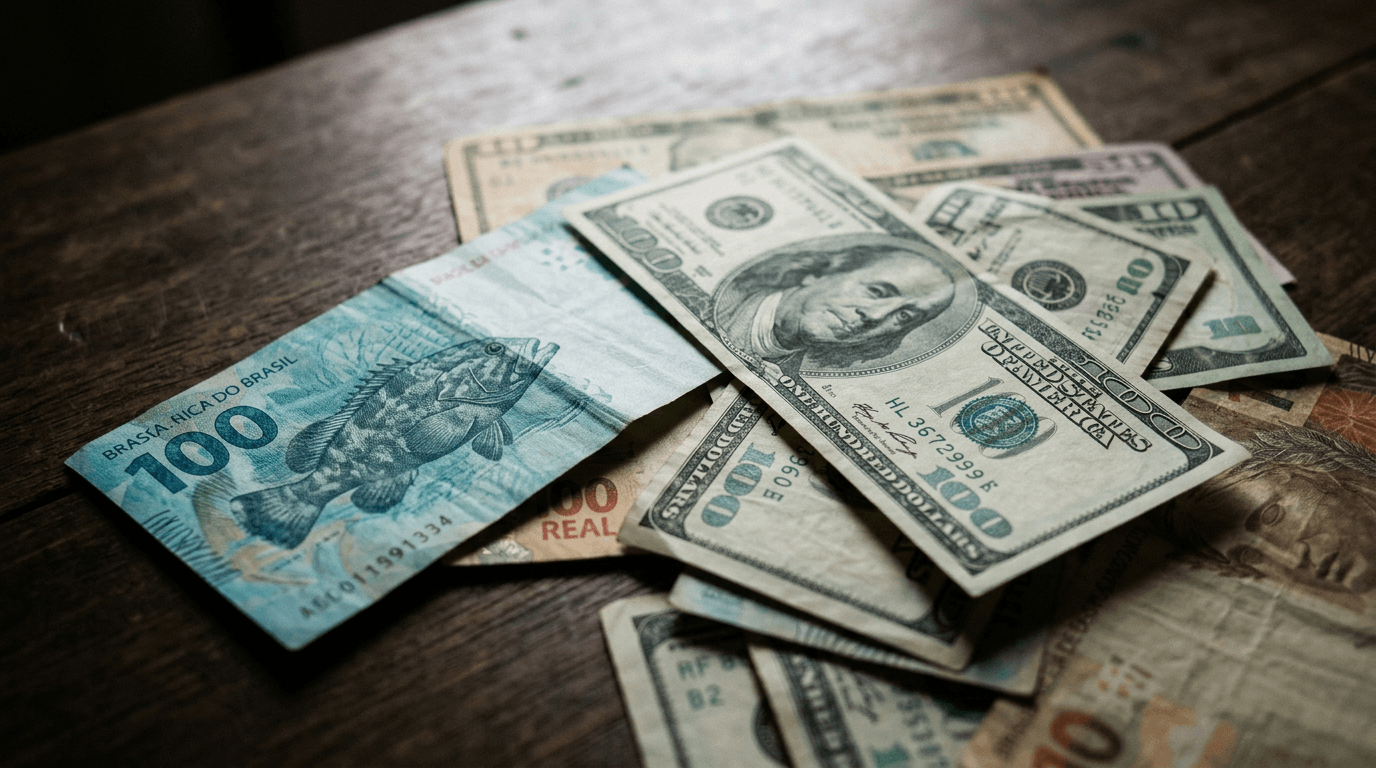
The Brazilian Real began the week under pressure on Monday, weakening significantly against the US Dollar as escalating domestic political instability fueled a flight to safety by investors. The dollar opened the session reaching R$5.16 against the Real, a move driven entirely by a heightened perception of local risk rather than a shift in the greenback’s standing against other major global currencies.
The market’s anxiety centers on two concurrent and deeply unsettling issues: the nearing presidential election and an unprecedented institutional crisis at the Supreme Federal Court (STF). Presidential election polls consistently show a technical tie in a simulated runoff between incumbent President Luiz Inácio Lula da Silva and right-wing challenger Senator Flávio Bolsonaro, the son of former President Jair Bolsonaro. This narrow margin, with the first round scheduled for early October, translates directly into investor uncertainty over the economic and fiscal direction of the country for the next four years.
This electoral anxiety is compounded by a high-profile crisis engulfing the Supreme Federal Court, Brazil’s highest judicial body. The conflict involves a public, partisan dispute between justices—particularly Justice Alexandre de Moraes and Justice André Mendonça—that has spilled over into the political arena. The feud, which includes allegations related to a bank scandal and the unsealing of police documents, has caused the Court to cancel sessions and has become a core issue in the presidential campaign, with both Lula and Bolsonaro demanding investigations into the justices along party lines. This chaos in an institution meant to be the guarantor of the rule of law is seen by investors as a fundamental threat to the nation's institutional stability.
The Real’s weakness reflects a fear that the current environment of deep political division and institutional turmoil may be prolonged beyond the election, regardless of who wins. This risk premium is a critical factor for the Real, given that the underlying fundamentals of the Brazilian economy, such as high-interest rates and a strong commodity sector, have typically offered some support to the currency. For ordinary Brazilians, the rise in the dollar immediately makes imported goods and foreign travel more expensive, acting as a brake on purchasing power.
The next point of focus will be the immediate reaction to the latest round of polling, as well as the STF’s planned session this week. Further institutional conflict at the Court or any narrowing of the election gap could intensify the Brazil political uncertainty and place continued pressure on the currency.
What it touches
The move directly impacts traded assets sensitive to foreign exchange risk and overall Brazilian market sentiment. Companies with significant dollar-denominated costs or unhedged foreign debt will see their balance sheets affected, while those with strong export revenues, like commodity giants, may see a benefit. The broader market gauge, the Ibovespa, is likely to trade with increased volatility as investors try to price in the heightened domestic risk. The ADRs of Brazilian companies traded on US exchanges, such as Inter & Co. (INTR), Pátria Investments (PAX), and Adecoagro S.A. (AGRO), all traded down today, signaling the negative sentiment across sectors.
Related coverage
Markets
Speculators Hold Near-Record Long Position in Soybean Futures, Signaling Continued Price Support for Brazil’s Record Crop
Published
Markets
Brazil’s Finance Minister Ties 2027 Rate Cuts Directly to Fiscal Discipline
Published
Markets
Brazil’s Ferrogrão Railway Moves Toward Tender Despite R$33 Billion Cost and Public Fund Debate
Published