
Brazil Finance Minister Durigan Says STF Crisis Is Hurting Economy and Investor Confidence
Finance Minister Dario Durigan openly admitted that institutional instability at the Supreme Federal Court (STF) is harming the Brazilian economy and raising the perceived "Brazil risk.
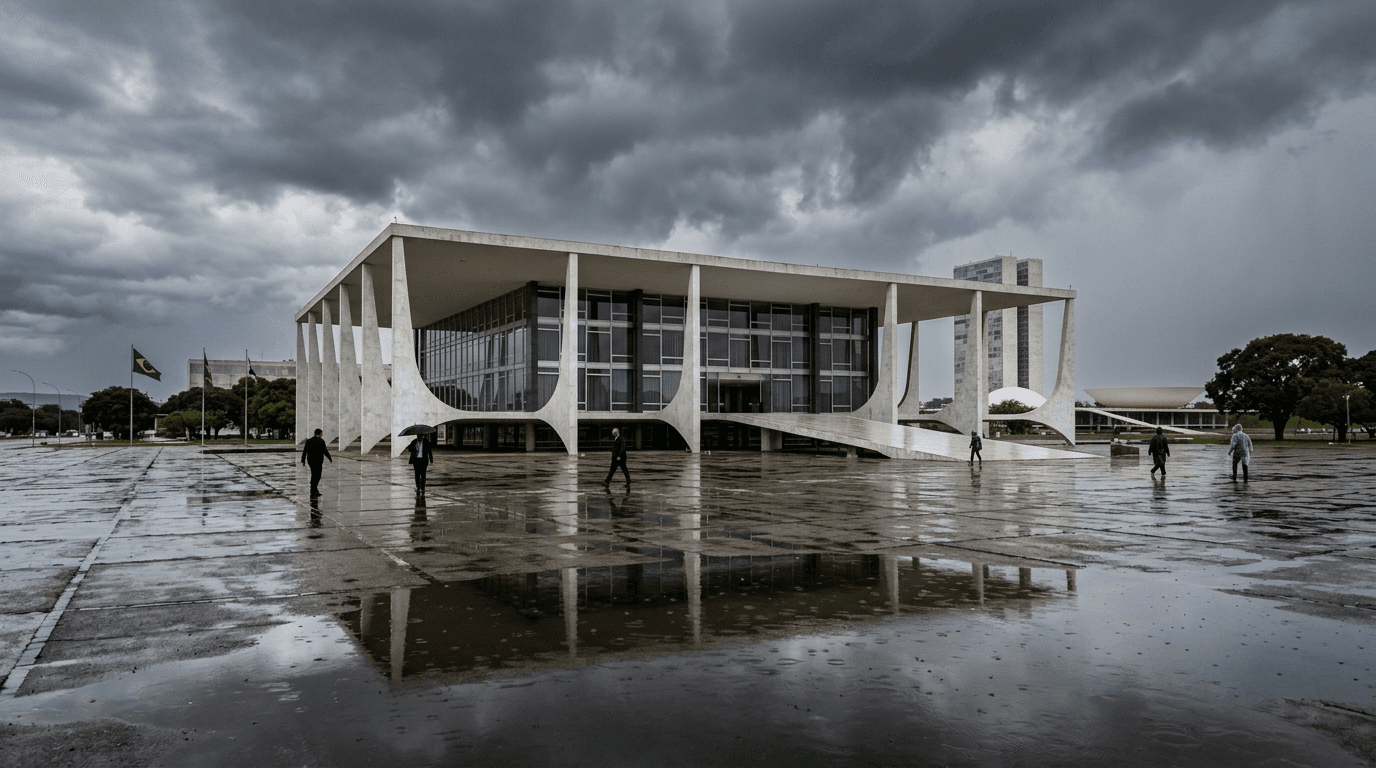
Brazil's Finance Minister, Dario Durigan, acknowledged that the ongoing institutional crisis involving the Supreme Federal Court (STF) is a concrete drag on the national economy and is actively eroding international investor confidence. The public admission, made in an interview on September 14, 2026, is a rare instance of a high-level government official linking political instability from a top judicial body directly to economic damage and reduced predictability for those considering investment.
The Supreme Federal Court (STF) acts as Brazil's highest court and constitutional arbiter, with its 11 justices often ruling on issues of national consequence that cross over into political and economic policy. Durigan’s remarks come amidst a highly publicized institutional crisis that has generated conflicting decisions among the justices and sparked concerns about the court’s credibility. The Minister stated plainly that this type of instability increases the so-called “Brazil risk,” which raises the cost of credit for both the government and private companies seeking financing, concluding that institutional predictability is ultimately a question of price.
Defending the Government’s Fiscal Stance
In the same interview, Durigan shifted to a broader defense of the administration’s fiscal policy, arguing that the financial market suffers from a "fiscal prejudice" against President Luiz Inácio Lula da Silva’s government. The Minister's remarks implied that the market automatically discounts the commitment to fiscal responsibility when it comes from a left-leaning administration, claiming that perceived fiscal prudence should not be exclusive to right-wing governments.
To reinforce the administration's commitment to public accounts, Durigan affirmed that future plans for a possible next mandate for Lula would include measures to deepen fiscal adjustments. Specifically, he proposed a new approach for cutting tax benefits, defending a linear reduction that would be subject to annual review. This focus on trimming the country's massive and often opaque array of tax exemptions aims to help the government meet its primary surplus targets.
The immediate consequence of the Minister’s statement is to publicly shift some of the blame for Brazil's lingering political-risk discount away from the executive branch’s spending plans and onto the highly politicized actions of the judiciary. Foreign investors, already juggling concerns over the central bank's interest rate policy and the government's ability to hit fiscal targets, must now contend with an explicitly acknowledged institutional instability as a material risk.
What it touches
The Minister's statement directly frames the political-risk discount in the price of Brazilian assets. Elevated institutional uncertainty is a key component of the "Brazil risk," which typically affects the perceived creditworthiness of the government and the broader investment climate, impacting the valuations of sovereign debt and various equities exposed to the country's cost of capital.
Related coverage
Markets · PRO
Global Speculators Maintain Strong Bet on Soybean Prices, Signaling Support for Brazilian Agriculture
Published
Markets · PRO
Lula Escalates Sovereignty Rhetoric Over Brazil's 'New Pre-Salt' Oil Frontier
Published
Markets · PRO
Petrobras Challenges Regulator’s ‘Gas Release’ Plan, Threatening Brazil’s Market Liberalization
Published