
Santander Brasil OPA Triggers Liquidity Risk, Exit Opportunity
Santander's voluntary OPA for Santander Brasil (SANB11) offers a 15% premium but signals a sharp drop in free float, raising long-term liquidity risks.
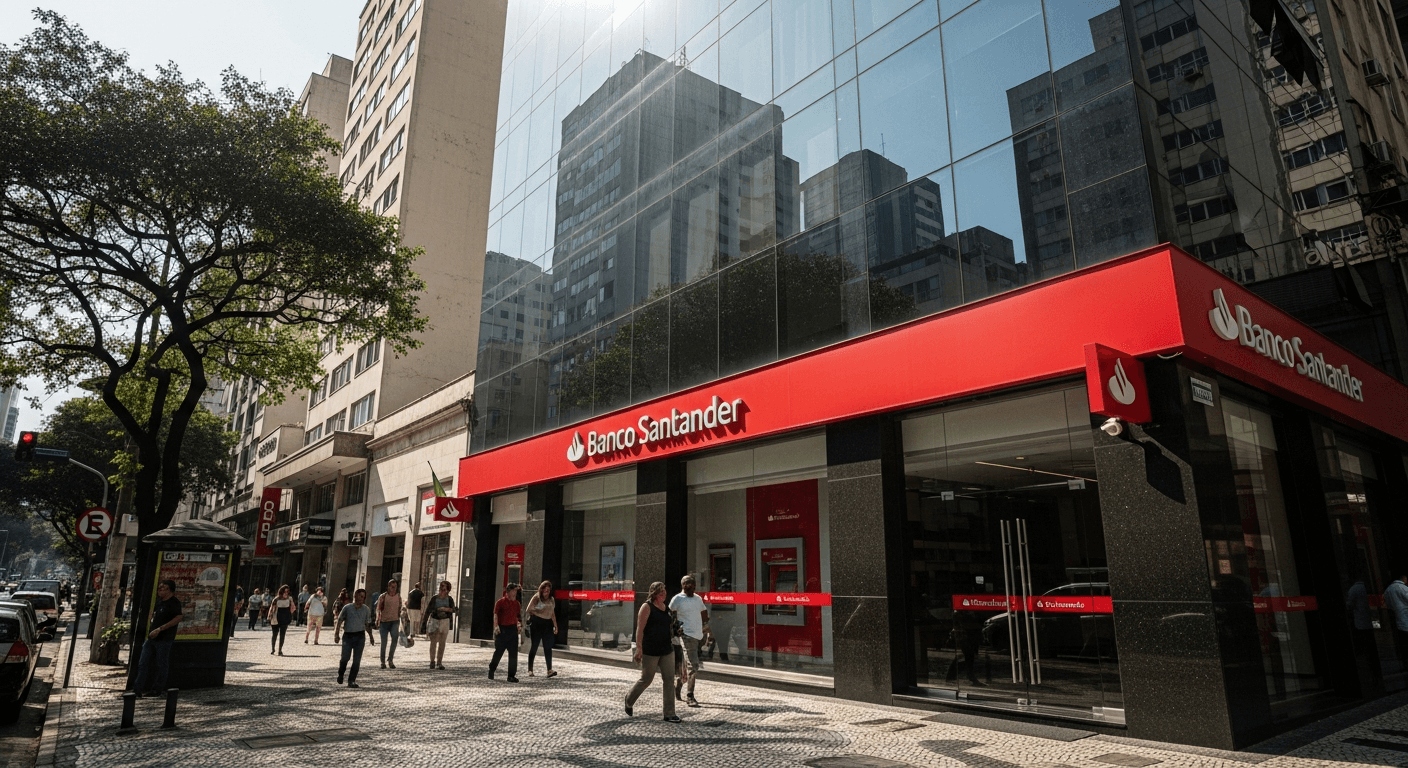
The Spanish parent company of Santander Brasil has announced a voluntary Public Acquisition Offer (OPA) to acquire the remaining 10% stake in its Brazilian subsidiary that it does not already own. The transaction, valued at up to €1.9 billion (approximately R$ 11.2 billion), targets all outstanding shares, including SANB11 Units on the B3 exchange and American Depositary Shares (ADSs) traded under the ticker BSBR in New York. The offer provides a 15% premium over the July 30 closing price of R$ 25.25 per Unit, setting the implied offer price at R$ 29.04 via a share swap of newly issued shares of the Spanish parent company.
The mechanism of this OPA is structured as a voluntary stock swap rather than a cash payout. Under the terms, B3 investors who accept the offer will receive 0.4056 newly issued shares of Banco Santander Spain (delivered via BDRs or ADSs) for each SANB11 Unit. While the parent company has stated that a formal B3 delisting is not immediate, the transaction is designed to significantly reduce the free float of the Brazilian unit. This reduction in outstanding shares will severely impact future trading volume, exposing remaining minority shareholders to heightened liquidity risks and the potential for an eventual delisting.
Market reaction to the announcement was swift and pronounced. On the B3, SANB11 Units surged over 13% to R$ 28.63, rapidly converging toward the premium valuation implied by the offer. This upward momentum contrasted with the broader market, where the Ibovespa index (IBOV) edged up 0.47% to 177,999.0 points. Meanwhile, the benchmark iShares MSCI Brazil ETF (EWZ) rose 0.33% to $36.65, and major B3 stocks showed mixed results, with Itaú Unibanco (ITUB4) gaining 0.35% to R$ 42.89 and Vale (VALE3) rising 0.25% to R$ 76.28.
For global investors looking to invest in Brazil, the OPA presents a strategic crossroads. While the 15% premium offers an attractive exit window following a challenging second quarter for the bank—which saw recurring net income drop to R$ 3 billion—holding onto SANB11 carries long-term operational risks. Analysts warn that as the free float shrinks, the stock will become increasingly illiquid, making it difficult to execute large trades without triggering high price volatility. Investors should closely monitor the rate of shareholder adherence to the OPA and any subsequent regulatory filings regarding the potential delisting of BSBR ADSs from the New York Stock Exchange.
Related coverage
Investing · PRO
Brightshore Capital, Formerly GTIS Partners, Launches $250 Million Debt Platform Eyeing Brazilian Real Estate
Published
Investing
Brazil’s Fixed Income Market Nears R$10 Trillion Milestone Amid B3 Volume Surge
Published
Investing
Brazil’s Suzano Targets $11 Billion Debt Level After Major Pulp Expansion
Published