
Lower Brazil Inflation Slashes KNCA11 FIAGRO Dividend by 11.5%
Kinea Crédito Agro fund KNCA11 dropped its monthly payout to R$ 1.00 as lower IPCA inflation impacted income.
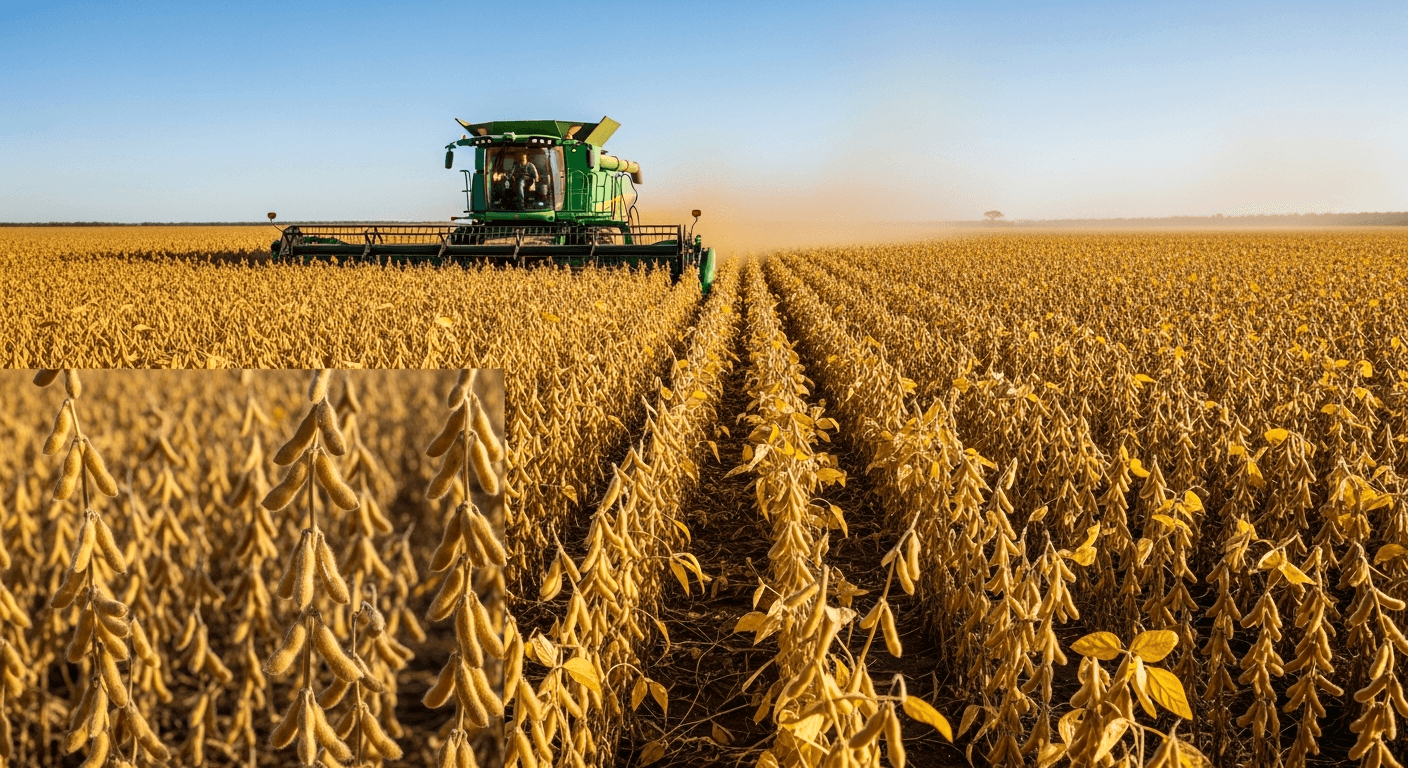
The Kinea Crédito Agro FIAGRO (KNCA11), a major Brazilian agricultural finance fund, cut its monthly dividend distribution by 11.5% as recent lower inflation figures reduced the income generated by its credit portfolio. The fund announced a payout of R$ 1.00 per share, down from R$ 1.13 the prior month, after its net result for July fell by 31.4% to R$ 21.6 million (approximately $3.96 million) from R$ 31.5 million in June. The sharp drop signals how sensitive Brazil's inflation-linked assets are to changes in the national consumer price index, or IPCA, a key metric for foreign investors tracking the country’s economy.
For the international investor, the mechanism of the dividend cut lies in the structure of the FIAGRO (Fundo de Investimento nas Cadeias Produtivas Agroindustriais), an investment vehicle for Brazil’s crucial agribusiness sector, and its reliance on index-linked instruments. KNCA11 primarily holds Agribusiness Receivables Certificates (CRAs), which are debt instruments often indexed to the IPCA plus a fixed interest rate. According to the fund’s manager, the income generated from these inflation-linked assets reflects the variation of the IPCA from the two preceding months. Therefore, the result calculated in July incorporated the low inflation readings of May (0.58%) and June (0.16%). These figures were substantially lower than the higher inflation rates that had boosted payouts in prior months, demonstrating that a moderation in Brazil's overall inflation environment immediately translates into lower income for index-linked funds.
While the slowdown in the headline IPCA is generally seen as a positive sign for the broader Brazilian economy, it creates a headwind for investors seeking high nominal returns from inflation-indexed credit assets. The fund noted that the decrease in its dividend comes even as the floating-rate portion of its portfolio, tied to the interbank CDI rate, was favorably impacted by the elevated Selic interest rate—currently at 14.25% per year—during the 23 business days of July. However, the lower inflation impact on the indexed portion was large enough to drive the overall net result from R$ 1.45 per share in June down to R$ 0.99 per share in July.
The immediate point of focus for investors is the incoming August IPCA print, which will provide a clearer picture of whether the low inflation trend continues and how that will affect the fund’s September distribution. The challenge for fund managers like Kinea remains balancing portfolio allocation between inflation-linked assets and those tied to the higher short-term CDI rate in a rapidly shifting macroeconomic environment.
What it Touches
The dividend change directly affects investors holding the KNCA11 FIAGRO, which trades on the B3 stock exchange. It also signals a broader income risk for other funds and debt instruments indexed to Brazil’s consumer price index (IPCA) within the fixed-income and real estate fund (FII) space. The move has an indirect link to the overall health of Brazil's agriculture sector, represented by traded assets like JBS, which closed down 5.76% at $13.41, and Adecoagro S.A. (AGRO), which saw a 2.22% gain to $9.66 on the New York Stock Exchange.
Related coverage
Investing · PRO
Brightshore Capital, Formerly GTIS Partners, Launches $250 Million Debt Platform Eyeing Brazilian Real Estate
Published
Investing
Brazil’s Fixed Income Market Nears R$10 Trillion Milestone Amid B3 Volume Surge
Published
Investing
Brazil’s Suzano Targets $11 Billion Debt Level After Major Pulp Expansion
Published