
Foreign Capital Fuels Surge in Trading for Brazil’s Unique Agro-Funds, Fiagros
Foreign investors accounted for over 20% of the trading volume in Brazil's Agribusiness Investment Funds (Fiagros) in August, signaling sharp international interest in the vehicle used to finance the country's vital farm sector.
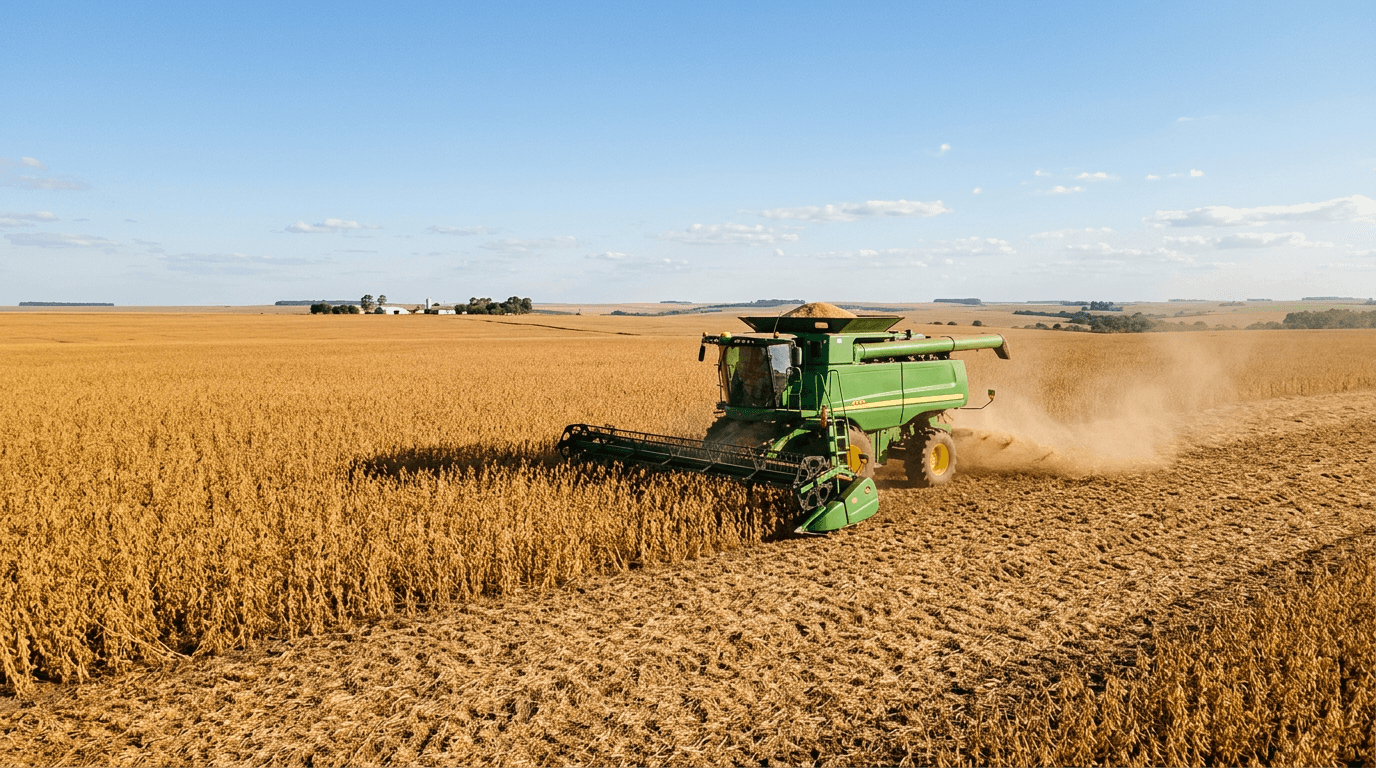
Foreign investors are driving a massive spike in trading activity for a unique Brazilian investment product, the Fiagro, or Agribusiness Investment Fund, highlighting growing international interest in financing the country’s most vital economic sector. Data from the B3 exchange shows that non-resident investors were responsible for 20.7% of the total financial volume traded in Fiagros in August 2026, even though they hold a mere 0.4% of the total assets in custody.
The significant discrepancy—accounting for one-fifth of the trading volume with less than half a percent of the total holdings—suggests that foreign capital is highly transactional, using the fund structure for high-flow movements rather than simply long-term asset accumulation. This dynamic contrasts sharply with the local market, which is still dominated by individual Brazilian investors (pessoas físicas) who hold over 91% of the total custody position.
Fiagros, formally known as Fundos de Investimento nas Cadeias Produtivas Agroindustriais, were created in 2021 as a mechanism to connect capital markets with Brazil’s powerful agricultural supply chain. They function similarly to the country’s popular Real Estate Funds (FIIs) but funnel money into agribusiness assets, including rural properties, agricultural credit rights, and securities. The product gives investors exposure to the sector that contributes the largest share to Brazil’s Gross Domestic Product (GDP).
The surge in foreign participation helped push the secondary market for the funds to R$ 417.1 million in August, marking an 18.7% increase in traded volume compared to July. The number of trades across the B3 exchange also surged by approximately 67% in the same period. The increasing daily liquidity is a crucial factor for the funds, with the Average Daily Traded Volume (ADTV) rising 21% to R$ 21.7 million.
This increased activity in the secondary market comes as the funds successfully mobilize capital for new projects. The Fiagros raised R$ 8.3 billion in the primary market through new issues during the first half of 2026, reinforcing their role in providing necessary funding to Brazil's vast Agribusiness sector. While the B3 data does not detail whether the foreign flow in August was predominantly net buying or selling, the high transaction rate signals growing international visibility for an asset class that is central to the Brazilian economy.
What it touches
The Fiagro structure is a direct funding channel for companies, cooperatives, and assets across the entire Brazilian Agribusiness supply chain. Increased liquidity and foreign capital flow into these funds can affect the cost of capital for firms in the sector, including major players that rely on local financing mechanisms. American Depository Receipts (ADRs) like JBS (JBS) and Adecoagro S.A. (AGRO), whose operations are deeply tied to the health of the sector, exist in the ecosystem that benefits from the funds’ successful role in bridging financing gaps.