
Brazilian Real Under Pressure as Political Risk and US Rate Hikes Force Foreigners to Demand Higher Premium
The Brazilian Real has been weakening against the US Dollar in recent weeks, driven by anxiety over the tight presidential election and narrowing interest rate appeal due to a hawkish US Federal Reserve.
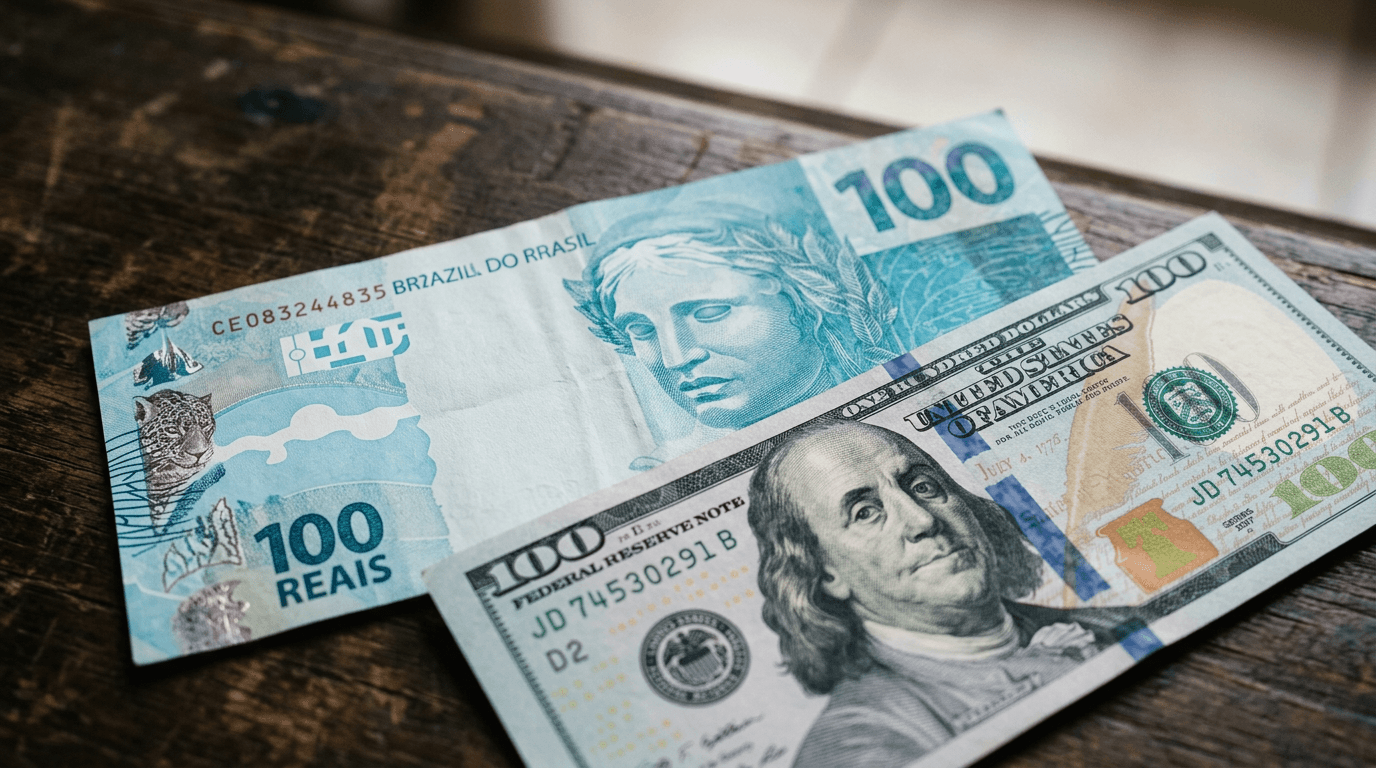
The Brazilian Real (BRL) is under sustained pressure, weakening against the US Dollar (USD) as foreign investors demand a higher risk premium to hold the currency ahead of the country’s high-stakes general election. With the USD trading near 5.20 Real, the currency is reflecting deep concerns over two major, converging forces: the external pull of higher US interest rates and the domestic uncertainty surrounding the political and fiscal future of Latin America’s largest economy.
The primary external headwind comes from the US Federal Reserve, whose hawkish stance on interest rates aims to combat high US inflation. When the Fed raises rates, it increases the yields on relatively safe assets like US Treasury bonds. This action narrows the crucial interest rate differential—the gap between the high rates offered by Brazil’s central bank (Banco Central do Brasil, or BCB) and the rising rates in the US. For capital managers, this makes the world’s safest assets suddenly look more attractive, drawing funds out of riskier emerging markets like Brazil and placing downward pressure on the Real.
Adding to this pressure is the proximity of the 2026 Brazilian General Election, with the first round set for October 4. The presidential race is a highly polarized contest, primarily between the incumbent President Luiz Inácio Lula da Silva and Flávio Bolsonaro, the son of the former president. Such a tight race increases the perception of political risk, as investors fret over the uncertain economic policy direction of the next administration.
Specifically, investors are focused on the country's fiscal outlook—the government's capacity to manage its debt and spending. Concerns have been raised over the government's difficulty in achieving fiscal consolidation and the potential for new spending programs that could further strain public finances. This uncertainty translates directly into a higher risk premium demanded by foreign holders of the Real and Brazilian debt, serving as an accelerator on the currency’s depreciation. This unusual dynamic means that sometimes, even the expectation of a higher Brazilian interest rate hike, which should theoretically strengthen the currency, can instead act as a warning sign to markets, signaling that the BCB needs to hike only because the government's fiscal position is deteriorating.
The Real's sensitivity to this mix of global macro shifts and domestic political maneuvering makes it a key barometer of foreign sentiment toward Brazil. Until the domestic political environment offers clarity, or the external pressure from the US Fed eases, the Real is likely to remain volatile.
What to Watch
The most immediate catalyst for the Real will be the results of the first round of the presidential election on October 4. Should no candidate secure an absolute majority, a runoff election will be held on October 25, potentially prolonging political uncertainty and currency volatility through the end of the month.
What it Touches
The volatility in the Real directly impacts foreign exchange (FX) market exposure for companies with BRL-denominated revenue or costs. The weakening currency affects the profitability of carry trade strategies, where investors borrow in a low-interest-rate currency to invest in a high-interest-rate one like the Real, forcing some to trim their exposure. Furthermore, the higher risk premium demanded by investors also manifests in the pricing of Brazilian sovereign debt, raising borrowing costs for the Brazilian government.