
Brazilian Real Strengthens Below 5 Per Dollar as Stocks Hit Record Highs
The Brazilian real rallied past a key psychological threshold and stocks surged following first-round presidential election results that favored challenger Flávio Bolsonaro.
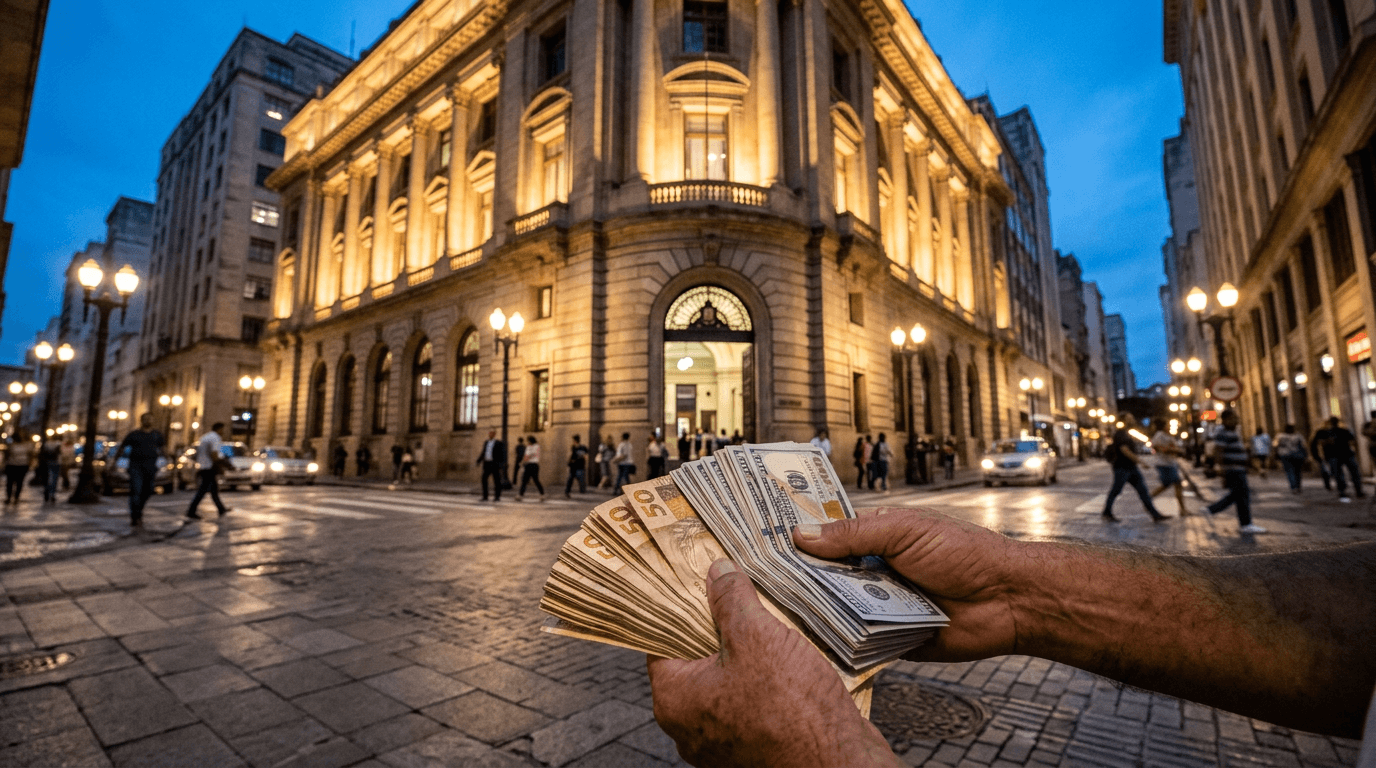
A dramatic shift in Brazil’s political landscape has sparked a historic rally across the country's financial markets, driving the local currency to its strongest level in nearly a year and a half while sending the benchmark stock index to an all-time high. The sudden surge signals a massive return of risk appetite and capital inflows into Latin America’s largest economy, catching many international observers by surprise.
The Brazilian real strengthened significantly, closing below R$ 5.00 per dollar and registering a weekly gain of 4.44%. At the same time, the Ibovespa, the benchmark index of the B3 stock exchange in São Paulo, surged by 8.82% over the week to close at a record-breaking 209,067 points on Friday, October 9, 2026. Local retail buying also fueled a 5.74% weekly jump in the real estate investment trust index (IFIX), which finished at 3,988 points.
This aggressive repricing of Brazilian assets was triggered by the first-round results of the presidential election held on Sunday, October 4, 2026. Senator Flávio Bolsonaro, the eldest son of former right-wing President Jair Bolsonaro, defied major public opinion polls to finish ahead of incumbent leftist President Luiz Inácio Lula da Silva. Senator Bolsonaro secured 47.03% of the valid votes against Lula’s 45.16%, establishing a narrow lead heading into the decisive runoff scheduled for October 25.
To foreign observers, the market's euphoric reaction reflects a strong preference among local and international institutions for the challenger's economic platform. Senator Bolsonaro is widely viewed by financial analysts as more fiscally restrictive. His economic team has already floated proposals for spending cuts equivalent to roughly 2% of Brazil's gross domestic product (GDP). Investors anticipate that a Bolsonaro administration would tighten controls on public spending, potentially paving the way for the Central Bank of Brazil to lower its benchmark Selic interest rate in the future.
The sudden appreciation of the real brings immediate relief to a currency that had been under intense pressure due to fiscal worries and global interest rate dynamics. However, the election is far from decided. No Brazilian presidential runoff has ever started with such a narrow margin between the two main contenders. While historical trends since 1989 show that the first-round leader has always gone on to win the presidency, the tight race means that extreme volatility is likely to return as both campaigns mobilize voters and clash in upcoming debates.
What it touches
The sudden rally has directly impacted major Brazilian equities traded both locally and abroad. Financial giants led the charge, with domestic heavyweights Itaú Unibanco (ITUB4) and Banco do Brasil (BBAS3) posting sharp gains. Meanwhile, domestic cyclical sectors, particularly homebuilders and retail giants like Magazine Luiza, surged as future interest rate expectations fell. Conversely, major exporting companies that rely on a weaker currency for revenue, such as pulp producer Suzano and aircraft manufacturer Embraer, experienced downward pressure as the US dollar weakened against the real.