
B3 Clearing Failure Signals Unprecedented Systemic Risk for Brazilian Markets
An operational failure in B3’s post-trading environment halted trading for over two hours, raising serious systemic risk concerns for foreign investors.
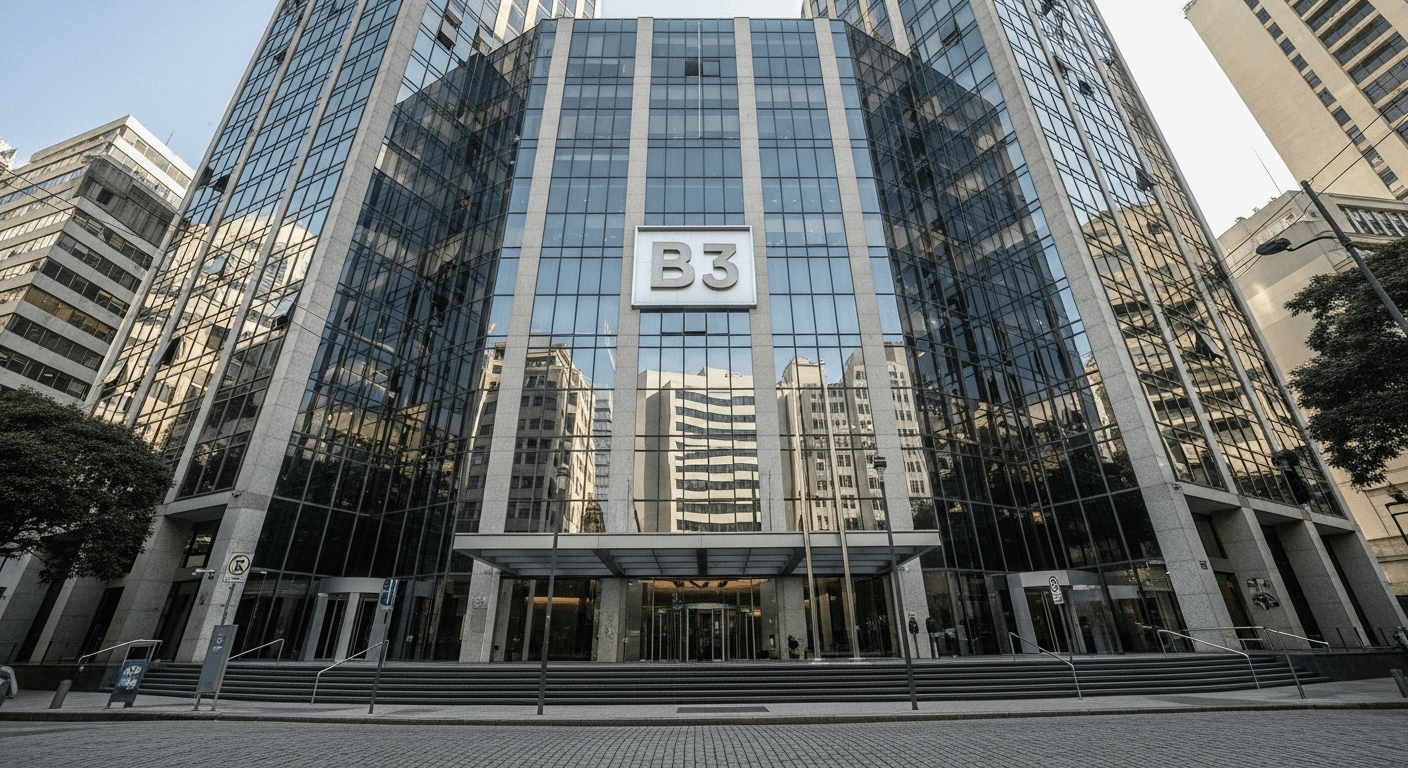
The integrity of Brazil’s sole financial market operator, B3 (B3SA3), came under sharp scrutiny on Friday, July 31, 2026, after an unprecedented operational failure in the exchange’s post-trading and clearing environment delayed the open of trading for over two and a half hours. The disruption, which the exchange described only as an 'operational intercurrence,' has been flagged by market experts as a major systemic event that raises significant questions about counterparty risk and technological resilience for foreign institutional investors in Brazilian markets. On Monday morning, following the incident, the benchmark Ibovespa index (IBOV) gained 0.47% to 177,999.0, while the iShares MSCI Brazil ETF (EWZ) traded up 0.33% to $36.65, but the event's systemic implications continue to reverberate.
The core problem was not merely a delay in executing trades, but a failure within the critical clearing and settlement infrastructure, specifically reported as a 'clearing file issue' affecting the operational processing link. This distinction is material to institutional investors, as the clearing house is the central counterparty responsible for guaranteeing the integrity of transactions and the final transfer of assets and payments. When that process fails, it creates a chain effect across the financial system, delaying the liquidation and transfer of resources for brokers, banks, investment funds, and companies alike. This breakdown of a core function elevates operational risk to systemic risk, as it threatens financial stability across the entire market ecosystem, not just an isolated trading issue.
The halt affected not only variable income assets like the main equity market but also contracts in fixed income and foreign exchange, underscoring the deep inter-connectivity and reliance on B3’s single-point infrastructure. For investors in B3SA3, the operator's stock, the incident highlights a material operational vulnerability inherent in its monopoly position, where a single point of failure in a critical system can halt the entire national trading mechanism. An event of this magnitude inevitably impacts investor confidence and can lead to inefficient price formation during the session it affects.
The immediate focus for investors remains B3's ability to provide a comprehensive, transparent explanation of the mechanism that failed and the steps taken to prevent a recurrence. As the sole gatekeeper to Brazilian markets and a systemically important financial market utility, a cursory 'operational intercurrence' is insufficient for an industry dealing with counterparty exposure. Investors should watch for a formal, detailed report from the exchange and any subsequent inquiry or formal response from Brazil's securities regulator, the CVM. The severity of the disruption—delaying payments and settlements—means the next data point to watch is not a market quote, but the formal regulatory and operational response that demonstrates B3 can guarantee system integrity for the long term.
Related coverage
Investing · PRO
Brightshore Capital, Formerly GTIS Partners, Launches $250 Million Debt Platform Eyeing Brazilian Real Estate
Published
Investing
Brazil’s Fixed Income Market Nears R$10 Trillion Milestone Amid B3 Volume Surge
Published
Investing
Brazil’s Suzano Targets $11 Billion Debt Level After Major Pulp Expansion
Published