
High US Long-Term Rates Crimp Brazilian Real Strength Despite Post-Fed Rally
Elevated US 10-year Treasury yields at 4.70% are placing fundamental pressure on the BRL, threatening to unwind recent gains against the US Dollar.
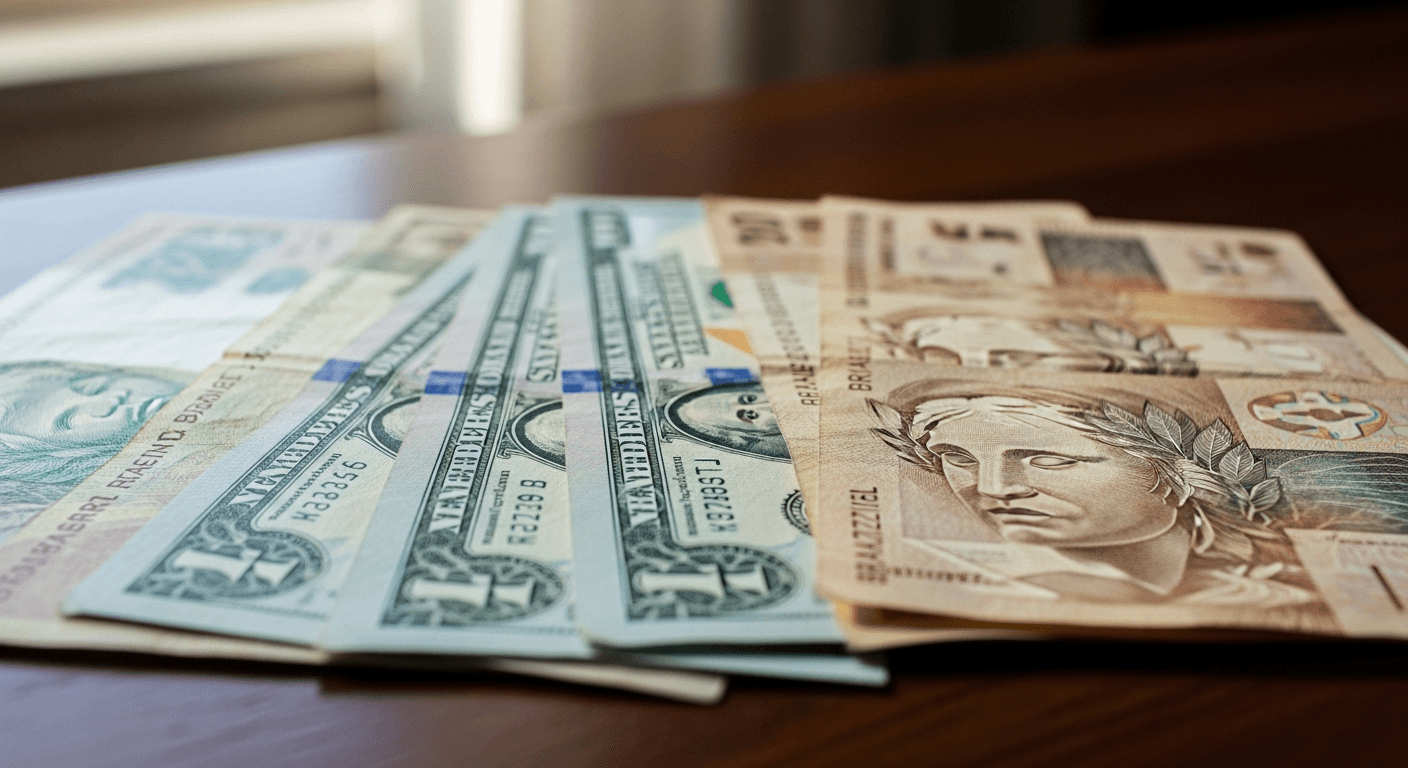
The Brazilian Real (BRL) is facing renewed fundamental pressure as long-term US interest rates rise to historically high levels, eroding the currency’s ability to sustain recent appreciation against the U.S. Dollar. The U.S. 10-year Treasury Note Yield, the global benchmark for the risk-free rate, is trading near 4.70% as of today, a level that signals underlying market concern about sustained high rates in the U.S. This yield pressure is the key headwind for the currency, even as the USD/BRL pair currently trades around 5.119853 following the latest Federal Reserve meeting.
The mechanism linking elevated US Treasury yields to a weaker Real is direct: the high return offered by virtually risk-free US sovereign debt diminishes the relative attractiveness of higher-yielding, but riskier, emerging market assets like Brazilian stocks and government bonds. Global capital flows are fundamentally drawn to the highest risk-adjusted returns, and a long-term US Treasury yield near this level acts as a powerful gravitational pull, encouraging investors to shift capital away from the B3 stocks and other assets that underpin the Invest in Brazil narrative.
While the Federal Open Market Committee (FOMC) maintained the federal funds rate in the 3.50%–3.75% range, the market reacted to the overall hawkish tone, which suggests a "higher-for-longer" scenario for US rates. The initial dollar weakness that sparked the Real's rally near the R$ 5.12 level immediately after the Fed decision was primarily a short-term volatility play on the policy rate, masking the more structural challenge posed by the long-end of the yield curve. That curve action—the rise in the 10-year Treasury—reflects investor demand for higher compensation to hold US debt for a long duration, a dynamic that directly threatens the emerging market carry trade that has benefited the BRL.
For investors following the Brazilian Real forecast, the short-term direction of the USD/BRL will be determined by the interaction between US economic data and the resulting movement in the US 10-year Treasury yield. Key levels to watch are a sustained break above 4.75% in the US yield, which could trigger accelerated capital outflow from Brazil and rapidly unwind recent BRL strength. Conversely, the next moves by the Brazilian Central Bank's Monetary Policy Committee (Copom) on the Selic rate will need to be aggressive enough to maintain a sufficiently wide interest rate differential to keep the local market attractive against the compelling alternative offered by US sovereign debt.
Latest articles
Agro · PRO
Brazil's Bid for 80,000 Tons of Beef Exports to China Awaits Beijing's Quota Veto
Published
Markets · PRO
Brazil Finance Ministry Cuts 2026 GDP Forecast to 2.0% on Drag From High Selic Rate
Published
Investing · PRO
Brightshore Capital, Formerly GTIS Partners, Launches $250 Million Debt Platform Eyeing Brazilian Real Estate
Published