
Geopolitical Risk in Middle East Solidifies USD Safe-Haven Status, Pushing USD/BRL Higher
Escalating US-Iran tensions have strengthened the US Dollar by fueling global inflation concerns and shifting the Federal Reserve's rate outlook.
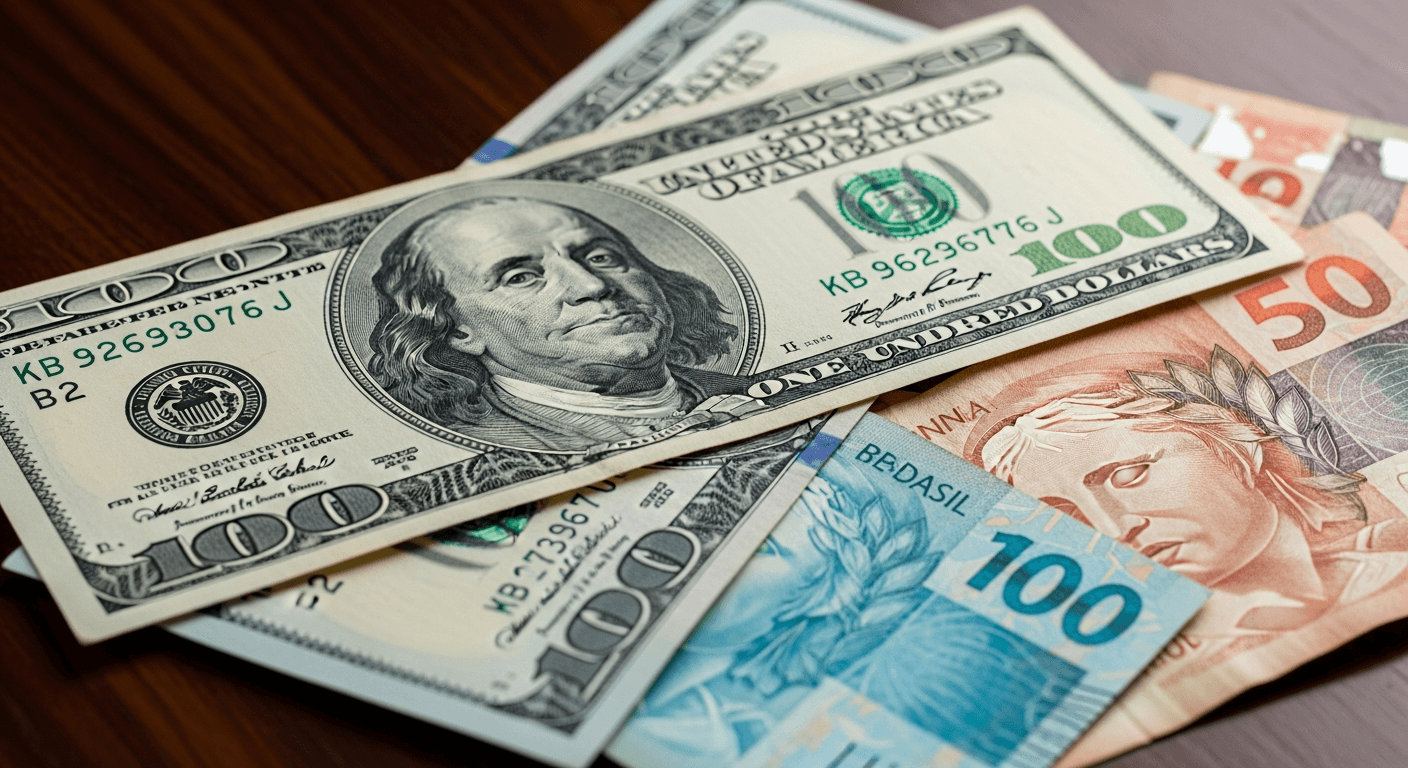
The Brazilian Real is once again demonstrating its vulnerability to global geopolitical crises, with escalating tensions between the U.S. and Iran acting as a defined catalyst for a stronger dollar and a weaker BRL. In a recent trading session, the risk-off pivot driven by the Middle East conflict caused the U.S. Dollar/Brazilian Real (USD/BRL) exchange rate to close 0.63% higher, underscoring the currency pair's sensitivity to global uncertainty. The mechanism driving this shift is clear: a surge in oil prices and a resulting adjustment in the outlook for U.S. monetary policy. Today, the dollar remains firm, with the USD/BRL trading near 5.086098, even as the British Pound (GBP/BRL 6.774189) and Euro (EUR/BRL 5.790595) also hold ground against the Real.
The core of the matter for emerging market currencies like the Real is the direct link between Middle East instability and global inflation. Renewed military confrontation between the U.S. and Iran, particularly around the critical Strait of Hormuz—a chokepoint for nearly a fifth of the world's oil supply—has pushed Brent crude prices back toward $100 a barrel. This oil price shock feeds directly into inflation expectations globally. For the Federal Reserve, this rise in energy costs increases the risk that U.S. inflation proves "stickier" than previously hoped, forcing markets to aggressively reprice the probability of further interest rate cuts this year into a more hawkish stance. Higher-for-longer U.S. rates amplify the return on dollar-denominated assets, drawing capital away from higher-risk, higher-yield emerging markets like Brazil.
This classic risk-off environment solidifies the U.S. Dollar's role as the pre-eminent safe-haven asset. The move is also bolstered by recent comments from U.S. Treasury Secretary Janet Yellen, who has stated that despite discussions of de-dollarization, "no currency can replace the dollar" due to the unique strengths of U.S. financial markets, the rule of law, and massive liquidity. When global uncertainty spikes, institutional capital flows overwhelmingly into the world's deepest and most liquid asset: U.S. Treasuries, translating into immediate dollar strength against nearly all counterparts, including the Real.
For investors following Brazil, the BRL's weakness in this scenario is a consequence of capital flight from riskier assets and the country’s own domestic inflation fight. As the dollar strengthens, Brazil's central bank, the Copom, faces greater pressure to maintain a restrictive Selic rate to keep inflation anchored, even as economic growth slows. The strong correlation between geopolitical oil shocks and USD/BRL volatility means investors must monitor events outside of Brasília and São Paulo to manage currency risk effectively.
The immediate watch point remains the geopolitical developments in the Middle East and the upcoming communications from the U.S. Federal Reserve. Any further escalation that drives oil prices higher will likely translate into continued USD strength and BRL weakness. Conversely, a confirmed de-escalation or diplomatic breakthrough would immediately unwind the dollar’s geopolitical risk premium, pushing traders to sell the safe-haven USD and potentially fueling a rapid appreciation of the Brazilian Real.
Latest articles
Agro · PRO
Brazil's Bid for 80,000 Tons of Beef Exports to China Awaits Beijing's Quota Veto
Published
Markets · PRO
Brazil Finance Ministry Cuts 2026 GDP Forecast to 2.0% on Drag From High Selic Rate
Published
Investing · PRO
Brightshore Capital, Formerly GTIS Partners, Launches $250 Million Debt Platform Eyeing Brazilian Real Estate
Published