
Brazil’s Trade Surplus Provides US$19.7 Billion Buffer Against Volatile Financial Flows
Brazil logged a US$1.9 billion net foreign exchange inflow in July, driven entirely by robust exports, stabilizing the Brazilian Real.
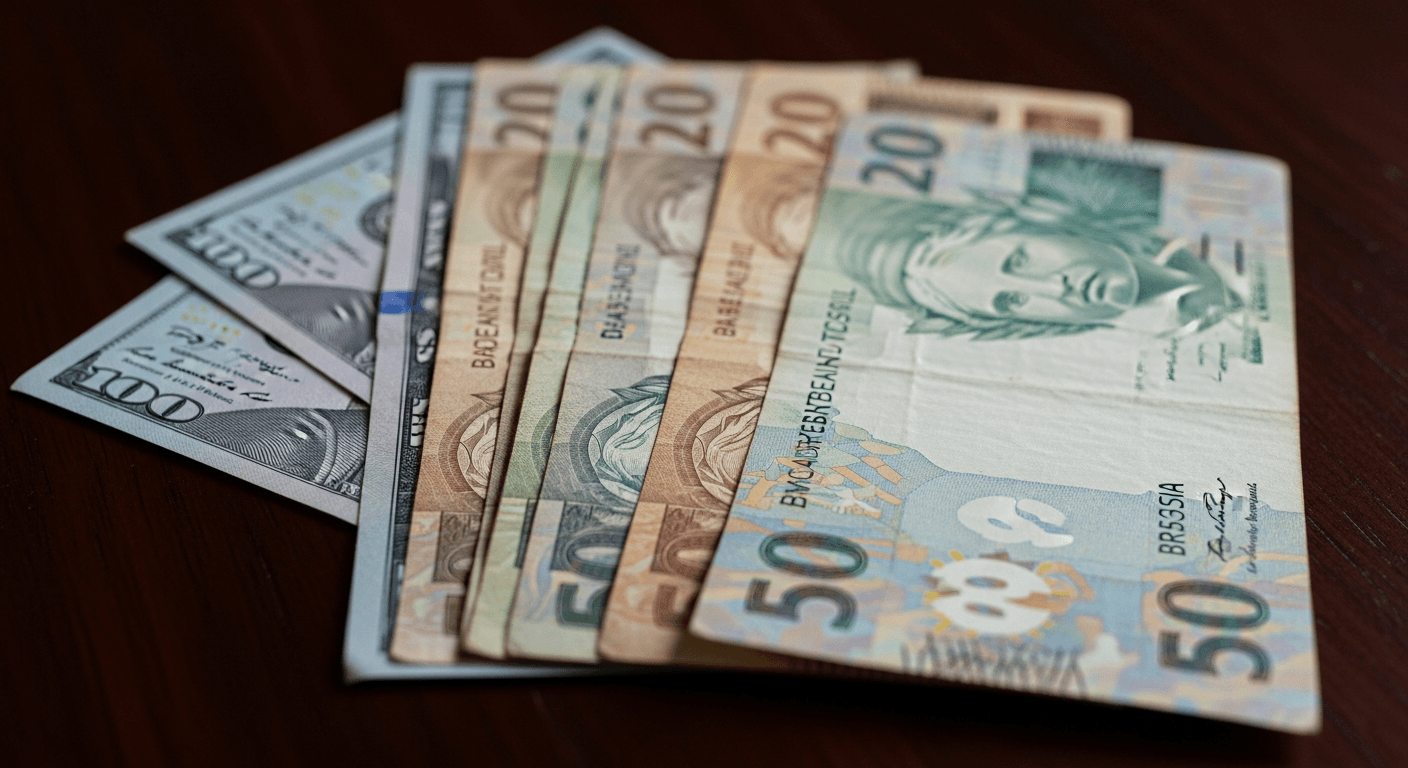
Brazil recorded a net positive foreign exchange flow (fluxo cambial) of US$1.9 billion in July 2026, confirming that the country's booming export sector is providing a fundamental structural buffer against global financial volatility. This positive result was entirely driven by the trade-related commercial channel, which generated a net inflow of US$4.5 billion, effectively compensating for a net outflow of US$2.5 billion from the financial channel, which tracks investments and profit remittances. Cumulatively, the net flow for 2026 through the end of July stands at US$19.7 billion, a performance described as the best in eight years and a sign of economic resilience that benefits the broader Brazil economy.
The country’s foreign exchange data, tracked by the Banco Central do Brasil (BCB), is broken into two key parts a foreign observer needs to understand: the commercial channel and the financial channel. The current strength of the net flow is a direct result of the commercial channel, a function of robust Brazil exports of raw and semi-finished materials, particularly soybeans, crude oil, and iron ore. This trade strength creates a constant influx of dollars into the country, giving the Brazilian Real greater external stability even as the financial channel—which measures the volatile movements of international investors—shows a negative pull, as it did in July. This constant flow of dollars helps to absorb the outflows caused by investment profit remittances, corporate debt payments, or the exit of portfolio investors concerned about political risk.
The commercial buffer is critical in an environment of global uncertainty, signaling to the world that Brazil’s external accounts are sound. Even as the currency trades near R$5.1279 to the US dollar, this structural trade strength gives the Banco Central do Brasil (BCB) greater flexibility, as it does not need to intervene constantly to shore up the exchange rate against capital flight. The overall health of the foreign exchange flow acts as a practical hedge, ensuring that the country’s dependency on the more unpredictable movements of the financial channel is mitigated by a steady, reliable stream of export revenues. The eight-year high in the year-to-date trade surplus underlines the profound shift in the Brazilian external sector toward a reliance on hard commercial results rather than on the temporary allure of hot money.
Going forward, the key factor to watch is the continued global demand for Brazil’s commodities, particularly from major partners like China, which has been driving much of the export growth. Any significant downturn in commodity prices or global consumption could weaken the commercial channel, exposing the Brazilian Real more directly to the underlying negative pressures in the financial channel. The BCB will continue to monitor these flows closely as it determines its interest rate policy.
What it touches
The dominant role of the commercial channel highlights the exposure of sectors involved in commodity exports. The ongoing strength directly supports revenues for large Agribusiness and Oil & Gas companies, whose dollar-denominated exports are converted into a stronger-than-it-otherwise-would-be Brazilian Real (USD/BRL).
Latest articles
Agro · PRO
Brazil's Bid for 80,000 Tons of Beef Exports to China Awaits Beijing's Quota Veto
Published
Markets · PRO
Brazil Finance Ministry Cuts 2026 GDP Forecast to 2.0% on Drag From High Selic Rate
Published
Investing · PRO
Brightshore Capital, Formerly GTIS Partners, Launches $250 Million Debt Platform Eyeing Brazilian Real Estate
Published