
Brazil’s Real Stability Relies Entirely on Trade Boom as $21 Billion Capital Flight Continues
A massive trade surplus is the sole support for the Brazilian Real, masking a $21.2 billion financial capital flight from the country, Central Bank data shows.
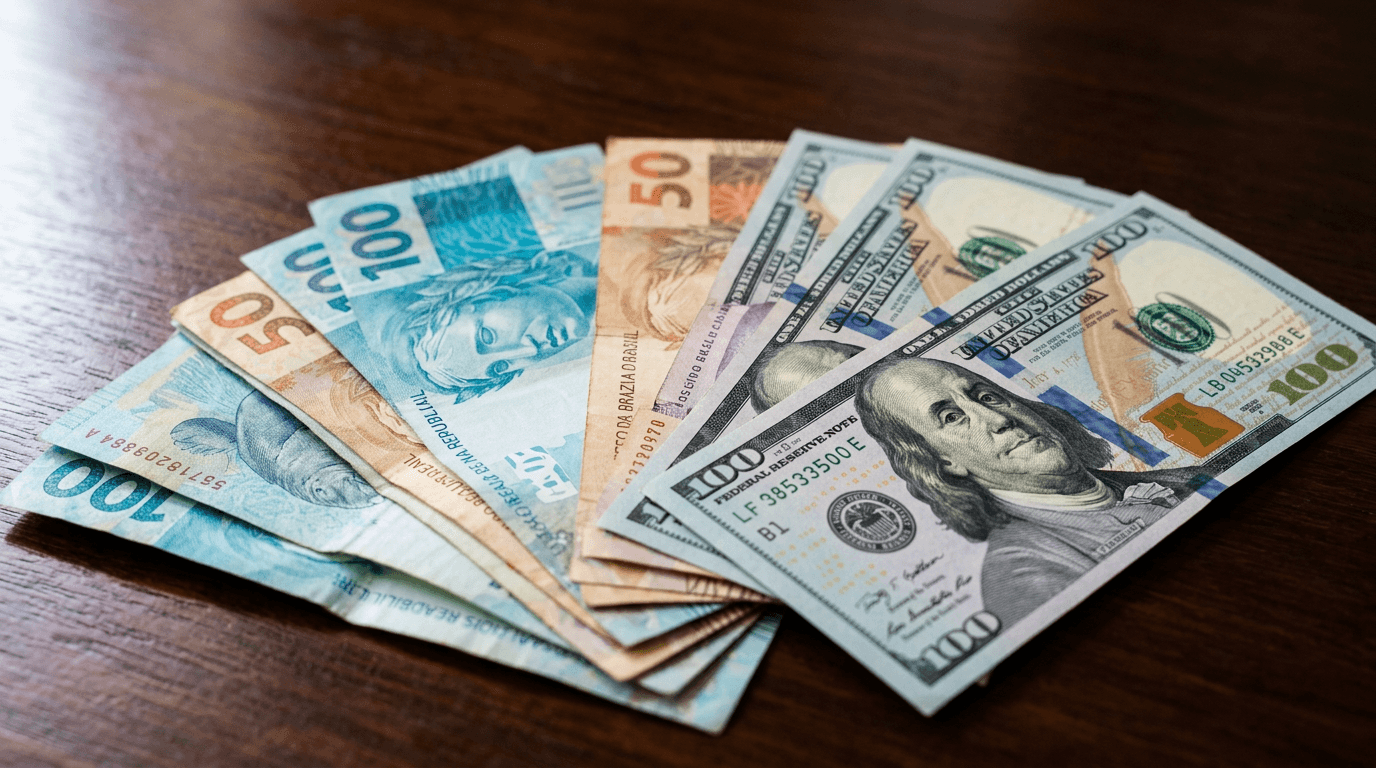
The apparent stability of the Brazilian real (BRL) against the U.S. dollar is currently reliant on an unprecedented trade boom, which is entirely offsetting a matching flow of financial capital leaving the country, according to data from the Central Bank of Brazil (BC). Through August 14, 2026, Brazil’s total foreign exchange flow recorded a positive balance of US$21.2 billion, a figure that on the surface suggests overall "brazil currency stability." However, a closer look at the Central Bank’s figures reveals that this positive balance is composed of a US$42.4 billion net inflow from the commercial channel—primarily trade of goods and commodities—which is precisely double the US$21.2 billion net outflow registered in the financial channel.
The financial channel balance is the gauge of foreign investor sentiment, covering flows related to foreign direct investment (FDI), portfolio investment in local stocks and bonds, and profit repatriation. A net outflow of US$21.2 billion in the year to mid-August signals significant capital flight, driven by a combination of global factors and persistent local concerns over fiscal health and long-term economic growth. Were it not for the strength of the nation’s exports—a windfall of commodities like soy, iron ore, and oil demanded by the world—the Brazilian Real would face severe depreciation pressure.
The balancing act between the trade surplus and financial outflows continued even in the most recent reporting period. In the first half of August, a US$2.6 billion net financial outflow, signaling continued foreign divestment, was neutralized by a commercial surplus of US$4.1 billion, resulting in a US$1.5 billion net inflow for the period. This consistent support from commodity sales is the mechanism keeping the BRL buoyant, which on Friday traded at R$5.1619 to the dollar, reflecting a 1.09% gain for the day.
This precarious balance raises questions about the long-term "brazil stability conditions," as the country’s exchange rate is overwhelmingly tied to the volatility of global commodity markets rather than the confidence of financial investors. Should commodity prices suddenly fall or if a major trading partner—such as China—reduces demand, the commercial surplus would shrink, rapidly exposing the underlying weakness from financial capital flight and potentially forcing a sharp devaluation of the Real. The next data releases on Brazil’s monthly trade balance will be critical in assessing the durability of the current market equilibrium.
What it touches
The Brazilian Real’s vulnerability is tied to the volatile nature of global commodity prices, as the currency is currently a function of trade surpluses. Simultaneously, the continuous financial outflows, particularly from portfolio investments, create a persistent headwind for the local stock market, the B3, and its main index, the Ibovespa (IBOV), by reducing the supply of foreign capital available to purchase domestic assets.