
Dollar Rises Above R$5.11 Against Brazilian Real as Hormuz Tensions Fuel Global Risk Aversion
The Brazilian Real depreciated past R$5.11 against the US Dollar as geopolitical tension in the Middle East drove investors to safe-haven assets.
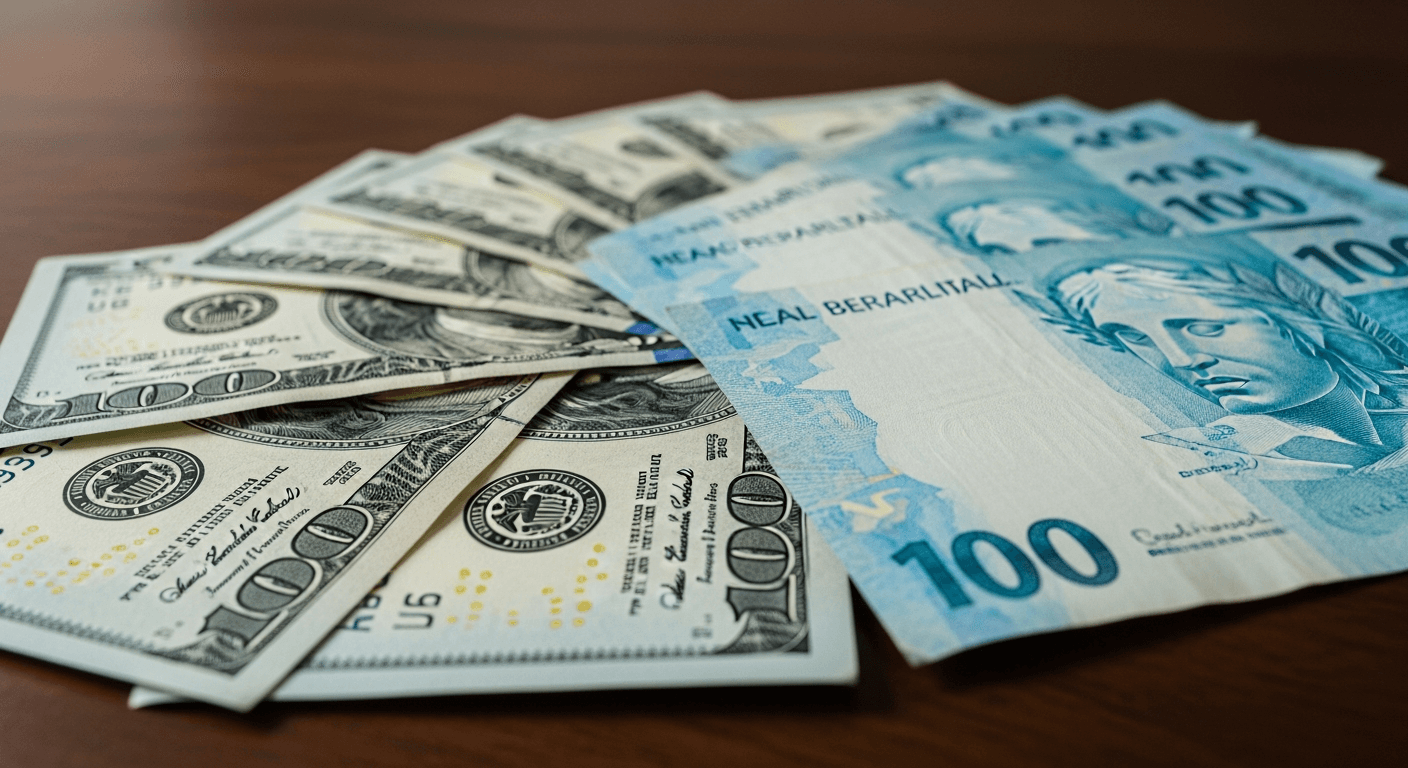
The U.S. Dollar rose sharply against the Brazilian Real (USD/BRL) on Monday, with the commercial rate closing at R$5.1107, a 0.52% increase from the previous close, as investors moved out of riskier emerging market assets and into the U.S. safe-haven currency. The appreciation pushed the pair above the psychological R$5.11 mark, a level previously noted by analysts as a key layer of technical resistance. The movement was prompted by a combination of renewed geopolitical tensions in the Middle East and market anxiety ahead of a critical week for inflation and interest rate data in both the United States and Brazil. The Real began Tuesday trading slightly tempered, with the USD/BRL commercial rate standing at 5.1066.
The primary driver for the risk-off sentiment originated in the Middle East, specifically surrounding the Strait of Hormuz, where negotiations between the United States and Iran over a peace deal have reached an impasse. Reports that a vessel owned by Abu Dhabi National Oil Co. (ADNOC) was targeted by an Iranian missile on Saturday has fueled caution, pushing oil prices higher and intensifying a scramble for the U.S. dollar. For the Brazilian Real, the geopolitical shock and the resulting rise in U.S. Treasury yields makes the currency less attractive, as investors unwind leveraged positions in emerging markets to shield themselves from global volatility.
The secondary catalyst is the looming schedule of crucial economic data, which will guide the outlook for the interest rate differential supporting Brazil’s lucrative carry trade. On Tuesday, Brazil’s central bank, known as the Banco Central do Brasil, is set to release the minutes from its recent Monetary Policy Committee (Copom) meeting, which saw the Selic benchmark rate cut to 14.00%. Markets will scrutinize the text for any hint that the central bank will slow or pause its cutting cycle. The July Extended Consumer Price Index (IPCA) for Brazil is also expected to be released today, with a lower-than-expected figure potentially boosting expectations for further rate cuts and, consequently, weakening the Real.
Further volatility is expected mid-week as the focus shifts to the United States, where the U.S. Consumer Price Index (CPI) for July is due on Wednesday, followed by the Producer Price Index (PPI) on Thursday. Stronger-than-expected inflation in the U.S. could lead to higher Treasury yields, increasing the opportunity cost of holding the Brazilian Real and accelerating the move away from emerging markets. Conversely, weaker U.S. data could ease pressure on the dollar, potentially allowing the Real to retake the R$5.10 level.
What it Touches The sensitivity of the Real to global risk and interest rate expectations directly impacts investments in BRL-denominated assets, especially government bonds that underpin the carry trade. Investors in Brazil-focused exchange-traded funds (ETFs) such as the EWZ are exposed to this currency risk, as a weakening Real erodes the dollar-denominated returns from Brazilian equity and bond positions.
Latest articles
Agro · PRO
Brazil's Bid for 80,000 Tons of Beef Exports to China Awaits Beijing's Quota Veto
Published
Markets · PRO
Brazil Finance Ministry Cuts 2026 GDP Forecast to 2.0% on Drag From High Selic Rate
Published
Investing · PRO
Brightshore Capital, Formerly GTIS Partners, Launches $250 Million Debt Platform Eyeing Brazilian Real Estate
Published