
Brazilian Real Strengthens Below R$5.09 as Weak US Jobs Data Eases Federal Reserve Rate Hike Fears
The Brazilian Real closed the week strong, crossing a key technical level after a weak US payrolls report reduced Federal Reserve rate-hike bets.
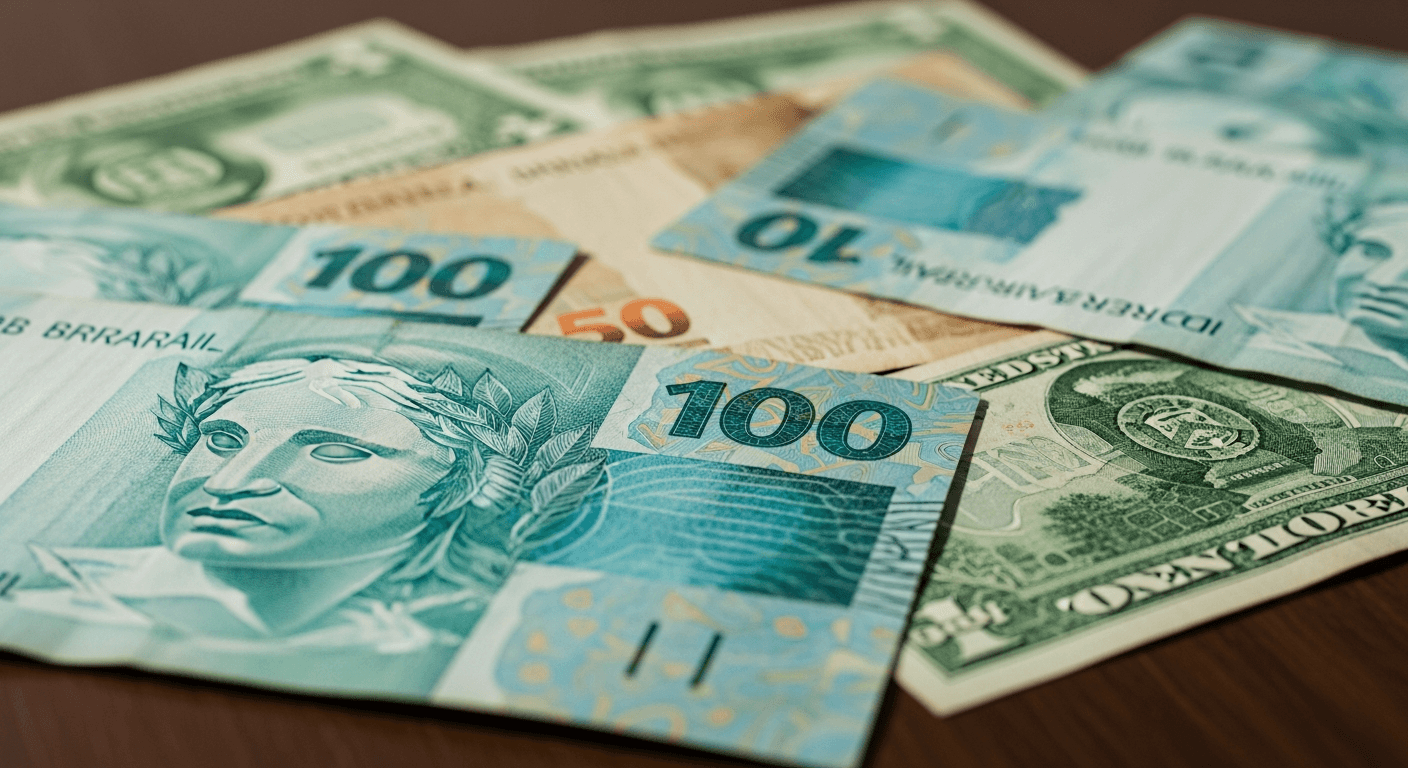
The Brazilian Real closed the last trading week on a strong footing against the U.S. Dollar, driven by an unexpectedly weak employment report in the United States that shifted global monetary policy expectations. The USD/BRL exchange rate settled at R$5.0835 on Friday, a decline of 0.46%, successfully trading below the R$5.09 psychological and technical level. The pair currently trades near R$5.0902 (-0.01%) on today’s open, consolidating the prior session’s gain.
The catalyst for the move was the July U.S. Non-farm Payrolls report, which showed the U.S. economy unexpectedly shed 23,000 jobs during the month, dramatically undershooting the consensus expectation of an 80,000 gain. The decline, coupled with significant downward revisions to prior months, was interpreted by the market as a sign of rapidly cooling labor conditions, immediately lowering the probability of a Federal Reserve (Fed) interest rate hike in September. The odds of a hike fell from a slight majority before the data release to less than 45% immediately following the report, applying broad selling pressure to the U.S. Dollar as investors reassessed the future path of U.S. rates.
For the Real, the reduced expectation of a near-term Fed rate increase serves to reinforce its appeal as a global favorite for the carry trade. The strategy involves borrowing in a low-interest currency, like the Dollar, and investing in high-interest assets, such as those denominated in the Real. Brazil’s high Selic interest rate—recently lowered but still elevated—creates a substantial and attractive interest rate differential with the U.S. When the Federal Reserve signals caution or delays tightening, as the weak jobs data implies, the risk to this differential diminishes, encouraging fresh capital inflows into Brazilian government bonds and equities. The BRL’s appreciation is consistent with a broader trend of Latin American currencies strengthening as a softer Dollar environment makes high-yield emerging market assets more attractive.
The next point of focus for the currency pair will be the market’s continued reassessment of U.S. economic strength, specifically ahead of the next Federal Open Market Committee (FOMC) meeting. Any further deceleration in U.S. inflation or labor data will strengthen the case for a prolonged Fed pause, which would continue to attract foreign capital to Brazil's high-yielding assets and potentially push the USD/BRL lower. Conversely, any data suggesting the July employment slump was an anomaly would reignite rate hike fears and reverse the Real’s recent gains.
What it Touches
The continued strength of the Brazilian Real directly impacts the value of the USD/BRL pair and generally provides a tailwind for the domestic equity market, represented by the Ibovespa stock index and the widely-traded Brazil ETF (EWZ). A stronger BRL increases the purchasing power of foreign investors buying into local assets while signaling confidence in the country’s relative interest rate policy.
Latest articles
Agro · PRO
Brazil's Bid for 80,000 Tons of Beef Exports to China Awaits Beijing's Quota Veto
Published
Markets · PRO
Brazil Finance Ministry Cuts 2026 GDP Forecast to 2.0% on Drag From High Selic Rate
Published
Investing · PRO
Brightshore Capital, Formerly GTIS Partners, Launches $250 Million Debt Platform Eyeing Brazilian Real Estate
Published