
Brazilian Real Slides Past R$ 5.11 as Global Risks Rise
The Brazilian real fell to R$ 5.11 against the US dollar amid a lack of support from global oil prices and cautious international market sentiment.
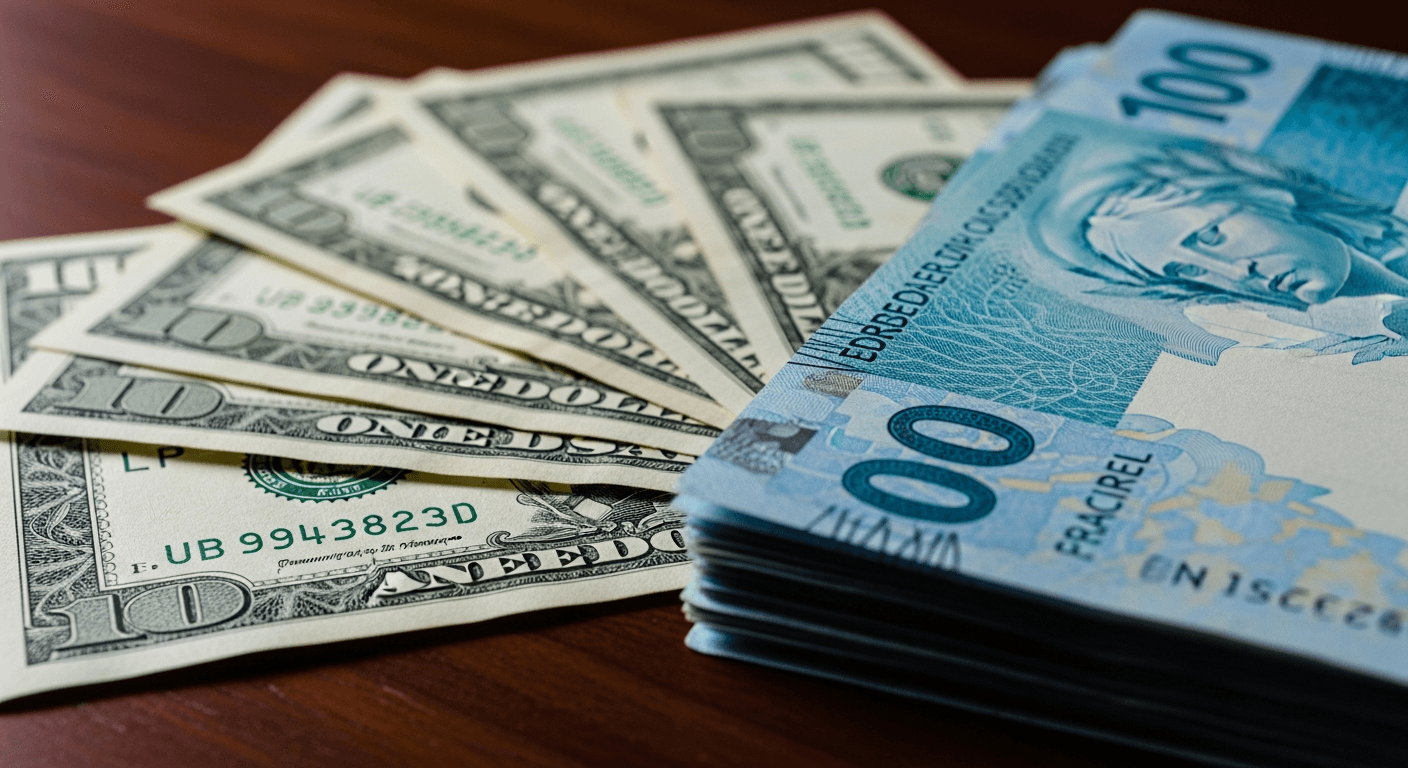
The US dollar advanced to R$ 5.1169 in early trading on July 28, 2026, marking a rise of approximately 0.6% from the prior day's close of R$ 5.08. The currency pair later stabilized slightly, with the USD BRL trading near 5.0918. The sudden retreat of the Brazilian real past the psychological R$ 5.11 threshold highlights renewed volatility for emerging market assets amid shifting global risk dynamics.
The primary mechanism driving this currency movement is a lack of support from international oil prices combined with cautious foreign market behavior. Because commodity exports are a key pillar of Brazil agribusiness and the broader economy, softer energy prices reduce the inflow of foreign capital, leaving the real vulnerable when global investors seek the safety of the US dollar. Additionally, recent US trade policy adjustments have added minor friction to the bilateral trade outlook, keeping currency traders on high alert.
This currency volatility directly impacts foreign equities and exchange-traded funds. Investors monitoring the MSCI Brazil ETF (EWZ) and major Brazilian ADRs traded on US exchanges—such as state-run oil giant Petrobras (PBR), mining heavyweight Vale (VALE), and financial institutions like Itaú Unibanco (ITUB), Banco Bradesco (BBD), and Nu Holdings (NU)—are closely watching how a weaker real affects corporate earnings when converted back into US dollars.
Domestically, the Central Bank of Brazil (BCB) continues to manage high borrowing costs, with the benchmark Selic rate currently sitting at 14.25%. While high interest rates typically support the real through carry-trade interest, persistent local inflation pressures and fiscal deficit concerns have limited the currency's appreciation potential. According to the central bank's latest Focus survey, market analysts expect the exchange rate to end the year around 5.20 reals per dollar.
Moving forward, global macro traders looking to invest in Brazil will focus heavily on the upcoming Copom decision regarding the Selic rate, alongside the next official Brazil inflation IPCA print. Any signs of fiscal consolidation from Brasilia or a stabilization in global commodity markets could help the real regain its footing, while continued geopolitical uncertainty in the Middle East may keep the US dollar elevated.
Latest articles
Agro · PRO
Brazil's Bid for 80,000 Tons of Beef Exports to China Awaits Beijing's Quota Veto
Published
Markets · PRO
Brazil Finance Ministry Cuts 2026 GDP Forecast to 2.0% on Drag From High Selic Rate
Published
Investing · PRO
Brightshore Capital, Formerly GTIS Partners, Launches $250 Million Debt Platform Eyeing Brazilian Real Estate
Published