
Brazilian Real Pressured as US-Iran De-escalation Tanks Oil Prices
The BRL weakened against the USD after hopes for a Middle East truce sent Brent crude prices down, hitting Brazil's commodity-linked assets.
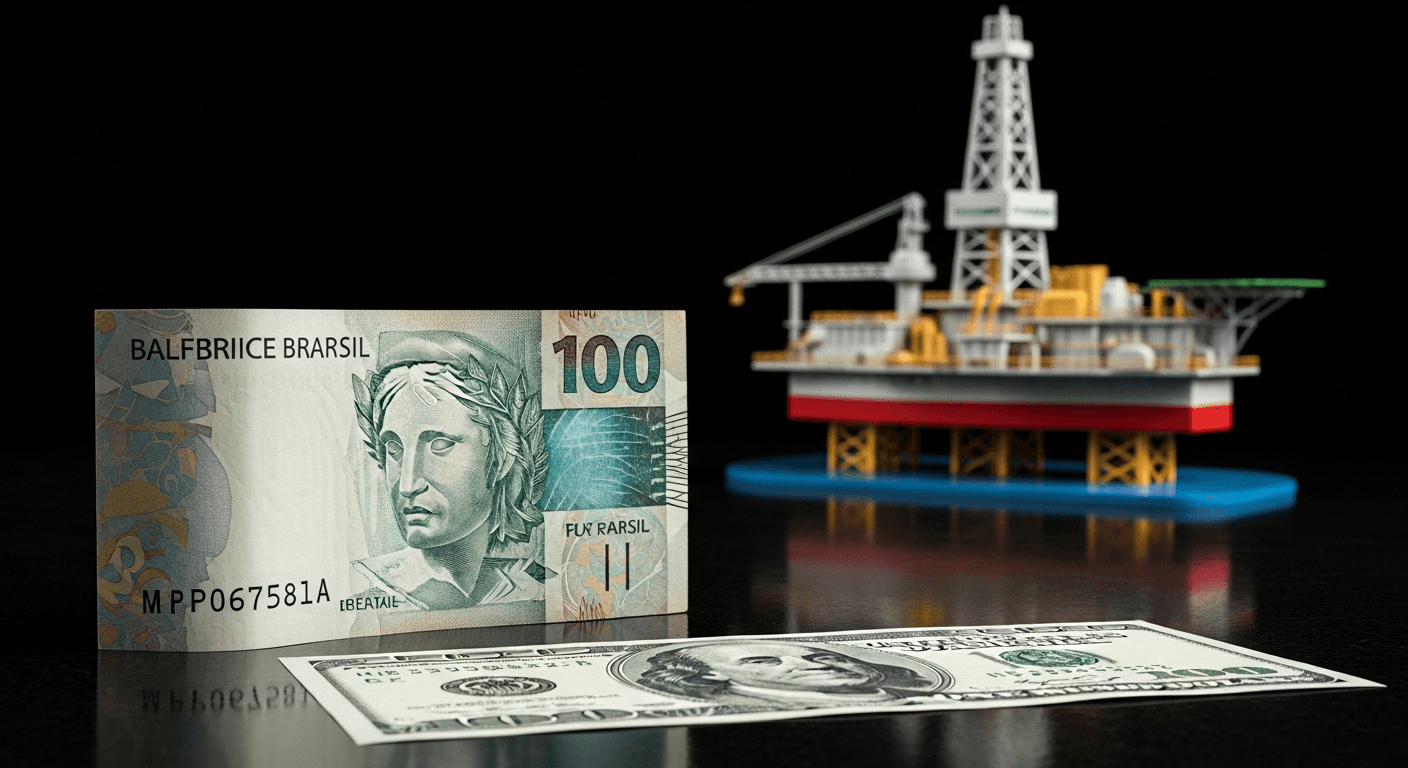
The Brazilian Real (BRL) weakened against the U.S. Dollar (USD) on Tuesday as hopes for a diplomatic breakthrough between the U.S. and Iran drove international oil prices sharply lower, removing a key support for Brazil’s commodity-linked currency. The USD/BRL spot rate traded at R$5.091851, extending a move that has seen the dollar climb from R$5.05 earlier this week as investors recalibrate the risk premium tied to Middle East tensions. Brent crude, the global benchmark, fell more than 2% in early trading, cementing a decline that began on Monday following reports of a pause in hostilities.
This dynamic illustrates the direct and immediate linkage between global geopolitical risk and the performance of key Brazilian assets. The mechanism is clear: de-escalation in the Persian Gulf lowers the risk to global oil supply, causing a retreat in Brent crude prices. For Brazil, a major oil exporter and a commodity-heavy emerging market, this acts as a direct headwind to its terms of trade, putting pressure on the Brazilian Real by reducing expected foreign exchange inflows from energy exports.
The market reaction was most acutely felt in the energy sector and the broader Ibovespa index (EWZ). State-controlled oil giant Petróleo Brasileiro S.A. (Petrobras), whose American Depositary Receipts (PBR) and local common shares (PETR4) are major components of the Ibovespa, is particularly exposed. The stock has been highly sensitive to the geopolitical premium that had previously driven Brent crude near $100 a barrel, with shares falling significantly on Monday as the oil price initially declined. The renewed drop in crude prices today, to near $86.50 a barrel, suggests continued downward pressure on Petrobras and acts as a drag on the broader Brazil stock market.
The currency’s move above the R$5.09 level suggests that investors are quickly unwinding their positions linked to the high-oil-price scenario. The Real had previously benefited as the geopolitical risks abroad increased the country's commodity export revenues and attracted carry-trade flows due to high local interest rates. The current pullback signals a shift in focus from geopolitical risk to domestic economic fundamentals.
Moving forward, investors will be closely watching for two primary catalysts. First, any further concrete news on the U.S.-Iran diplomatic track will determine if the oil price drop is a short-term correction or a sustained trend reversal. Second, the upcoming release of Brazil’s mid-month inflation report will provide fresh insight into the domestic monetary policy path, a critical factor for the Real, given that the high local Selic rate remains the BRL’s key source of support against the stronger US Dollar.
Latest articles
Agro · PRO
Brazil's Bid for 80,000 Tons of Beef Exports to China Awaits Beijing's Quota Veto
Published
Markets · PRO
Brazil Finance Ministry Cuts 2026 GDP Forecast to 2.0% on Drag From High Selic Rate
Published
Investing · PRO
Brightshore Capital, Formerly GTIS Partners, Launches $250 Million Debt Platform Eyeing Brazilian Real Estate
Published