
Brazilian Real Holds R$5.08 Pivot Amid Geopolitical De-Escalation, Highlighting Exporter Revenue Structure
USD/BRL stability near R$5.08 persists despite geopolitical risk unwinding, drawing attention to dollar-earning Brazilian firms.
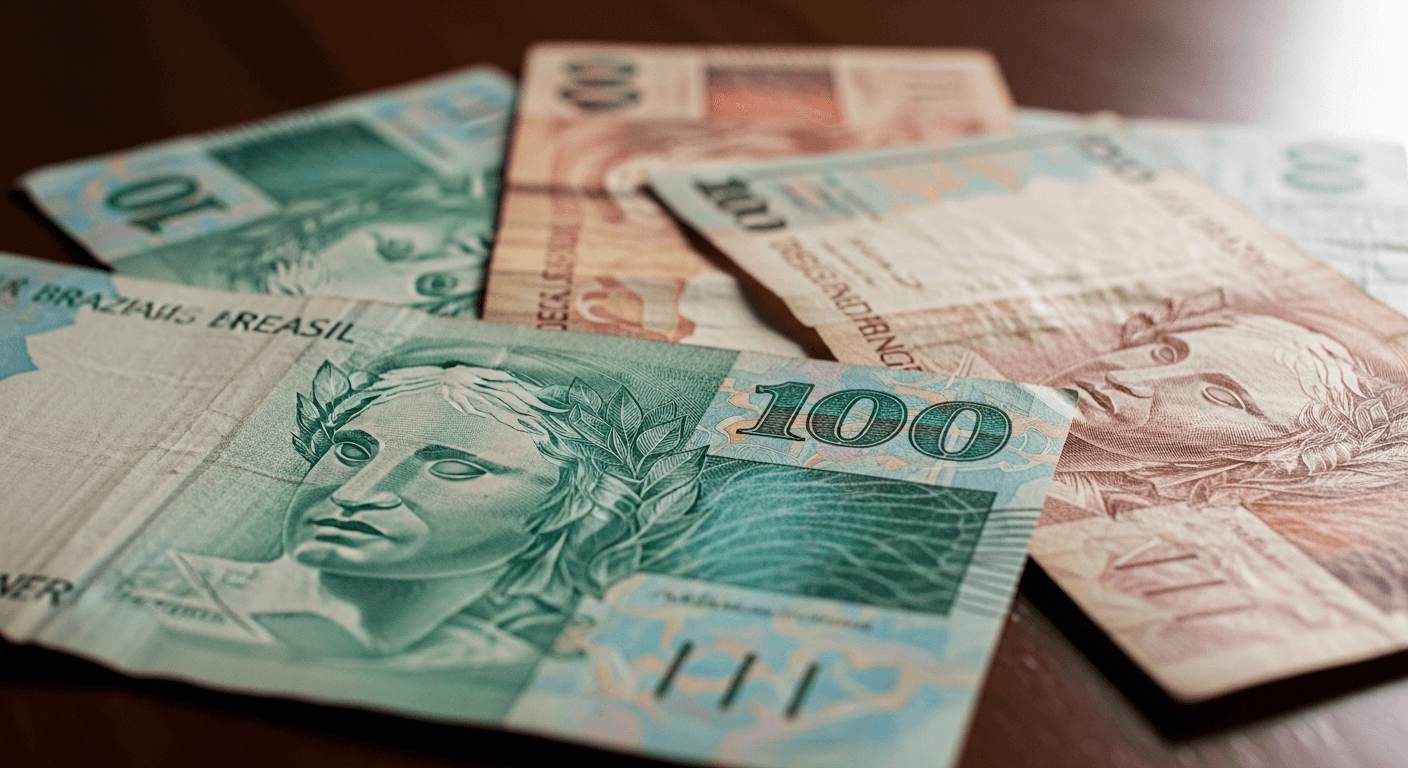
The Brazilian Real is demonstrating unusual resilience against the US Dollar, trading at R$5.0846 today, holding a tight range near the R$5.08 pivot point despite an abrupt unwinding of geopolitical risk. This stability is counter-intuitive, as the Real has maintained its level even after Brent crude oil futures dropped sharply below $91 per barrel following a de-escalation of tensions between the United States and Iran. This shift means the Real is not acting as a primary absorber of external shocks, prompting investors to focus instead on the underlying financial structure of Brazilian companies exposed to foreign exchange fluctuations.
The previous week saw Brent crude briefly trade above $100 a barrel amid escalating Middle East tensions, only to retreat aggressively as Washington halted military strikes, dissolving the war risk premium. This relief rally in global risk assets has been met with fresh economic uncertainty from new U.S. Section 301 tariffs, which impose duties between 10% and 12.5% on imports from a host of countries, including Brazil, as a long-term economic strategy. The Real’s ability to withstand this dual-pressure test—a dissolving risk premium that typically weakens the BRL against the USD, and new trade uncertainty—suggests strong structural inflows or continued carry trade interest are providing support.
This currency resilience highlights the operational mechanism that links the foreign exchange rate to Brazilian corporate earnings, particularly for export-focused firms. The core financial benefit for these companies is that they earn revenue in U.S. Dollars, which then translates into higher sales in Brazilian Reais when the local currency weakens. Institutional research, such as from Banco Bradesco BBA, has historically pointed to this built-in currency benefit, noting that companies with dollar-linked revenues offer a structural hedge against BRL depreciation.
Major Brazilian companies with extensive foreign operations, such as state-controlled oil giant Petrobras, global miner Vale, and aerospace manufacturer Embraer, all share this structural relationship. While the current stability in USD/BRL temporarily reduces the immediate boost to their Real-denominated earnings, the underlying mechanism remains critical for investors modeling future profitability. Should the R$5.08 support level eventually break due to renewed global risk or a shift in the domestic interest rate outlook, these companies are positioned to see a translation gain that could allow them to potentially outperform the broader B3 index.
The longevity of the Real’s R$5.08 stability remains contingent on external factors. Investors will be closely watching for any renewed escalation in geopolitical flashpoints, such as the Strait of Hormuz, or concrete developments in U.S. trade policy regarding the Section 301 tariffs. Any sustained shock to the global risk environment could test the Real’s current strength, intensifying the focus on firms whose financial performance is structurally linked to a stronger U.S. Dollar.
Latest articles
Agro · PRO
Brazil's Bid for 80,000 Tons of Beef Exports to China Awaits Beijing's Quota Veto
Published
Markets · PRO
Brazil Finance Ministry Cuts 2026 GDP Forecast to 2.0% on Drag From High Selic Rate
Published
Investing · PRO
Brightshore Capital, Formerly GTIS Partners, Launches $250 Million Debt Platform Eyeing Brazilian Real Estate
Published