
Zero Rainfall in Brazil's Key Soybean Belt Threatens Delay to 2025/26 Planting Season
Critical drought conditions in Brazil's Center-West and Northeast may delay the 2025/26 soybean planting, tightening global oilseed supply.
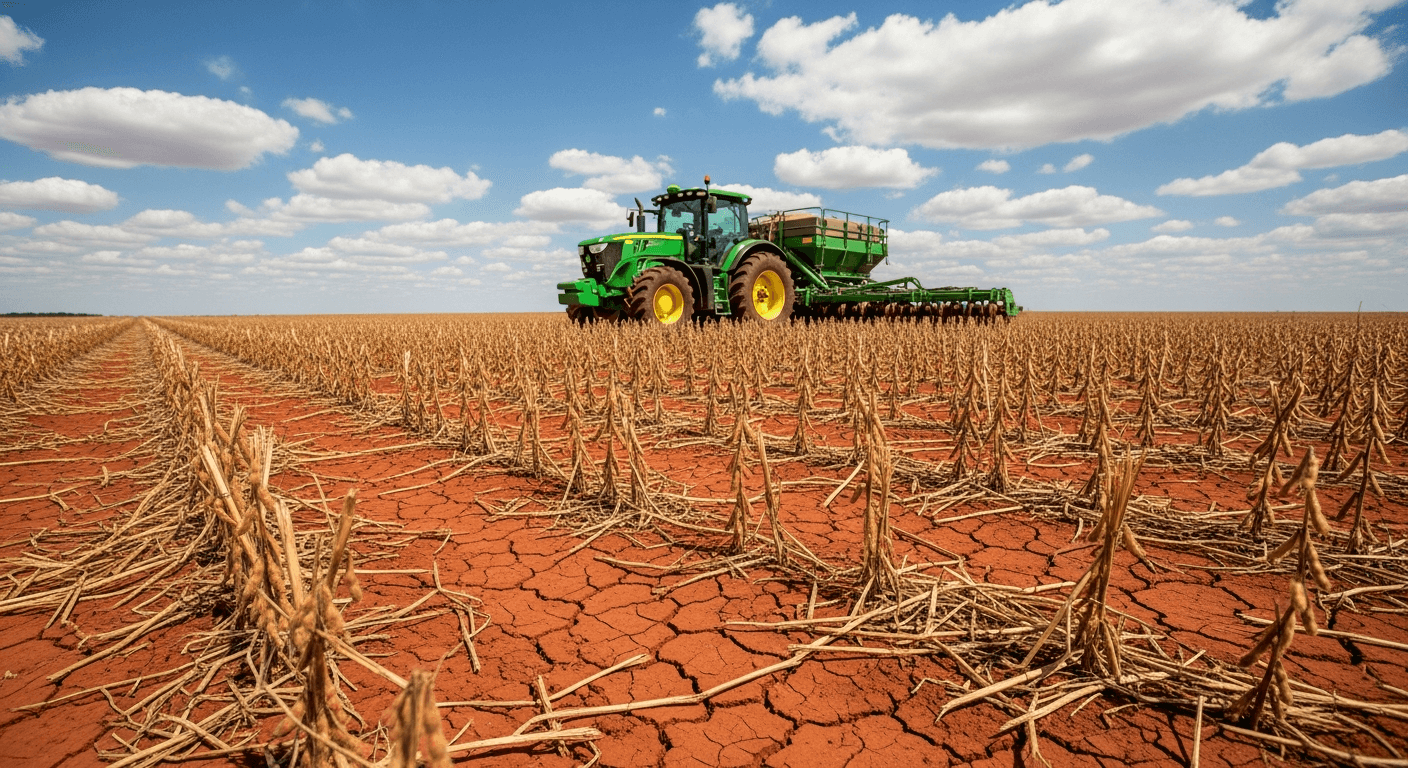
A critical lack of rainfall in Brazil’s primary soybean-producing states has intensified concerns over the delayed start of the 2025/26 planting season, potentially tightening the global oilseed supply outlook. Key regions in the Central-West and Northeast saw near-zero precipitation over the past week, with the city of Luís Eduardo Magalhães in Bahia (BA) and Rio Verde in Goiás (GO) registering 0.0mm of rain over seven consecutive dry days, while Sorriso, in the top producing state of Mato Grosso (MT), received just 0.2mm over the same period. This dryness occurs just weeks before the primary planting window opens in September.
The severe water deficit poses a significant pre-season risk, as adequate soil moisture is essential for a timely start to planting and successful crop emergence. The current dry pattern in the central and northern areas of Brazil aligns with forecasts for the developing El Niño climate phenomenon, which typically leads to suppressed rainfall in the Center-West during the late winter and early spring months. Farmers in Mato Grosso and Goiás are normally allowed to begin sowing the main summer soybean crop in September, following the completion of the phytosanitary ‘sanitary void’ period, but a continued lack of rain may force delays as growers wait for safe moisture levels.
The potential for a compressed or delayed planting calendar has secondary market effects, primarily by shrinking the window for the vital second-crop corn (safrinha) planted immediately after the soybean harvest. Delayed soybean planting pushes the safrinha past its optimal sowing date, increasing the risk of cold or dry weather later in its cycle. This mechanism ties the current weather anomaly to the overall Brazilian grain supply outlook. In contrast to the Center-West, the southern region of Paraná is faring slightly better, with Cascavel recording 10.6mm of rainfall, though it has still seen five dry days.
Market positioning reflects a high degree of sensitivity to these supply-side weather concerns. The latest Commitment of Traders (COT) report shows institutional money managers holding a significant net long position in soybeans, totaling 113,860 contracts (182,923 long against 69,063 short), indicating that large speculators are already positioned for price increases driven by potential supply disruptions. Any further deterioration in the weather outlook across the key producing regions—particularly Mato Grosso, which leads the country’s output—will likely add upward pressure to benchmark soybean futures prices.
Investors should monitor rainfall patterns in Mato Grosso and Goiás closely through August. The critical metric will be the level of soil moisture available at the official planting start in early-to-mid September. If the dry spell extends, market participants will focus on whether the delay affects Conab’s (National Supply Company) or the USDA’s current record production forecasts for the 2025/26 season. Prolonged weather stress leading to higher export prices for soybeans, a core Brazilian commodity, would also need to be factored into the trajectory of the USD/BRL exchange rate.