
Unseasonal Rains Halt Safrinha Corn Harvest, Disrupt Sugar Crushing in Brazil South
Atypical July rains, driven by El Niño, are delaying the safrinha corn harvest and cane crushing, signaling a supply shock for corn and sugar futures.
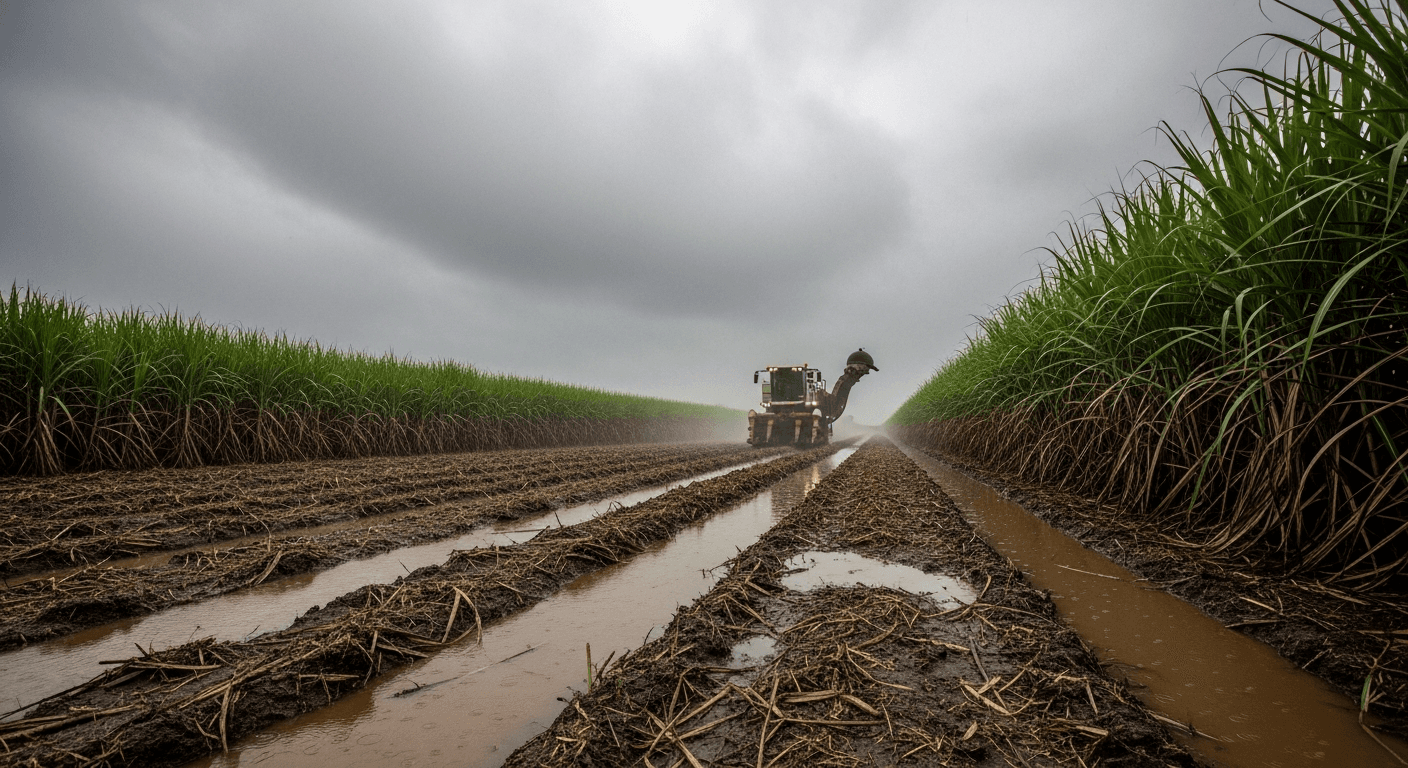
Unseasonal and heavy July rainfall in Brazil’s southern and center-south regions is significantly slowing the harvest of the country’s crucial second corn crop, or safrinha, and disrupting the sugarcane crushing season, pointing to an immediate supply shock that is likely to drive price strength for both Corn Futures and Sugar Futures. The atypical winter weather pattern, linked to the strengthening El Niño phenomenon, is most pronounced in states like Paraná, where the city of Cascavel recorded 74.3 millimeters of rain in the last seven days. This moisture is proving a major constraint on field operations, forcing harvest stops, and elevating risks to crop quality for both grains and cane-derived products, including ethanol.
The weather event impacts the corn market at a sensitive time. Brazil’s safrinha crop accounts for roughly 80% of the nation’s total corn production and is the engine of its export program. The delays in southern regions are creating operational bottlenecks for field access and logistics, which analysts cite as a “binding constraint” on export shipments. Furthermore, the heavy moisture can degrade grain quality, requiring costly drying processes and potentially leading to commercial losses. While central states like Mato Grosso (Sorriso, 0.0mm rain/7 dry days) and Goiás (Rio Verde, 0.0mm rain/7 dry days) are experiencing the drier-than-normal conditions typical of El Niño in the Center-West, the operational delay in southern ports and key producing areas is rationing immediate global supply.
For the sugarcane sector, the unseasonal rainfall is directly curtailing processing capacity and reducing near-term output of sugar and ethanol. UNICA, the Brazilian sugarcane industry association, reported that processing in the Center-South region during the first half of July was down 11.07% year-over-year due to the weather. While the long-term moisture associated with El Niño is expected to benefit the overall size of the sugarcane crop and improve conditions for the 2027 harvest, the immediate effect is a reduction in the total recoverable sugar (ATR) and a slowdown in the pace of crushing. This translates into less availability of Brazilian sugar and less ethanol on the global market now, reinforcing the supply-constrained view for investors looking at Sugar Futures and ethanol-linked B3 stocks.
The supply disruption arrives as investors already hold a significant bullish bias in the commodity complex, with long positions in both Corn Futures and Sugar Futures heavily outweighing shorts, according to recent Commitment of Traders (COT) data. To gauge the true extent of the damage and operational delay, investors should closely monitor weekly harvest progress reports from industry analysts and updated production forecasts from CONAB or UNICA over the next 30 days. The primary watch point remains the persistence of the El Niño pattern, which is forecast to continue through the current season, making weather the dominant factor for the Brazil agribusiness outlook into 2027.