
'Super El Niño' Threatens Brazil’s 2027 Harvest, Pushes Finance Ministry to Raise Inflation Forecast
Major climate agencies forecast a potentially historic El Niño, forcing Brazil's Ministry of Finance to raise its 2027 inflation projection due to risks to key crops like soybeans and corn.
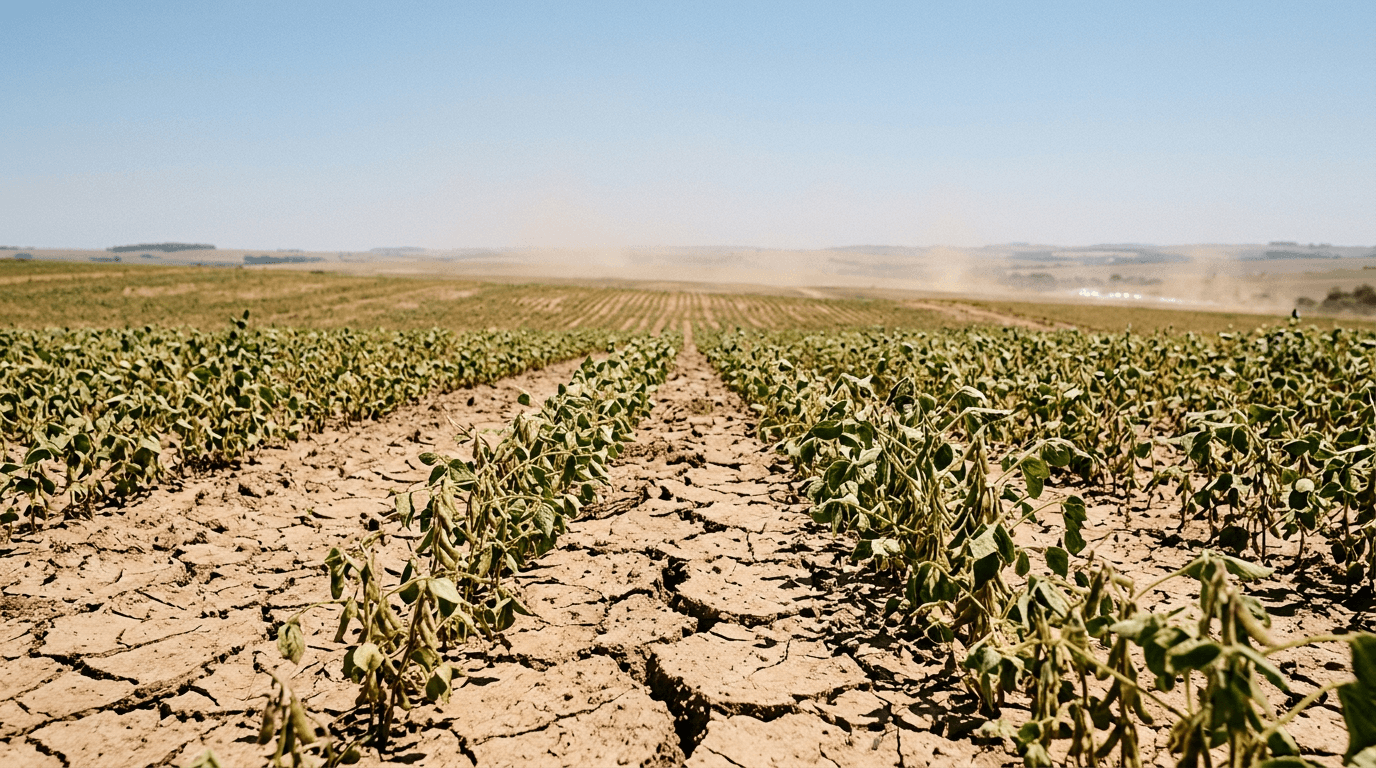
Global climate agencies are warning that a potentially historic "very strong" El Niño is nearly certain to persist into early 2027, posing a significant risk to Brazil’s upcoming 2026/2027 grain and oilseed harvests and prompting the government to revise its macroeconomic outlook. The US National Oceanic and Atmospheric Administration (NOAA) states there is a greater than 90% chance of a very strong event developing this season, with a 75% chance that the phenomenon will exceed the intensity of all El Niño episodes recorded since 1950.
The looming Super El Niño, a term used colloquially to describe events of this magnitude, is expected to severely disrupt typical weather patterns across the country's vast agricultural landscape. The southern region of Brazil, including key agricultural states like Paraná, is forecast to receive excessive rainfall and risk flooding, which hinders planting, complicates harvest, and raises the incidence of disease for winter crops such as Wheat. Meanwhile, the crucial Center-West and northern states—the heart of Brazil’s soybean and corn production—are expected to face prolonged periods of reduced precipitation and high heat, leading to water stress for crops.
This severe weather forecast has already forced Brasilia to adjust its economic planning. Brazil’s Ministry of Finance, which handles the government’s official macro-fiscal projections, explicitly cited the potential impact of El Niño on agricultural production when it updated its forecasts for 2027. The Ministry increased its official 2027 IPCA inflation forecast to 3.8% from 3.6% and cut its GDP growth projection to 2.3% from 2.5%. This caution follows a prior 7.5% reduction in the volume of cereals and oilseeds during the 2024 El Niño event, which is being used as a benchmark for the current risk analysis.
The timing of the peak intensity is particularly critical for global soft commodity supply, as the El Niño is expected to strengthen through the end of 2026 and persist well into the first half of 2027. This coincides with the planting window for the main Soybean crop and the critical development stages for the second-crop Corn, or safrinha, which accounts for the vast majority of Brazil’s corn output. The performance of these two crops will largely determine the success of the harvest cycle and the degree of inflationary pressure on food prices into the next year.
What it touches
The heightened risk to Brazil’s commodity production directly exposes global soft commodity futures, particularly Soybean and Corn contracts traded in Chicago, as Brazil is the world’s largest exporter of soybeans and a major corn supplier. On the currency front, a threat to a key driver of Brazil's export revenue could add volatility to the USD/BRL exchange rate.