
Super El Niño Forecast Splits Brazil’s Agribusiness, Creating Regional Input Arbitrage
Strong climate forecasts for the 2026/27 crop point to a severe North-South divide in Brazil, triggering a major arbitrage opportunity in agricultural inputs.
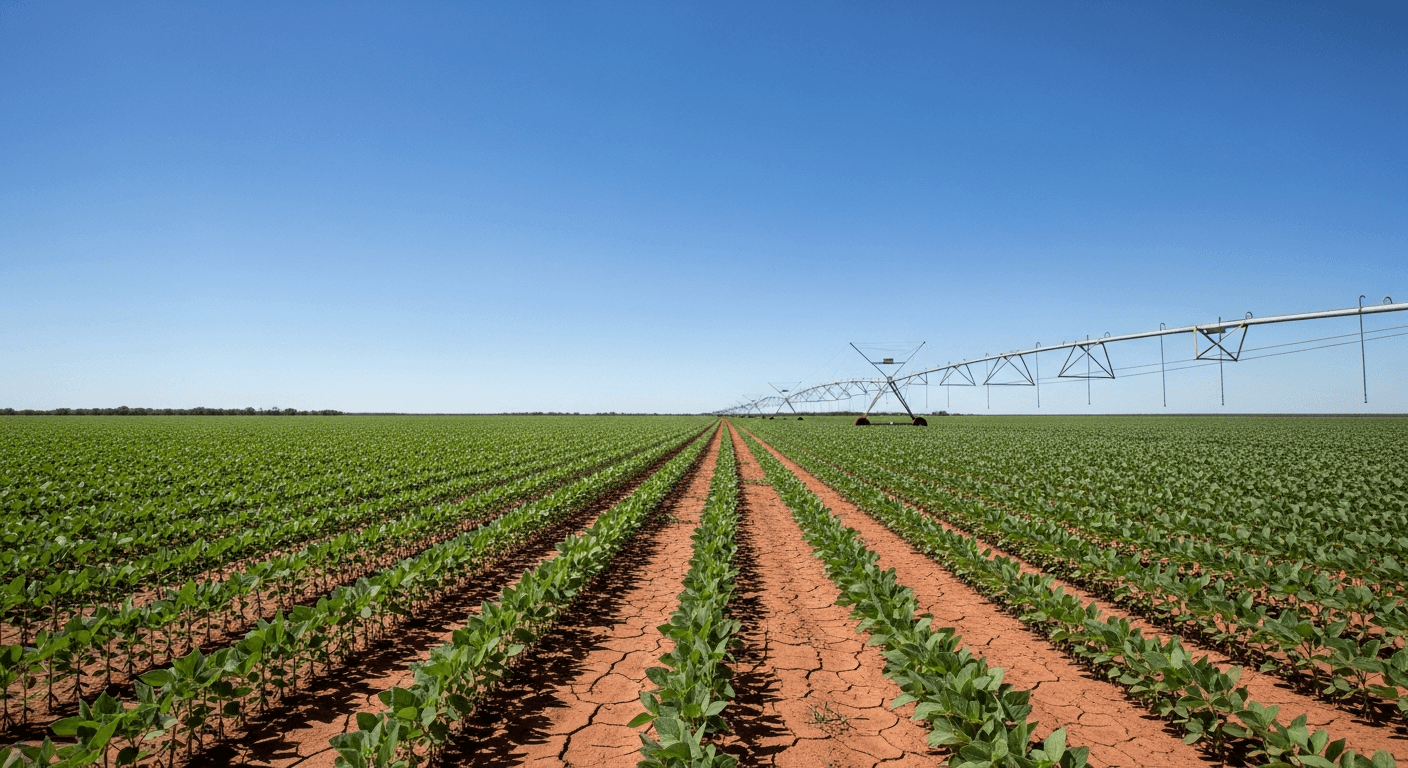
Forecasts indicating a "Super El Niño" for the 2026/27 harvest are injecting significant volatility into Brazil’s agribusiness supply chain, forcing a sharp divergence in demand for agricultural inputs across the country’s main producing regions. While Brazil’s massive grain sector faces a climate-driven squeeze on production—with US Soy futures currently trading at 1182.25 cents per bushel and Corn at 465.25 cents per bushel—the immediate consequence is a critical input arbitrage opportunity driven by opposite weather risks in the North and South. Global climate models show a high probability that the phenomenon, which is expected to peak between late 2026 and early 2027, will produce extreme heat and drought across the key Center-North and Matopiba farming areas, while driving excessive rainfall and flooding risks in the South.
This severe regional split is rewriting the risk map for the 2026/27 growing season. In the Center-North states that constitute the core of Brazil’s commodity production—areas like Sorriso-MT and Luís Eduardo Magalhães-BA, which currently report zero rainfall over the last seven days—the priority is drought survival. Producers in these regions will accelerate demand for high-cost, drought-resistant seed technology and cultivars adapted to shorter, more variable planting windows to mitigate against a projected delay in the rainy season. Conversely, in the South, where states like Paraná and Rio Grande do Sul face the risk of a repeat of last year's severe floods, the threat shifts from dryness to excessive moisture and low solar radiation. Cascavel-PR, for example, has already seen 17.9mm of rain in the last seven days, four times the rainfall of the dry regions.
For the agribusiness sector, this translates directly into a regional arbitrage on input purchases. Excessive rainfall in the South will significantly raise the likelihood of fungal diseases and pests, driving a surge in demand and pricing for crop protection chemicals, especially fungicides and pesticides, as farmers scramble to protect already-wet crops from pressure. Simultaneously, the drought risk in the North is channeling capital toward specialized seed genetics and precision irrigation technology designed for high-heat tolerance and water efficiency. This is forcing farmers and input suppliers to manage two entirely different risk profiles within the same national market, creating logistical and financial challenges.
The market is already signaling its awareness of the coming risks. Producers in the Center-West are being urged to closely monitor forecasts and adjust planting schedules, as late rainfall could compress the critical safrinha corn window that follows the initial soybean harvest. Tighter margins, high domestic interest rates, and an exchange rate holding at 5.0902 Reais to the US Dollar are increasing the financial pressure on producers to make precise, timely decisions about which inputs to purchase now.
What It Touches: The climate volatility and production risks directly impact the protein sector, specifically companies like JBS (B3: JBSY3) and BRF (B3: BRFS3), as any reduction in the domestic soybean and corn crops increases the cost of feed, the single largest operational expense for meatpackers. The price direction of SOY and CORN futures will depend heavily on whether the dual regional risks result in a net domestic supply deficit. Demand for shares of publicly traded agri-input companies that specialize in either high-tech seeds or crop protection chemicals may be volatile as investors attempt to price in the geographically split demand.