
Strong Real, Export Premiums Insulate Brazil Soybean Market from CBOT Plunge
Brazilian soybean prices saw only moderate losses despite a 3.17% plunge in Chicago, thanks to a robust USD/BRL exchange rate and resilient export premiums.
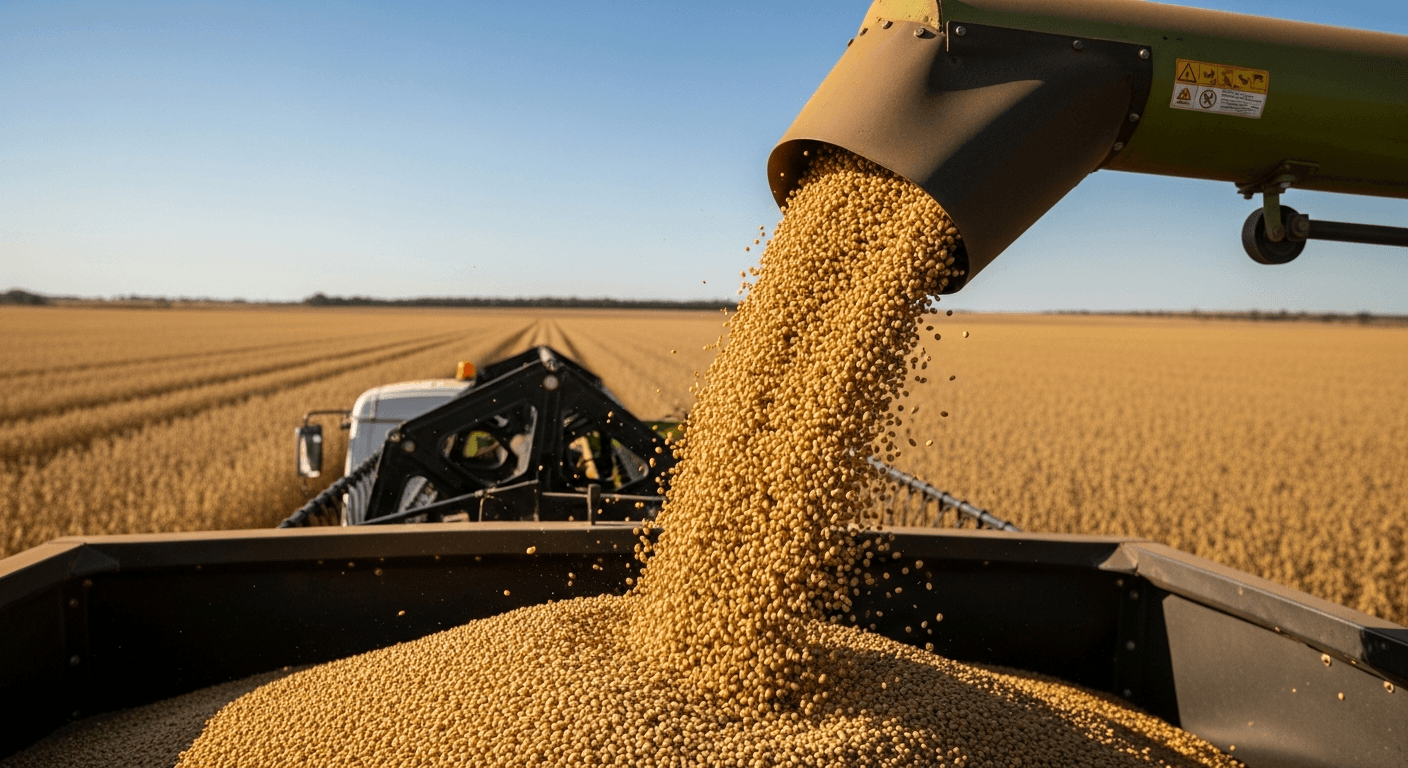
The Brazil soybean market saw domestic prices dip only moderately, averaging a R$2.00 decline per 60kg bag, despite a sharp 3.17% sell-off in the November contract on the Chicago Board of Trade (CBOT) that took futures down to US$12.13 per bushel. The divergence between international and physical domestic pricing was driven by the counter-balancing effect of a strong USD BRL exchange rate and resilient export premiums, which acted as a crucial buffer against the downward pressure from the US market. The CBOT drop was attributed to profit-taking and international factors, including a fall in crude oil prices.
For Brazilian exporters and producers, the strong Real against the dollar—trading near R$5.1305 today—translates the dollar-denominated futures price into a higher local currency equivalent, effectively cushioning the blow of the futures decline. The mechanism is further reinforced by robust port differentials, or export premiums, which have remained firm due to consistent global demand, particularly from China. This combination of a high exchange rate and strong premiums has created a small, though temporary, window for producers to sell, mitigating the full impact of the Chicago decline on the physical market.
The market remains highly illiquid, characterized by a widening spread between buyer and seller expectations, according to local reports. Producers, cautious of selling into a falling market after seeing prices near $12.13 on the CBOT, have largely opted to hold off, contributing to the subdued volume of trade. This lack of liquidity suggests that while the financial hedges (currency and basis) are supporting current price floors, trade volume on the B3 stocks exchange and the physical trade side for SOYA3 remains constrained.
From a structural perspective, the fundamentals for Brazil’s soy exports remain strong, with China continuing to favor Brazilian beans, supporting the high export basis. However, investors are watching the US market closely. Managed money is currently heavily long in soybean futures, with 182,923 long contracts against 69,063 short contracts as per the latest Commitment of Traders (COT) report, a positioning that could signal further volatility if market sentiment shifts rapidly. What happens next in the Brazil agribusiness space will depend heavily on the sustained strength of the Brazilian real and whether US weather forecasts trigger any significant rally in Chicago that might unlock further domestic selling interest. Meanwhile, weather remains dry in key planting areas like Luís Eduardo Magalhães, BA, and Rio Verde, GO, which could be a bullish factor for future new-crop pricing if dryness persists.