
Soybean Prices Surge in Brazil as Chicago Futures Rally on US Weather
Chicago soybean futures surged over 4% on US weather concerns, driving physical prices in Brazil up by R$ 3 per bag at major shipping ports.
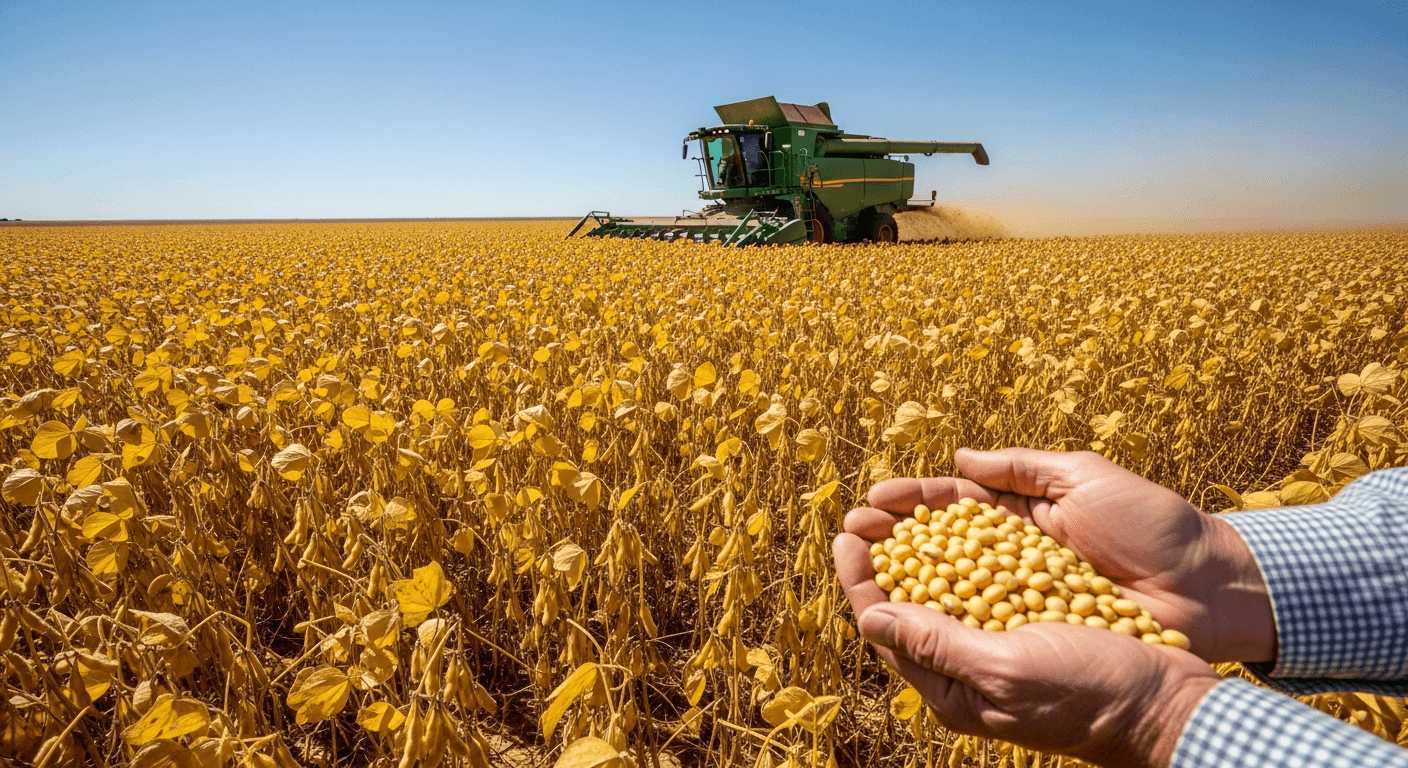
A sharp rally in Chicago soybean futures has triggered immediate price increases across major Brazilian agricultural hubs. On July 6, 2026, the Chicago Board of Trade (CBOT) July 2026 soybean futures contract closed up 4.20% at $11.84 per bushel. The international surge, driven by adverse weather forecasts in the US Midwest and expectations of robust Chinese demand, directly boosted physical soybean prices in Brazil by up to R$ 3.00 per bag.
In Brazil’s primary ports, physical prices responded with high elasticity to the CBOT gains. At the Port of Paranaguá, prices rose from R$ 137.00 to R$ 139.00 per bag, while at the Port of Rio Grande, prices jumped from R$ 137.50 to R$ 140.00 per bag. Interior hubs also posted gains, with Rio Verde (GO) rising to R$ 122.00 per bag and Cascavel (PR) reaching R$ 128.00 per bag. Local trading activity accelerated as Brazilian producers capitalized on the sudden price spike to lock in sales.
The sudden upward momentum is heavily tied to the US weather premium. A weekend heatwave and forecasts showing above-normal temperatures coupled with below-average rainfall for the first half of July have heightened crop vulnerability during a critical phase of the North American growing season. Meanwhile, domestic production regions in Brazil continue to face dry conditions. Live agricultural data shows Sorriso (MT), Luís Eduardo Magalhães (BA), and Rio Verde (GO) all recording 0.0mm of rain over the last 7 days with 7 consecutive dry days, while Cascavel (PR) recorded 12.5mm of rain and 5 dry days.
Market positioning reflects a highly active trading environment. The latest Commitment of Traders (COT) report shows soybean positions at 197,868 longs versus 121,241 shorts. For context across related agricultural commodities, corn COT positions stand at 490,117 longs and 425,940 shorts, while coffee positions sit at 58,153 longs and 37,222 shorts. With the US crop entering its key development phase, global soybean markets remain highly sensitive to any further weather disruptions.