
Heavy Storms in Brazil Delay Coffee and Sugarcane Harvests
Heavy unseasonal rainfall in Brazil's agricultural heartland has delayed coffee and sugarcane harvests, fueling supply concerns and impacting logistics.
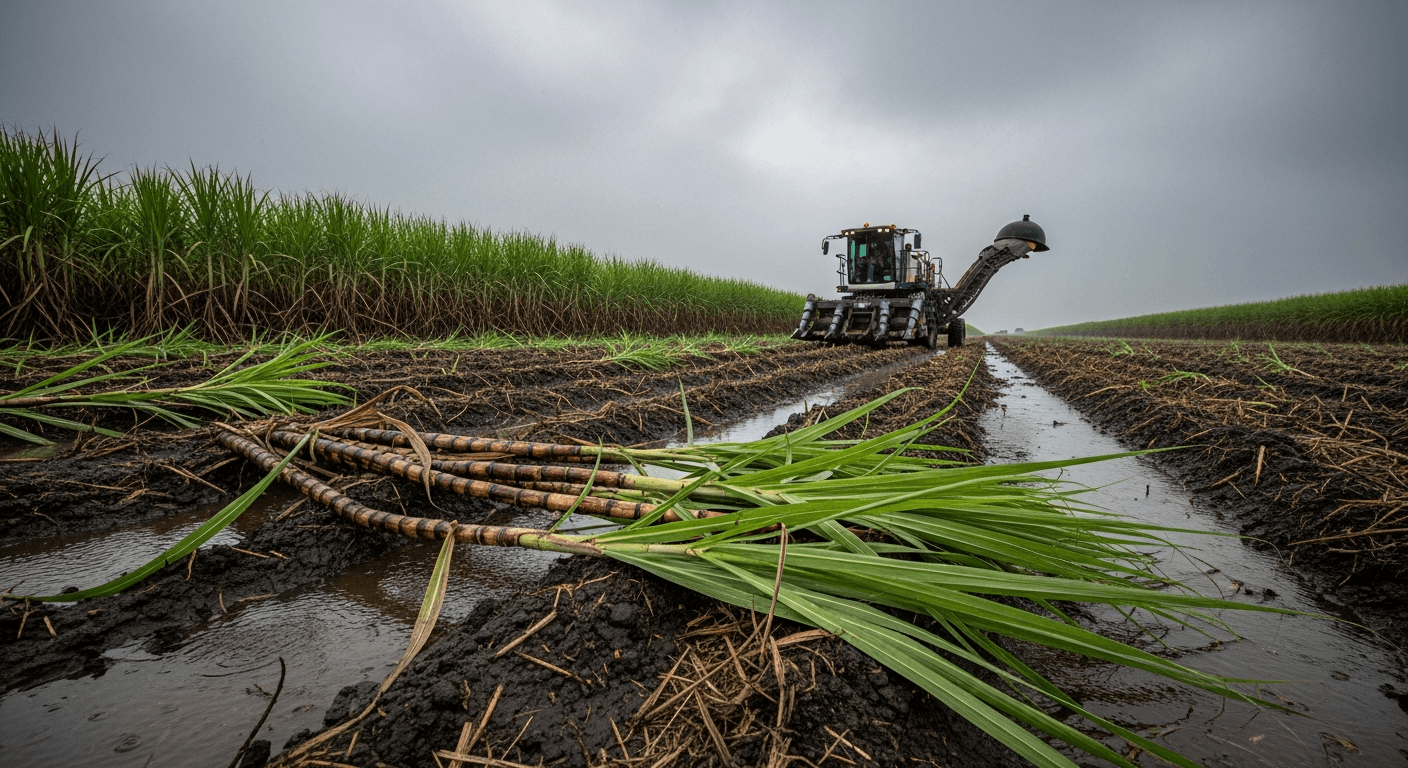
Unseasonal heavy storms across Brazil's key southern and southeastern agricultural states are disrupting harvest operations and creating logistics bottlenecks, threatening commodity delivery schedules and crop quality. The Brazilian Agribusiness Association (ABAG) warned that recent intense storms in São Paulo and Rio Grande do Sul are poised to impact agricultural production and food supply chains. The disruptions are particularly acute in São Paulo and the Sul de Minas Gerais region, where persistent rain has delayed the harvesting and drying of coffee, slowed down sugarcane crushing, and impeded the withdrawal of second-crop "safrinha" corn.
The weather-induced delays are directly impacting global commodity markets and investor sentiment. Saturated fields have prevented heavy machinery from accessing plantations, dragging harvest progress well behind historical averages. According to industry data, Brazil's coffee harvest was only 64% complete as of mid-July, trailing last year's pace of 77% and the five-year average of 70%. This supply-side bottleneck has triggered sharp movements in coffee futures (KCF26) and sugarcane-linked assets, as traders weigh the immediate tightness of physical supplies against earlier forecasts of a record crop.
In the financial markets, these agricultural setbacks are creating headwinds for Brazil agribusiness exporters and broader equities. On the B3 exchange, the benchmark Ibovespa today (IBOV) has felt the pressure of these supply chain bottlenecks, which also influence the performance of the MSCI Brazil ETF (EWZ). Meanwhile, the currency market remains highly sensitive to these developments, as any threat to agricultural export volumes can impact the USD BRL exchange rate and the broader Brazilian real forecast.
Further south, in Rio Grande do Sul, continuous precipitation has heightened the risk of flooding, damaging rural roads and complicating the transport of harvested goods to ports. While the direct impact on the state's main corn crop remains limited, the logistical hurdles are raising transport costs. In the corn futures (CCMK26) market, traders are monitoring these transport delays alongside localized harvest data, such as in Cascavel-PR, which recorded 17.0 mm of rain over the last seven days with 6 dry days. In contrast, key northern and central regions remain dry, with Luís Eduardo Magalhães-BA and Rio Verde-GO registering 0.0 mm of rain over the past week.
Market participants are closely watching upcoming weather forecasts to see if drier conditions will return to the Southeast to allow the sugarcane and coffee harvests to accelerate. Investors are also monitoring the commitment of traders (COT) data, which currently shows net-long positions of 52,395 contracts in coffee and 492,296 contracts in corn. Any prolonged wet weather could force analysts to revise down crop quality expectations and further squeeze near-term global supplies.