
EU Ban on Brazilian Animal Products Slams High-Value Beef Exports with Two-Year Bottleneck
EU's regulatory ban over antimicrobial use will disproportionately impact Brazil’s beef sector (BEEF3, MBRV3) for up to two years.
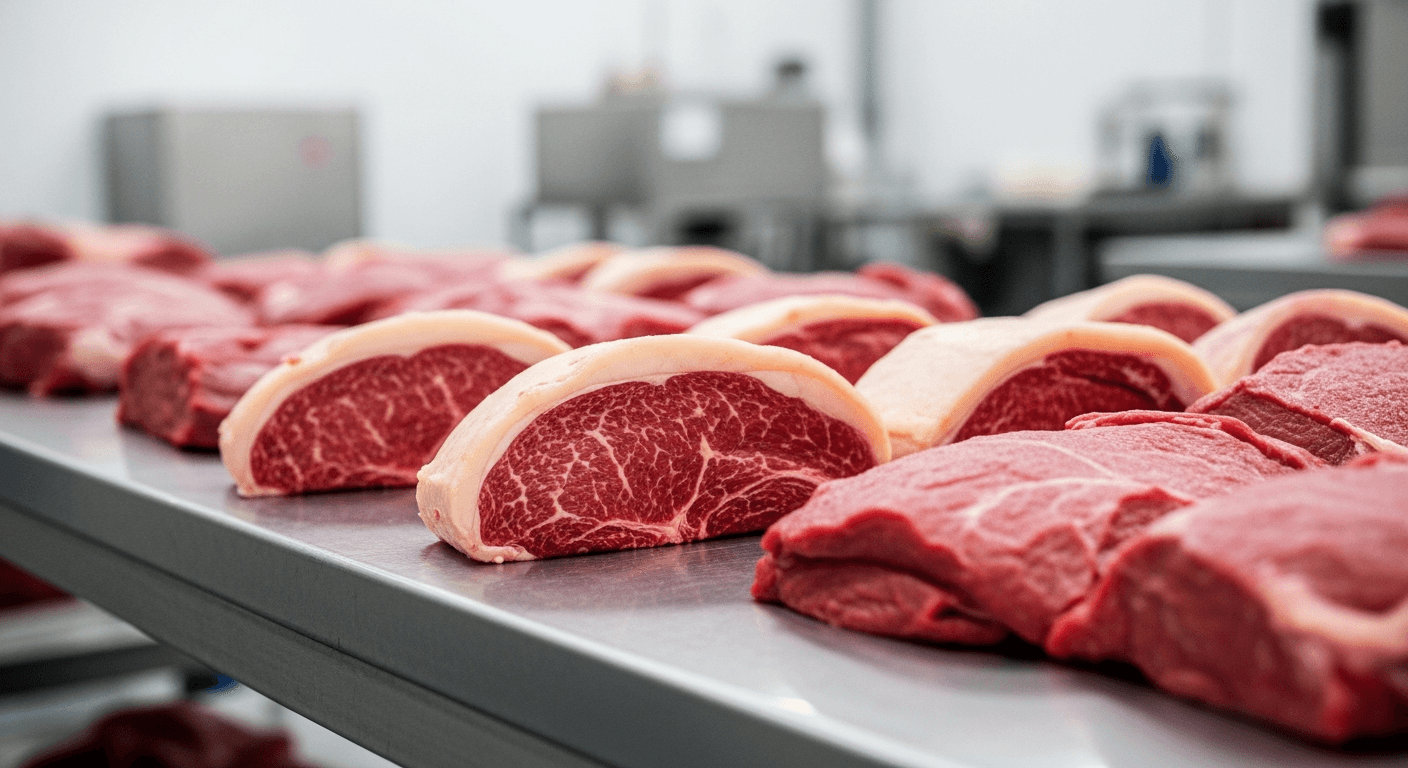
The European Union's impending ban on imports of Brazilian animal-origin products, set to take effect on September 3rd, is expected to create a disproportionately long bottleneck for Brazil’s beef exporters like Minerva (BEEF3) and Marfrig (MBRV3, MBRFY), with industry officials projecting a recovery timeline of up to two years. The measure, which also affects poultry and honey, stems from Brazil's failure to provide sufficient guarantees on control over antimicrobial use, not product quality issues, according to the European Commission. The impact is significant because the EU is a high-value market for noble cuts, estimated to pay a premium of approximately US$10/kg, compared to US$6.50/kg from the country’s largest volume buyer, China.
The two-year estimate for beef exports to resume is tied directly to the full cattle production cycle. To comply with the EU’s new standards, animals must be raised under new, stricter antimicrobial protocols from birth, meaning the first compliant cattle will not be ready for processing and export for roughly 24 months. This structural delay differentiates the challenge for beef producers from the poultry sector, which is represented by companies like BRF S.A. (BRFS3, BRFS). Due to the poultry sector’s much shorter 45-day production cycle, industry associations anticipate a far quicker resolution, potentially within weeks, once new certification standards are met.
Despite the high price premium, analysts suggest the impact on the consolidated revenues of the major Brazilian meatpackers (proteína animal) will be limited, although concentrated on the specialized, high-margin export cuts. Morgan Stanley estimates the EU accounts for roughly 5.3% of the value of Brazilian beef exports, translating to an estimated consolidated revenue exposure of around 3% for Minerva (BEEF3) and 0.5% for both JBS S.A. (JBSAY) and Marfrig (MBRV3). While JBS and Marfrig are more globally diversified—Marfrig’s operations include its strong North American footprint—Minerva has a business model more heavily weighted toward South American beef exports, making it the most exposed to the volatility in the short term. The challenge for all will be redirecting this higher-value product into existing markets or finding new high-end destinations to avoid a drag on margins.
The EU ban comes at a sensitive time for the broader Brazil agribusiness sector, which is also navigating China’s recent imposition of tariff-rate quotas on beef imports, pushing producers to seek market diversification. In the commodities space, speculative positioning remains bullish, with non-commercial traders holding a long position in soybean futures (180,562 long contracts versus 56,857 short) and a similarly strong long position in corn futures (493,348 long versus 239,028 short), signaling continued confidence in Brazilian grain exports. This market backdrop reinforces the need for the protein sector to quickly adapt its export strategy.
Investors should watch for two key data points that will signal the path forward. First, any official communication from Brazil’s Ministry of Agriculture regarding a structured compliance program, which would signal a firm timeline for the two-year clock to begin. Second, the movement of European beef prices post-September 3rd; a significant spike would create greater political pressure on the EU to find a diplomatic or technical solution, potentially shortening the ban. The fate of Brazil’s beef exports to the EU remains tied to the biological reality of the cattle cycle.