
Dual Shock: High Fertilizer Costs and 'Very Strong' El Niño Threaten Brazil’s 2027 Harvest
A combined geopolitical/climate shock threatens Brazil's 2027 harvest, pressuring margins and lowering yields for key commodities.
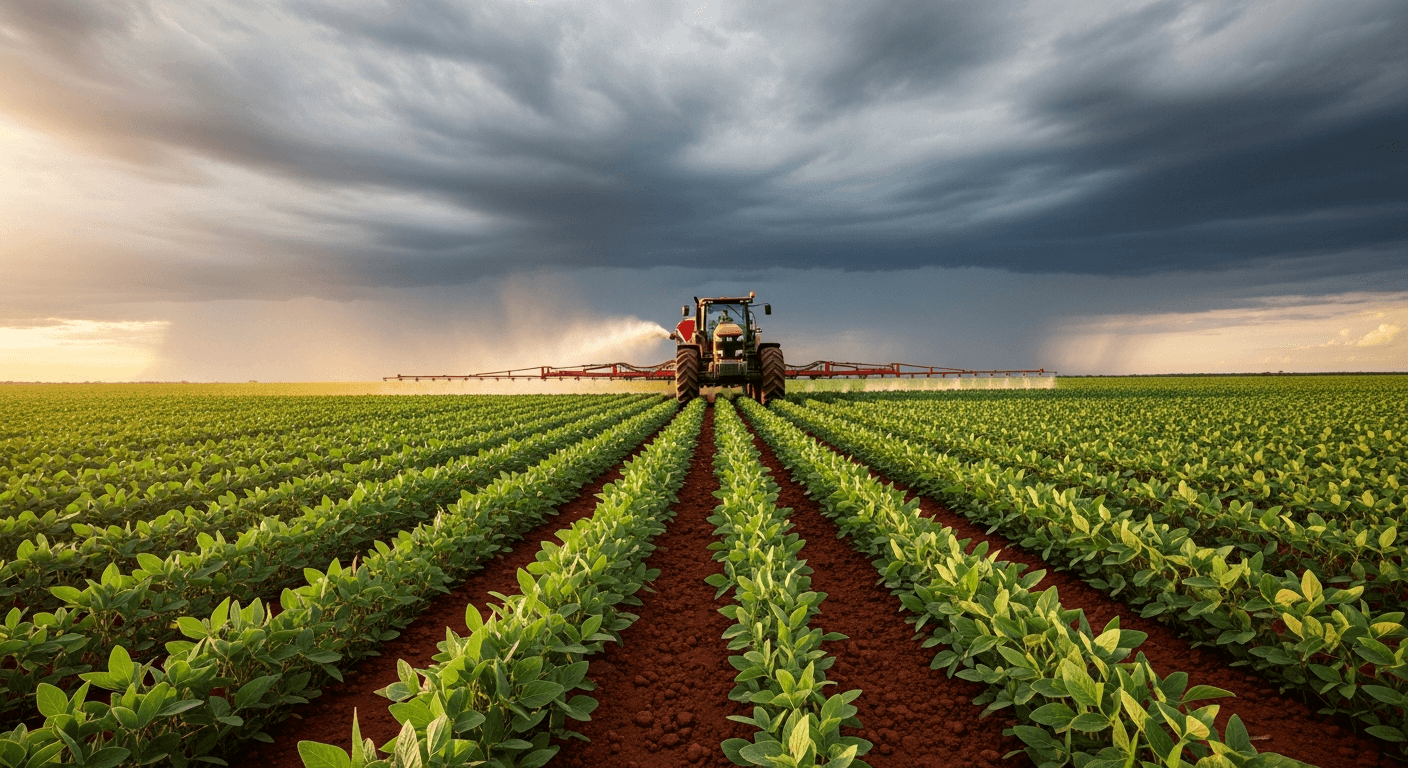
Brazilian agriculture faces a systemic risk to the 2027 harvest as persistently high fertilizer costs combine with the near-certainty of a very strong El Niño event, threatening productivity across key commodities like soybean, corn, and coffee. The dual shock forces a market alert, as reduced producer margins and adverse weather patterns could significantly tighten global supply for the coming season. The US National Oceanic and Atmospheric Administration (NOAA) has updated its forecast, assigning an 81% probability of a very strong El Niño developing between October and December 2026, which is expected to persist into early 2027.
The input cost crisis, largely driven by geopolitical tensions affecting key supply routes, is already pressuring the planting decisions for the next season. Brazil is uniquely vulnerable, importing an estimated 92% of its total fertilizer consumption, including 98% of potash and 93% of nitrogen. Disruptions caused by conflict in the Middle East have pushed global prices higher, with the World Bank projecting fertilizer prices to increase by over 30% for 2026, including a potential 60% rise for urea. Due to the ill-timed crisis coinciding with the prime procurement window for the 2027 soybean crop (which begins planting in October), Brazilian farmers have secured only an estimated 40-45% of their needs, well below the typical pace. This financial pressure is forcing some producers to consider reduced fertilization, a decision that directly correlates with lower yields, especially for the critical safrinha (second-crop) corn, which accounts for 75% of national production.
Compounding the input threat is the climate risk. The forecast El Niño is expected to divide the country climatically, creating adverse conditions for different regions. The Center-West and North, the country's primary soybean and corn belt, are projected to face delayed rains and high temperatures, which could compress the planting window. Current conditions already reflect this threat, with critical agricultural hubs like Rio Verde-GO, Sorriso-MT, and Luís Eduardo Magalhães-BA reporting little to no rainfall (0.0mm to 0.2mm) and seven consecutive dry days [LIVE DATA]. Conversely, the Southern region, which produces much of the nation's wheat and rice, is warned to brace for excessive rainfall, storms, and waterlogged soils, which threaten to compromise the quality and harvest of winter cereals.
The market is currently positioning itself ahead of this potential volatility. Commitments of Traders (COT) data shows a significant net-long positioning across key Brazilian commodities, indicating that investors are already leveraged to a bullish supply-shock scenario (COT soybean: long 182,923 vs. short 69,063; COT corn: long 492,296 vs. short 305,646; COT coffee: long 52,395 vs. short 25,140) [LIVE DATA]. The expected production shortfalls and logistical headaches—including high freight costs for the imported fertilizer and potential disruptions to grain transport via the Northern Arc’s low river levels—are also expected to weigh on the broader economy. Brazil's Central Bank projects El Niño could add 0.4 percentage points to the IPCA inflation index in 2027, with G5 Partners forecasting up to an 8% increase in food prices by year-end.
Investors should watch for updated rainfall forecasts as the crucial October planting window approaches, which will dictate whether producers commit to reduced fertilization strategies or face delayed planting. The next crucial indicator will be any changes in the NOAA's El Niño forecast, as its expected strength will determine the magnitude of the supply shock on global markets.